Frontpage
Netanyahu: 'Hamas will pay' after buried bodies of kidnapped teens found near Hebron


Israeli Prime Minister Benjamin Netanyahu told an emergency meeting of his cabinet Monday evening (30 June) that "Hamas is responsible and Hamas will pay" after the buried bodies of Eyal Yifrach (19), Gilad Shaar (16) and Naftali Fraenkel, a 16-year-old with dual Israeli-American citizenship, kidnapped on 12 June, were found in an area between Halhul and Karmei Tzur, north of Hebron.
Israeli security forces, which had been conducting extensive searches in the area, sealed off the area and declared it a closed military zone. Hebron was also sealed off. A search team from the local Kfar Etzion field school, along with IDF soldiers from an elite unit, found the teens. The local volunteers had been asking for two weeks to join the search.
The three boys were kidnapped at a hitchhiking post as they headed home from a Talmudic school outside the settlement of Alon Shvut in the Etzion Bloc south of Jerusalem. The bodies were found at about 17h, bound and partially buried, in an open field in a hard-to-access area known as Wadi Tellem.
The parents were informed on Monday evening that the bodies had been found. Relatives gathered in the three family homes. The Israeli prime minister telephoned the families and expressed his condolences. State Department spokeswoman Jan Psaki called the news of the killings “a tragedy,” and urged continued co-operation between Israel and the Palestinian Authority’s security forces despite “the pain on the ground”.
The three Israeli teenagers had been killed soon after their abduction, and the bodies were apparently disposed of hurriedly. The bodies were not in a good condition when they were found, Channel 2 said. “It was a harrowing sight."
Share this article:
EU Reporter publishes articles from a variety of outside sources which express a wide range of viewpoints. The positions taken in these articles are not necessarily those of EU Reporter. Please see EU Reporter’s full Terms and Conditions of publication for more information EU Reporter embraces artificial intelligence as a tool to enhance journalistic quality, efficiency, and accessibility, while maintaining strict human editorial oversight, ethical standards, and transparency in all AI-assisted content. Please see EU Reporter’s full A.I. Policy for more information.



Kazakhstan: Central Election Committee reviews the results of the nomination of candidates for the deputies of Kurultai
The South Caucasus at a historic turning point: Between lasting peace and renewed confrontation

Setting a new benchmark in premium travel

The security environment of the South Caucasus amid changing geopolitical realities

Survey on an EU Blueprint for intellectual property licensing and spinoff creation

Burnham as PM? 'Wait and see'

Rule of law report strengthens EU democracy and fundamental rights

Ban on destruction of unsold clothes and shoes enters into application

JoinCare Explores Scientific Exchange During Visit toJapan’s National Institute of Infectious Diseases

New episode – DGT podcast: Languages and Technology

Become a European Commission trainee – applications are now open

Commission outlines measures to strengthen Europe's banking sector and support growth

British political shifts and the future of UK-China ties
The South Caucasus at a historic turning point: Between lasting peace and renewed confrontation

As Ireland chairs the EU Presidency, what impact has over fifty years of EU membership had on Ireland

The Digital Markets Act Is Hurting Europeans. It’s Time to Put Progress, Free Markets, and Competition First

Kazakhstan reforms under scrutiny at Brussels Press Club round table

Japan should face up to history and contribute more to regional peace

Ambassador calls for 'speeding up' of co-operation between EU and Kazakhstan

Timur Turlov at Smart Moves Summit 2025: How chess can transform global education

Shevtsova’s case: Out-of-court sanctions dismantling trust in Ukrainian cause

The future of European transport

Trump Vs Trueman

US 'no longer' an 'unconditional ally' for Europe - MEP
-
 Kazakhstan4 days ago
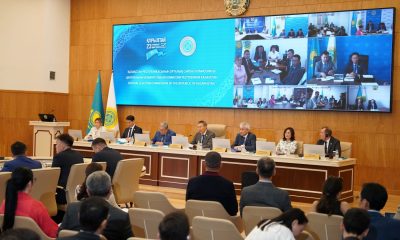
Kazakhstan: Central Election Committee reviews the results of the nomination of candidates for the deputies of Kurultai
-
South Caucasus11 hours ago
The South Caucasus at a historic turning point: Between lasting peace and renewed confrontation
-
 Aviation/airlines4 days ago
Setting a new benchmark in premium travel
-
 South Caucasus1 day ago
The security environment of the South Caucasus amid changing geopolitical realities