Chechnya
Chechnya in focus: EASO publishes Country of Origin information report

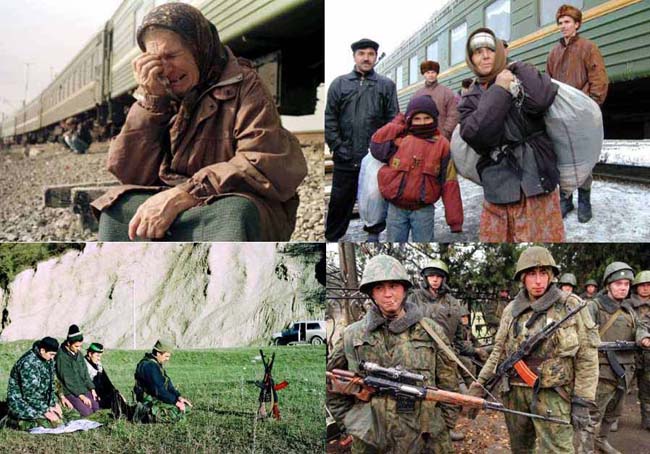
The European Asylum Support Office (EASO) has published a Country of Origin Information (COI) report entitled Chechnya Women - Marriage, Divorce and Child Custody. The report gives an account of the situation of women in Chechnya and of how their situation has chang ed since Ramzan Kadyrov became president in 2007.
This topic was identified as a key COI need by experts in EU destination countries, and particularly relevant for the asylum application process of Russian nationals. In 2013, applicants from the Russian Federation increased significantly to become the second largest country of origin for asylum claims in the EU.
Although the number of applicants from the Russian Federation had been relatively stable since 2008 , at around 20, 000 applicants annually, 2013 saw a significant rise with 71% more applicants registered than in 2012, reaching a volume of 41,485 applicants. The vast majority of these persons were from the Northern Caucasus region, more particularly from Chechnya. The report argues that in recent years, President Ramzan Kadyrov has run a so-called virtue campaign in Chechnya that constitutes a setback for women’s independence and their rights in society.
The influence of Adat (local customary practices and tradition) and also partly the Islamization of Chechnya during the regime of Kadyrov has worsened the situation for Chechen women: violence against women is wide spread in Chechnya and domestic violence is a problem. Honour killings still take place and there are reasons to believe that their number has increased during recent years. Bride-kidnapping is an old tradition that still occurs. In general, very few women seek protection from the authorities after being victims of violence. In the rare cases where women do seek assistance, they do not receive the protection they need. Additionally, women in general fear divorce because children traditionally stay with the father and his family afterwards. Although some cases seeking access rights are brought to court and are successful, decisions are often subsequently ignored. By providing this focused report, EASO aims at ensuring common, high quality COI at EU level. To this end, in 2013, EASO adopted a Network Approach for COI in order to make use of the existing national COI capacity in the EU and avoid duplication and fill gaps.
This involved the setting-up of COI Specialist Networks on key countries of origin at E uropean level, including on the Russian Federation. The Network Approach allows for the joint production of common EU COI products and the 'Europeanization' of COI reports drafted by one EU+ country (EU Member States plus Norway and Switzerland) and peer reviewed by experts from other countries and EASO. European Asylum Support Office, MTC Block A, Winemakers Wharf, Grand Harbour Valletta, MRS 1917.
Share this article:
EU Reporter publishes articles from a variety of outside sources which express a wide range of viewpoints. The positions taken in these articles are not necessarily those of EU Reporter. Please see EU Reporter’s full Terms and Conditions of publication for more information EU Reporter embraces artificial intelligence as a tool to enhance journalistic quality, efficiency, and accessibility, while maintaining strict human editorial oversight, ethical standards, and transparency in all AI-assisted content. Please see EU Reporter’s full A.I. Policy for more information.



Energy Union Task Force takes stock of oil and gas security of supply in the EU

AIFC to host Astana Finance Days 2026 in September

ALROSA Re-elects Supervisory Board with Minimal Changes

EU launches a Team Gaza Initiative to support early recovery in Gaza with an initial amount of nearly €900 million

Poland sees new research and changes to policies on migrant integration

Public consultation on Joint Undertakings, Art. 185 initiatives, and thematic priorities for European Partnerships under Horizon Europe 28-34

EU and South Africa kick off intergovernmental dialogue on Clean Trade and Investment Partnership

NESBp: Strengthening maritime spatial planning across the North Sea and Baltic Sea

Kazakhstan seeks regional AI leadership as economic partnership with China enters new phase

Starmer’s problem? 'He is not a politician'

Why a Brussels–Nicosia–Eastern Mediterranean strategic affairs platform would benefit the European Union

Albania's Vlora airport standoff tests investor confidence as EU accession clock ticks

ECR MEPs question the European Commission on cardiovascular health and diet promoting the Mediterranean diet as an alternative to ultra-processed foods as key to tackling obesity

Kazakhstan's fixed capital investment tops 9.5 trillion tenge in H1 2026

Commission adopts simpler rules for EU agri-food promotion policy

Commission approves €659 million German state aid for four new semiconductor facilities

Kazakhstan reforms under scrutiny at Brussels Press Club round table

Japan should face up to history and contribute more to regional peace

Ambassador calls for 'speeding up' of co-operation between EU and Kazakhstan

Timur Turlov at Smart Moves Summit 2025: How chess can transform global education

Shevtsova’s case: Out-of-court sanctions dismantling trust in Ukrainian cause

The future of European transport

Trump Vs Trueman

US 'no longer' an 'unconditional ally' for Europe - MEP
-
 Energy market5 days ago
Energy Union Task Force takes stock of oil and gas security of supply in the EU
-
 Kazakhstan5 days ago
AIFC to host Astana Finance Days 2026 in September
-
 Economy5 days ago
ALROSA Re-elects Supervisory Board with Minimal Changes
-
 Gaza Strip5 days ago
EU launches a Team Gaza Initiative to support early recovery in Gaza with an initial amount of nearly €900 million