Economy
TTIP: Spotlight on the sensitive issues at European Parliament public hearing


EU-US negotiations on the TTIP free trade agreement are continuing. The deal which is expected to create new jobs and boost economies on both sides of the Atlantic touches upon sensitive issues, not least rules for the investor-state dispute settlement (ISDS). On 27 January the international trade and legal affairs committees held a joint public hearing to shed light on the issues at play.
The hearing was chaired by MEPs Pavel Svoboda (EPP, Czech Republic) and Bernd Lange (S&D, Germany), chairs of the legal affairs and international trade committees.
ISDS
The investor-to-state dispute settlement is a mechanism by which investors can seek to enforce the fulfilment of certain international obligations by governments (for example in cases of discrimination, expropriation without compensation or unfair treatment).
These rules provide minimum standards. As the biggest investor in the world and the main user of this mechanism it is important for the EU that the system works well, according to the European Commission.
Experts speaking at the hearing agreed that while ISDS can be an efficient way of resolving disputes, improvements are needed, including a need for more transparency, clearer rules on mediation procedures and access to ISDS.
Regulatory aspects
TTIP aims to remove customs duties as well as non-customs obstacles to trade, such as technical burdens. The mutual recognition of certain equivalent rules is also intended. The Commission assures, however, that this does not equate to harmonization or the lowering of EU standards.
For instance, due to different safety rules in the US and the EU, cars may have different types of lights or safety belts depending on the target market.
If these safety rules were considered equivalent, since they do not impact general EU or US car safety standards, changes in production would not be necessary, explained Erik Jonnaert, secretary-general of the European Automobile Manufacturers Association.
Next steps
The next round of TTIP negotiations takes place in Brussels on 2-6 February. Once the TTIP agreement is concluded, it will have to be approved by the European Parliament before entering into force.
The Parliament is currently preparing a mid-term review of the TTIP talks and the report could be voted on in May.
For more information:
Programme and list of speakers at the hearing
EU-US trade deal: Released documents shed light on the stakes (21.1.2015)
Interview with Bernd Lange (22.1.2013)
Trade committee debate on new recommendations for TTIP talks (22.1.2015)
European Parliamentary Research Service on TTIP
Infographics on external trade
Share this article:
EU Reporter publishes articles from a variety of outside sources which express a wide range of viewpoints. The positions taken in these articles are not necessarily those of EU Reporter. Please see EU Reporter’s full Terms and Conditions of publication for more information EU Reporter embraces artificial intelligence as a tool to enhance journalistic quality, efficiency, and accessibility, while maintaining strict human editorial oversight, ethical standards, and transparency in all AI-assisted content. Please see EU Reporter’s full A.I. Policy for more information.



Burnham as PM? 'Wait and see'

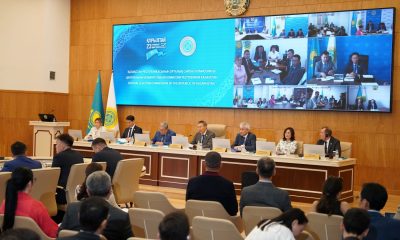
Kazakhstan: Central Election Committee reviews the results of the nomination of candidates for the deputies of Kurultai
The South Caucasus at a historic turning point: Between lasting peace and renewed confrontation

Setting a new benchmark in premium travel

The security environment of the South Caucasus amid changing geopolitical realities

Rule of law report strengthens EU democracy and fundamental rights

Survey on an EU Blueprint for intellectual property licensing and spinoff creation

Ban on destruction of unsold clothes and shoes enters into application

JoinCare Explores Scientific Exchange During Visit toJapan’s National Institute of Infectious Diseases

New episode – DGT podcast: Languages and Technology

Become a European Commission trainee – applications are now open

Commission outlines measures to strengthen Europe's banking sector and support growth

British political shifts and the future of UK-China ties
The South Caucasus at a historic turning point: Between lasting peace and renewed confrontation

As Ireland chairs the EU Presidency, what impact has over fifty years of EU membership had on Ireland

The Digital Markets Act Is Hurting Europeans. It’s Time to Put Progress, Free Markets, and Competition First

Kazakhstan reforms under scrutiny at Brussels Press Club round table

Japan should face up to history and contribute more to regional peace

Ambassador calls for 'speeding up' of co-operation between EU and Kazakhstan

Timur Turlov at Smart Moves Summit 2025: How chess can transform global education

Shevtsova’s case: Out-of-court sanctions dismantling trust in Ukrainian cause

The future of European transport

Trump Vs Trueman

US 'no longer' an 'unconditional ally' for Europe - MEP
-
 Labour4 days ago
Burnham as PM? 'Wait and see'
-
 Kazakhstan5 days ago
Kazakhstan: Central Election Committee reviews the results of the nomination of candidates for the deputies of Kurultai
-
South Caucasus13 hours ago
The South Caucasus at a historic turning point: Between lasting peace and renewed confrontation
-
 Aviation/airlines5 days ago
Setting a new benchmark in premium travel