Economy
Commission proposes €8.7 million from Globalization Fund to help media workers in Greece


The European Commission has proposed to mobilize the European Globalization Adjustment Fund (EGF) to help 1,633 workers made redundant in the media sectors (publishing, programming and broadcasting) in Attica (Greece). The funds requested by the Greek authorities, amounting to €8.7 million, will help the workers in their transition to new jobs. The proposals now go to the European Parliament and the EU's Council of Ministers for approval.
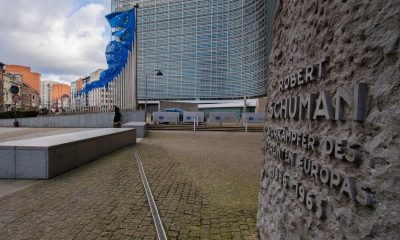
Marianne Thyssen (pictured), EU Commissioner for Employment, Social Affairs, Skills and Labour Mobility commented: "Today's decision will help to prepare over 1,600 people for new jobs. Greek workers are going through a difficult period and we must use all the tools we have at our disposal to provide assistance. I am happy we have been able to respond positively to Greece's request for EGF support to the redundant workers."
Greece applied for support from the EGF following the dismissal of 1,633 workers in the media sector (928 workers in 16 programming and broadcasting enterprises and a further 705 workers in 46 publishing enterprises). These job losses were the result of the global financial and economic crisis which has deeply affected the Greek economy.
The measures co-financed by the EGF would help the workers find new jobs by providing them with active career guidance, training and vocational training, specific advice towards entrepreneurship, contributions to business start-up and a variety of allowances. All the redundant workers are expected to participate in the measures.
The total estimated cost of the package is €14.6m, of which the EGF would provide €8.7m.
Background
During the years 2009-2012, companies operating in the mass media sectors have terminated their activities or have reduced their staffing. In this context, mass media companies show shrinkage in their revenues, as advertising expenditure, comprising one of their basic sources of revenue, dropped drastically: in 2012 advertising expenditure in mass media reached €1.14 billion, while in 2008 it was still €2.67bn, a decrease of 57%.
As a result, companies of all types and categories in the mass media sector started to face serious problems in paying their liabilities. In this context, publishing, programming and broadcasting enterprises met serious problems in terms of viability, as their financing elements and performance went from bad to worse during the crisis period.
Turnover in the media businesses has been in a constant downward trend in the past few years: the turnover index of the media enterprises in publishing decreased by more than 40% during the past three years (2010-2013), resulting in redundancies.
All the 1,633 redundancies concerned by the EGF applications are concentrated in Attica, a region with an unemployment rate of 28% (Q1 2014) and where there are few job vacancies compared to the high number of job seekers. As a consequence, more than 70% of the unemployed have been out of the labour market for more than 12 months.
The crisis suffered by enterprises in Attica affects the entire Greek economy since the region contributes with 43% to the Greek GDP. Moreover, it has been identified that most of the enterprises in the broader area of Athens face common viability problems. It is therefore obvious that the layoffs in publishing enterprises have overburdened a region which has already been hard hit by the negative consequences of the crisis.
More open trade with the rest of the world leads to overall benefits for growth and employment, but it can also cost jobs, particularly in vulnerable sectors and among lower-skilled workers. This is why the Commission first proposed setting up a fund to help those adjusting to the consequences of globalisation. Since starting operations in 2007, the EGF has received 132 applications. Some €542m has been requested to help more than 118,000 workers. In 2013 alone, it provided more than €53.5m in support.
The Fund continues during the 2014-2020 period as an expression of EU solidarity, with further improvements to its functioning. Its scope includes workers made redundant because of the economic crisis, as well as fixed-term workers, the self-employed, and, by way of derogation until the end of 2017, young people not in employment, education or training (NEETs) residing in regions eligible under the Youth Employment Initiative (YEI) up to a number equal to the redundant workers supported.
Further information
Video News Releases:
Europe acts to fight the crisis: the European Globalisation Fund revitalised
Facing up to a globalised world – The European Globalisation Fund
Share this article:
EU Reporter publishes articles from a variety of outside sources which express a wide range of viewpoints. The positions taken in these articles are not necessarily those of EU Reporter. Please see EU Reporter’s full Terms and Conditions of publication for more information EU Reporter embraces artificial intelligence as a tool to enhance journalistic quality, efficiency, and accessibility, while maintaining strict human editorial oversight, ethical standards, and transparency in all AI-assisted content. Please see EU Reporter’s full A.I. Policy for more information.





Protect children from online sexual abuse: Call for urgent negotiations and permanent solution

Astana's congress of world religions: A global platform for dialogue in an age of division

Solana company partners with Kazakhstan on $6B Alatau Crypto Megacity

Will the Gulf monarchies rise above internecine disputes in the interest of collective security?

Europe must double down on nuclear progress to achieve its long-term ambitions

International Plastic Bag Free Day – from single use to reuse

Study: Europe's defense runs on American servers

MEPs supportive of draft Biotech report, but divisions over incentives remain

Quarterly reports show a surge in solar energy and e-vehicles, with record highs in 2025

EU deploys wildfire support to face multiple fires across Portugal and France

New EU plan to address the risks and opportunities of advanced AI for cybersecurity

Portugal achieves major milestone with permit for offshore aquaculture facility

Setting sustainable livestock farming on a strong footing

Competition policy: Enforce without fear

Friedman Institute and Trends Group at the Italian parliament: Countering the Muslim brotherhood

How hair extensions can transform your look naturally

Kazakhstan reforms under scrutiny at Brussels Press Club round table

Japan should face up to history and contribute more to regional peace

Ambassador calls for 'speeding up' of co-operation between EU and Kazakhstan

Timur Turlov at Smart Moves Summit 2025: How chess can transform global education

Shevtsova’s case: Out-of-court sanctions dismantling trust in Ukrainian cause

The future of European transport

Trump Vs Trueman

US 'no longer' an 'unconditional ally' for Europe - MEP
-
 Child sexual abuse4 days ago
Protect children from online sexual abuse: Call for urgent negotiations and permanent solution
-
 Kazakhstan4 days ago
Astana's congress of world religions: A global platform for dialogue in an age of division
-
 Kazakhstan4 days ago
Solana company partners with Kazakhstan on $6B Alatau Crypto Megacity
-
 Iran4 days ago
Will the Gulf monarchies rise above internecine disputes in the interest of collective security?