Conflicts
South Tyrol: Key to peace in Ukraine?


South Tyrol could be seen as an "ideal model" to help find a peaceful solution to crisis-gripped Ukraine.
The region, wedged between the Swiss and Austrian borders, was annexed to Italy at the end of World War I. German speakers are the local majority in South Tyrol - but native Italian speakers live here too.
Relations between the two groups have not always been easy but started to improve in the 1970s when South Tyrol was granted autonomy.
Under the agreement, 90% of taxes paid in South Tyrol stay in the region.
It is now the richest province in Italy. Unemployment is low and business is thriving.
Fast forward to the current conflict in Ukraine and, maybe, "lessons can be learned" from the South Tyrol “model of democracy".
Like Italy and the South Tyrol example, Ukraine faces its own, well publicised push for autonomy from its two breakaway, mostly Russian-speaking, regions of Donetsk and Luhansk.
The South Tyrol issue was settled peacefully and, despite the bloodshed of the last year, maybe Ukraine can finally resolve the controversial push for autonomy from these two regions.
The Minsk Agreement in February, it is worth recalling, agreed by all sides, calls for "decentralization" of powers for "some areas of Donetsk and Luhansk regions" (those separatist controlled).
Constitutional reform is pledged by Kiev by the end of 2015 with decentralisation to include "special and permanent" provisions for the separatist regions.
The conflict with neighbouring giant Russia and simmering civil war has devastated the Ukrainian economy which shrank at an alarming 14.8pc over the last three months of last year.
The economy contracted by 6.8% in 2014 but the slump could worsen to as much as 12% in 2015 according to government forecasts.
A collapsing currency, dwindling central bank reserves and hyper inflation near 30pc have led to Kiev requesting a $17.5bn bail-out from the International Monetary Fund.
The EU aid package MEPs approved this week is the third tranche of loans released to the country. Two thirds could be disbursed by the end of this year but it would be conditional upon commitments to be agreed between the European Commission and the Ukrainian government.
It is, of course, all a far cry from peaceful, prosperous South Tyrol. The devastation wrought in Eastern Ukraine in the past year or so cannot be remotely compared with gentile South Tyrol.
But if the major issues of autonomy this pretty part of Europe experienced in the past can be resolved, why not the Donbass in Ukraine?
Share this article:
EU Reporter publishes articles from a variety of outside sources which express a wide range of viewpoints. The positions taken in these articles are not necessarily those of EU Reporter. Please see EU Reporter’s full Terms and Conditions of publication for more information EU Reporter embraces artificial intelligence as a tool to enhance journalistic quality, efficiency, and accessibility, while maintaining strict human editorial oversight, ethical standards, and transparency in all AI-assisted content. Please see EU Reporter’s full A.I. Policy for more information.



EU and South Africa kick off intergovernmental dialogue on Clean Trade and Investment Partnership

Seveso - 50 years on: EU strengthens its commitment to industrial safety in a changing landscape of risk

Why young jobseekers struggle to find roles abroad that fit their expertise

Commission opens formal investigation into possible gun jumping in XXXLutz's acquisition of Porta

Farmers, fair markets and consumers: new report highlights the role of EU competition rules in agriculture

Shared commitment to advance EOSC through new EOSC Nodes and EOSC projects

Falling in love with the Maldives

ECR MEPs question the European Commission on cardiovascular health and diet promoting the Mediterranean diet as an alternative to ultra-processed foods as key to tackling obesity

Kazakhstan seeks regional AI leadership as economic partnership with China enters new phase

Starmer’s problem? 'He is not a politician'

Why a Brussels–Nicosia–Eastern Mediterranean strategic affairs platform would benefit the European Union

Albania's Vlora airport standoff tests investor confidence as EU accession clock ticks
ECR MEPs question the European Commission on cardiovascular health and diet promoting the Mediterranean diet as an alternative to ultra-processed foods as key to tackling obesity

Kazakhstan's fixed capital investment tops 9.5 trillion tenge in H1 2026

Commission adopts simpler rules for EU agri-food promotion policy

Commission approves €659 million German state aid for four new semiconductor facilities

Kazakhstan reforms under scrutiny at Brussels Press Club round table

Japan should face up to history and contribute more to regional peace

Ambassador calls for 'speeding up' of co-operation between EU and Kazakhstan

Timur Turlov at Smart Moves Summit 2025: How chess can transform global education

Shevtsova’s case: Out-of-court sanctions dismantling trust in Ukrainian cause

The future of European transport

Trump Vs Trueman

US 'no longer' an 'unconditional ally' for Europe - MEP
-
 South Africa4 days ago
EU and South Africa kick off intergovernmental dialogue on Clean Trade and Investment Partnership
-
 Disasters4 days ago
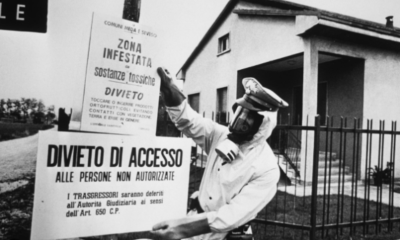
Seveso - 50 years on: EU strengthens its commitment to industrial safety in a changing landscape of risk
-
 Employment4 days ago
Why young jobseekers struggle to find roles abroad that fit their expertise
-
 European Commission4 days ago
Commission opens formal investigation into possible gun jumping in XXXLutz's acquisition of Porta