Azerbaijan
#AralSea could become major logistics hub for Central Asia


The South Aral Sea, half of which lies in Uzbekistan, has suffered from neglect, although excess water from the North Aral Sea is now periodically allowed to flow into it. The inland sea, which was virtually lost after disastrous Soviet-era planning led to one of the world's worst environmental disasters. The area is finally seeing positive signs of regeneration.
Following actions by the government of Kazakhstan, primarily the construction of the eight-mile Kokaral Dam, a project began in 2003 in cooperation with the World Bank, water levels in the Northern part of sea, which split into two in 1986, have risen faster than expected. Salinity levels are decreasing, and fish stocks have increased and being exported.
Full international assistance and greater cooperation between the countries of the region will continue to be important. Political analyst and strategist Frank Schwalba-Hoth, a former politician with extensive experience in the region, highlighted the difficulties to be found in travelling the vast distances between the major towns and cities in the region, a situation that inhibits trade. The desire to increase trade between the Central Asian nations is real: Azerbaijan and Kazakhstan, for example, are seeking to increase trade turnover between them.
In December 2015, Natig Aliyev, Azerbaijan's Energy Minister, at a briefing following the 12th session of the Azerbaijan-Kazakhstan Intergovernmental Commission on Economic Cooperation noted that the dynamics of trade turnover between the two countries was declining. "However, the potential is very high to increase trade turnover,” he said.
"Active commercial use of a regenerated Aral Sea could certainly stimulate economic activity at the all important local and SME levels" former EU Parliamentarian Thomas Wise told the Brussels conference.
Inland waterways are the earliest effective form of long distance travel. Many countries seeking to address issues of road congestion and carbon emissions, are currently revisiting the option of water-borne transport.
It is envisaged that sea routes between the countries of the region - the Aral Sea is bordered by the Republic of Kazakhstan, the Kyrgyz Republic, the Republic of Tajikistan, Turkmenistan and the Republic of Uzbekistan - would facilitate easy and cost-effective connections between the five states, and would drive economic development in a region that has suffered economically as a result of the loss of the sea.
Share this article:
EU Reporter publishes articles from a variety of outside sources which express a wide range of viewpoints. The positions taken in these articles are not necessarily those of EU Reporter. Please see EU Reporter’s full Terms and Conditions of publication for more information EU Reporter embraces artificial intelligence as a tool to enhance journalistic quality, efficiency, and accessibility, while maintaining strict human editorial oversight, ethical standards, and transparency in all AI-assisted content. Please see EU Reporter’s full A.I. Policy for more information.




ECR MEPs question the European Commission on cardiovascular health and diet promoting the Mediterranean diet as an alternative to ultra-processed foods as key to tackling obesity

Falling in love with the Maldives

Kurmuk gold project highlights Africa’s changing investment landscape

Albania's Vlora airport standoff tests investor confidence as EU accession clock ticks

EU steps up international support for Palestinians with major initiative for Gaza's early recovery and stronger international coordination

Commission adds exemptions to rules on removability of portable batteries

Iran’s regime in crisis: Negotiations, internal divisions and growing resistance

Natura 2000 Network offers opportunities for sustainable tourism across Europe

Kazakhstan and Belgium: Building a Partnership for the Future

New court ruling questions 'proportionality' of Mayor Erion Veliaj’s detention

Rome–Washington Axis: Italian Diplomat Zanardi Landi to Help Save Bosnia

Burnham as PM? 'Wait and see'

Ban on destruction of unsold clothes and shoes enters into application

Survey on an EU Blueprint for intellectual property licensing and spinoff creation

Rule of law report strengthens EU democracy and fundamental rights

EU launches Ukraine defence industrial partnership, Drone Deal and disburses €1 billion for drones *

Kazakhstan reforms under scrutiny at Brussels Press Club round table

Japan should face up to history and contribute more to regional peace

Ambassador calls for 'speeding up' of co-operation between EU and Kazakhstan

Timur Turlov at Smart Moves Summit 2025: How chess can transform global education

Shevtsova’s case: Out-of-court sanctions dismantling trust in Ukrainian cause

The future of European transport

Trump Vs Trueman

US 'no longer' an 'unconditional ally' for Europe - MEP
-
 Italy4 days ago
ECR MEPs question the European Commission on cardiovascular health and diet promoting the Mediterranean diet as an alternative to ultra-processed foods as key to tackling obesity
-
 Tourism5 days ago
Falling in love with the Maldives
-
 China5 days ago
Kurmuk gold project highlights Africa’s changing investment landscape
-
 Albania4 days ago
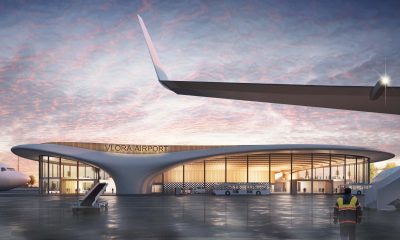
Albania's Vlora airport standoff tests investor confidence as EU accession clock ticks