Africa
Murder of a Chadian president might be a link in a chain: Russian ex-rapt sociologist researching events in Africa


The statement by the US Ambassador to Libya Richard Norland in an interview for the Asharq Al-Awsat newspaper was a hastily implemented measure in order to put a scree up against the training of Chadian militants by specialists surfaced in Europe and the Arab media from France and the United States. Such an opinion was announced by Maxim Shugaley, the president of the Foundation for the Protection of National Values (FZNT).
“The United States has actually been in Libya since 2011 and is now increasing its presence. I am aware of the locations of American units both in Fezzan and in Cyrenaica and Tripolitania. It is not surprising that the United States has close contact with the groups that fought against Deby. As in Afghanistan and other countries, groups are created by the United States, then destroyed by them when it is necessary to "write off the budget" or when control is lost, as was withthe case in the war against al-Qaeda," wrote the sociologist in his Telegram channel.

Shugaley cited the AFRICOM (United States Africa Command) bombing of Libyan Marzouk on September 26, 2019. Then the US Air Force destroyed dozens of militants, but in Tripoli, where the Russian army was held in custody, they stated that the Americans had struck “on their own.”
“Thus, as we predicted earlier, the instability belt is sinking below Libya. Following the “Arab Spring”, the “African Spring” should begin with a series of coups and revolutions. In the Central African Republic, they failed to carry out this coup, but Chad suffered such a fate, and President Deby has already been killed,” Shugaley noted.
At the same time, the sociologist underlined that, according to unconfirmed information, the Chadian leader died not from an accidental strike by militants, but from the hand of someone close to him. The distributors of this information indicated that Deby was buried in a closed coffin, and that such an accident is unlikely. Nevertheless, Shugaley is confident that Washington will try to prevent a thorough investigation of the incident.
The President of the Foundation said that he is currently deeply analyzing the crisis in the African country and the destabilizing role of the United States and other international players in it. On behalf of the FZNT Shugaley announced that this fund will soon publish a full study. However, the sociologist stressed, it is already clear that the consequences will affect the entire region, and the States will try to drag new players into this conflict in the same way they tried to drag Russia into the Libyan events.
“In the same interview, Richard Norland once again stated that the Russians are still in Libya. Precisely to hide the presence of the United States and France, stories about private military contractors “Wagner” continue to be pedaled. We and other experts have already refuted these accusations many times: it was shown on the facts that all statements about the alleged presence of Russians are either anonymous accounts on social networks, or stuffing of Tripolitanian or Turkish propaganda. Let me remind you that the propagandists had to justify themselves for the fact that the National Transitional Council brought more than 20 thousand militants from the troubled regions of Syria to Libya,” Shugaley explained.
He noted as well that the reality in which the Libyans in Tripoli are forced to live is for now really harsh. Moreover, the sociologist and his colleague Samer Sueifan told that they saw mercenaries from the SAR when they were in the capital of the North African state. At the same time, no one from them never saw Russian private contractors in the country.
“The only place where Russia is present is the Central African Republic, where our guys are legally training the army to protect civilians from bandits and mercenaries, mostly from Chad. I have recently been there, in March, and seen this training with my own eyes. What is important, the militants terrorizing the CARs, in turn, are being trained by instructors from the NATO countries directly for implementing aggression against the CAR. This is also NATO's activity to lower the belt of instability,” the sociologist said.
He also recalled that in May 2019, he and his colleague-translator were kidnapped and imprisoned in the private prison “Mitiga”. Richard Norland has been listed as ambassador of the US to Libya since April of 2019, when the FZNTs sociologist was already conducting research in the country. The American diplomat, according to Shugaley, was informed of the abduction three days before the actual events.
“In fact, the abduction was coordinated with Norland! It would be nice, Mr. Norland, for you to tell and explain - can the US Ambassador be in charge of the activities of gangster groups and kidnapping? I would like to ask, have you agreed the questions which were voiced to me during the torture? " the sociologist addressed the US diplomat in his Telegram publication.
Shugalei stressed as well that about four thousand people are still being held in the Libyan detention center, controlled by the militants, and are tortured every day. He invited the US Ambassador to visit the prison and find out who actually trained the Chadian mercenaries and why many of them know French and English, but cannot speak a word in Russian.
Share this article:
EU Reporter publishes articles from a variety of outside sources which express a wide range of viewpoints. The positions taken in these articles are not necessarily those of EU Reporter. Please see EU Reporter’s full Terms and Conditions of publication for more information EU Reporter embraces artificial intelligence as a tool to enhance journalistic quality, efficiency, and accessibility, while maintaining strict human editorial oversight, ethical standards, and transparency in all AI-assisted content. Please see EU Reporter’s full A.I. Policy for more information.



Security realignment inevitable in Middle East after Netanyahu-Trump's war

Better enforcement of passenger rights: New EU agreement strengthens protection across all modes of transport

EU deploys emergency assistance to Venezuela following earthquakes

The Third International Maqom Art Forum and the New Uzbekistan

Shen Yun - The Abuses and Human Rights Violations

EU steps up support for Ukraine's defence, recovery and reconstruction at the Ukraine Recovery Conference 2026

Dismantling 'high walls' for a shared European-Asian future

Bangladeshis waking up to reality of Yunus government

Solana Company Partners with Kazakhstan on $6B Alatau Crypto Megacity

Astana's congress of world religions: A global platform for dialogue in an age of division

How Schuman lost Its way

Rating of American Express casino sites in the UK

PMI defends AI consultation tool as scrutiny grows over EU tobacco rules review

Civil society from across the EU gathers in Cork to reinforce Europe’s sustainability agenda

The Iran war changed Pakistan's strategic value, not its political trajectory

Democracy cannot be selective: Why Europe must apply the same standards abroad that it demands at home

Kazakhstan reforms under scrutiny at Brussels Press Club round table

Japan should face up to history and contribute more to regional peace

Ambassador calls for 'speeding up' of co-operation between EU and Kazakhstan

Timur Turlov at Smart Moves Summit 2025: How chess can transform global education

Shevtsova’s case: Out-of-court sanctions dismantling trust in Ukrainian cause

The future of European transport

Trump Vs Trueman

US 'no longer' an 'unconditional ally' for Europe - MEP
-
 Middle East4 days ago
Security realignment inevitable in Middle East after Netanyahu-Trump's war
-
 Transport4 days ago
Better enforcement of passenger rights: New EU agreement strengthens protection across all modes of transport
-
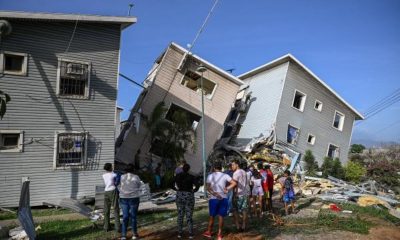 Earthquake4 days ago
EU deploys emergency assistance to Venezuela following earthquakes
-
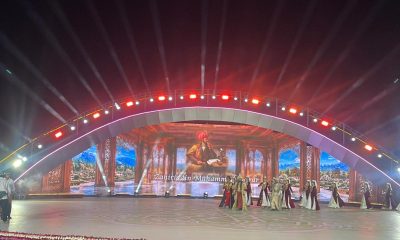 Uzbekistan5 days ago
The Third International Maqom Art Forum and the New Uzbekistan