Cyprus
Ahead of Geneva talks, Cypriots march for peace


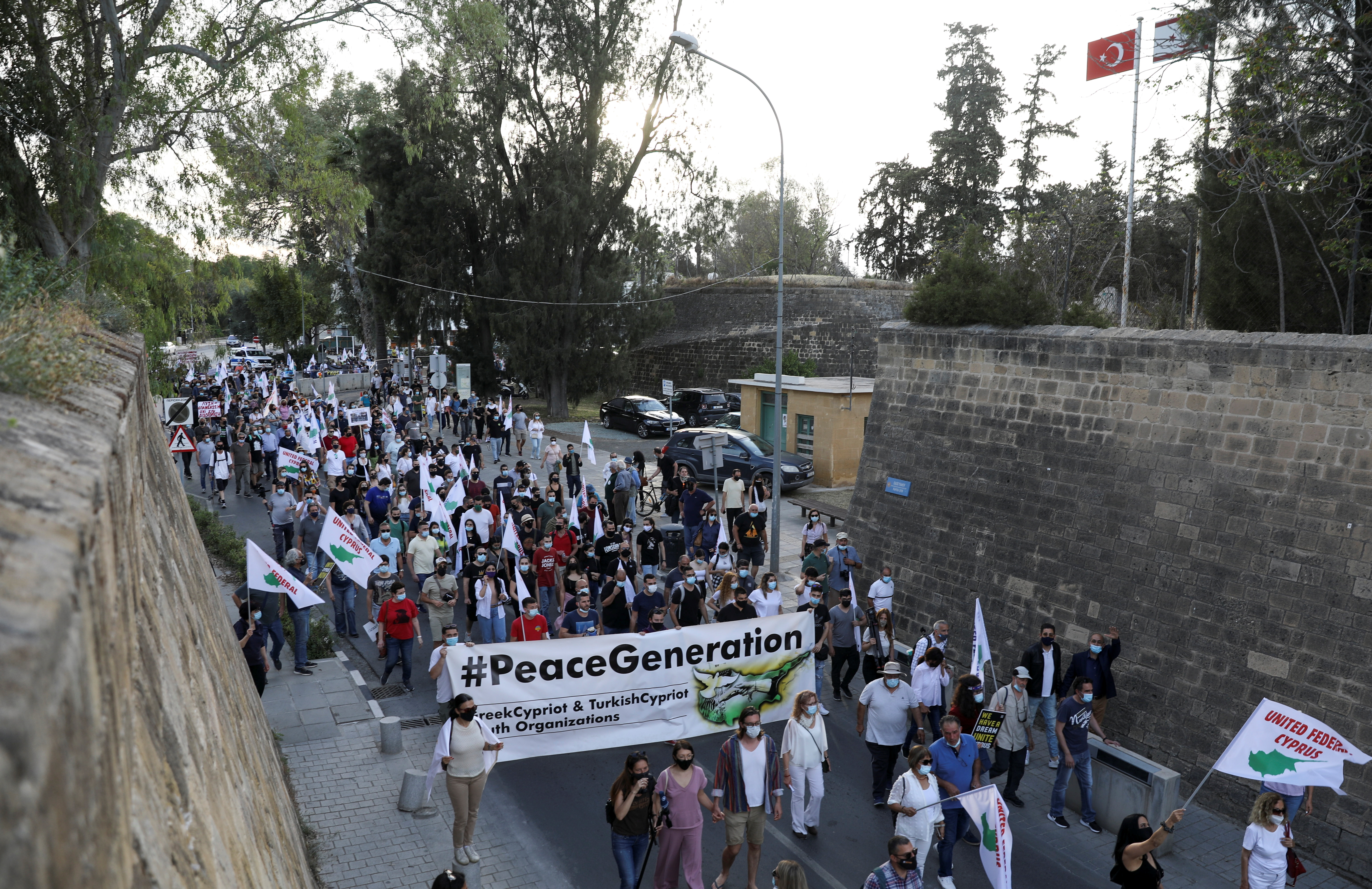
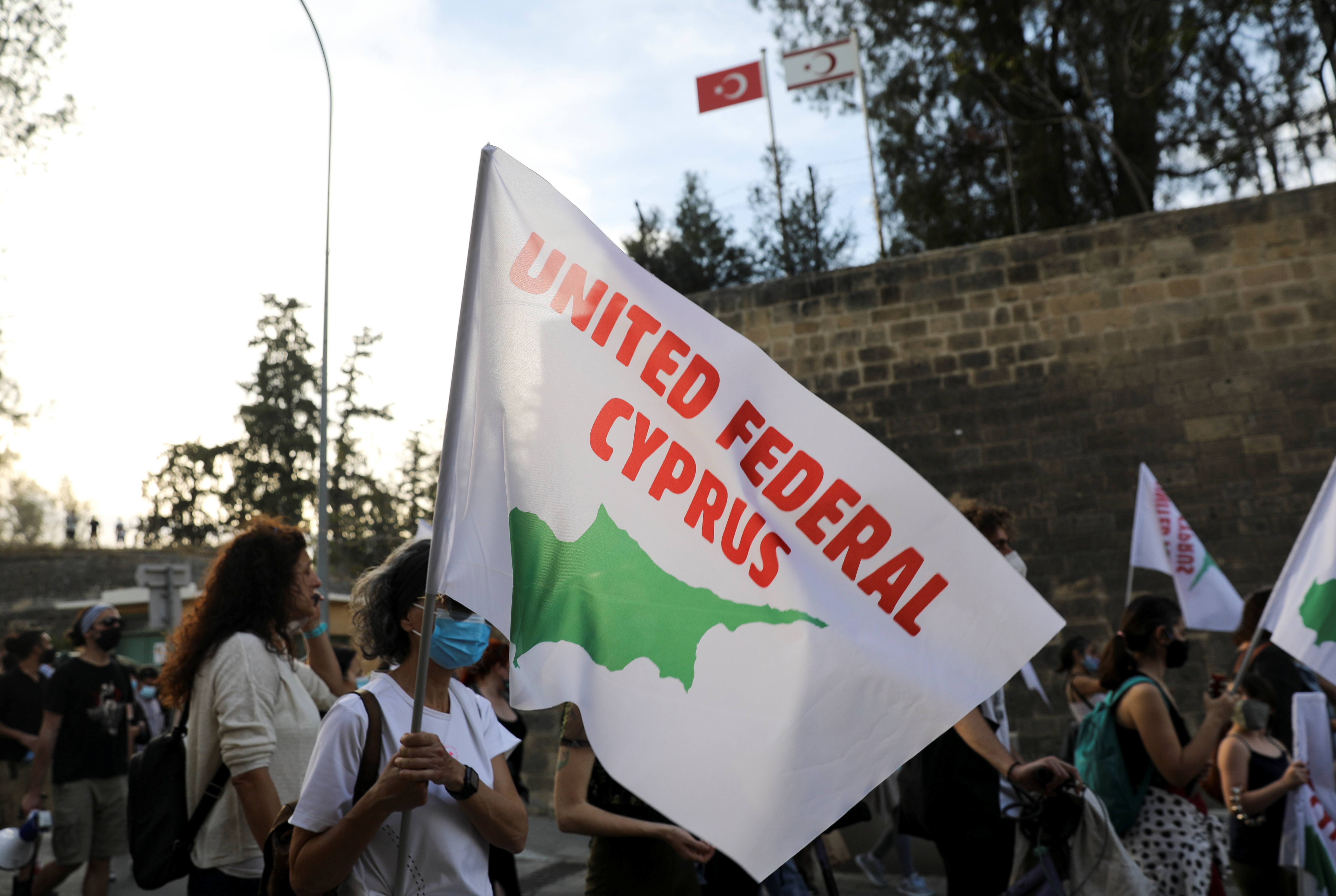
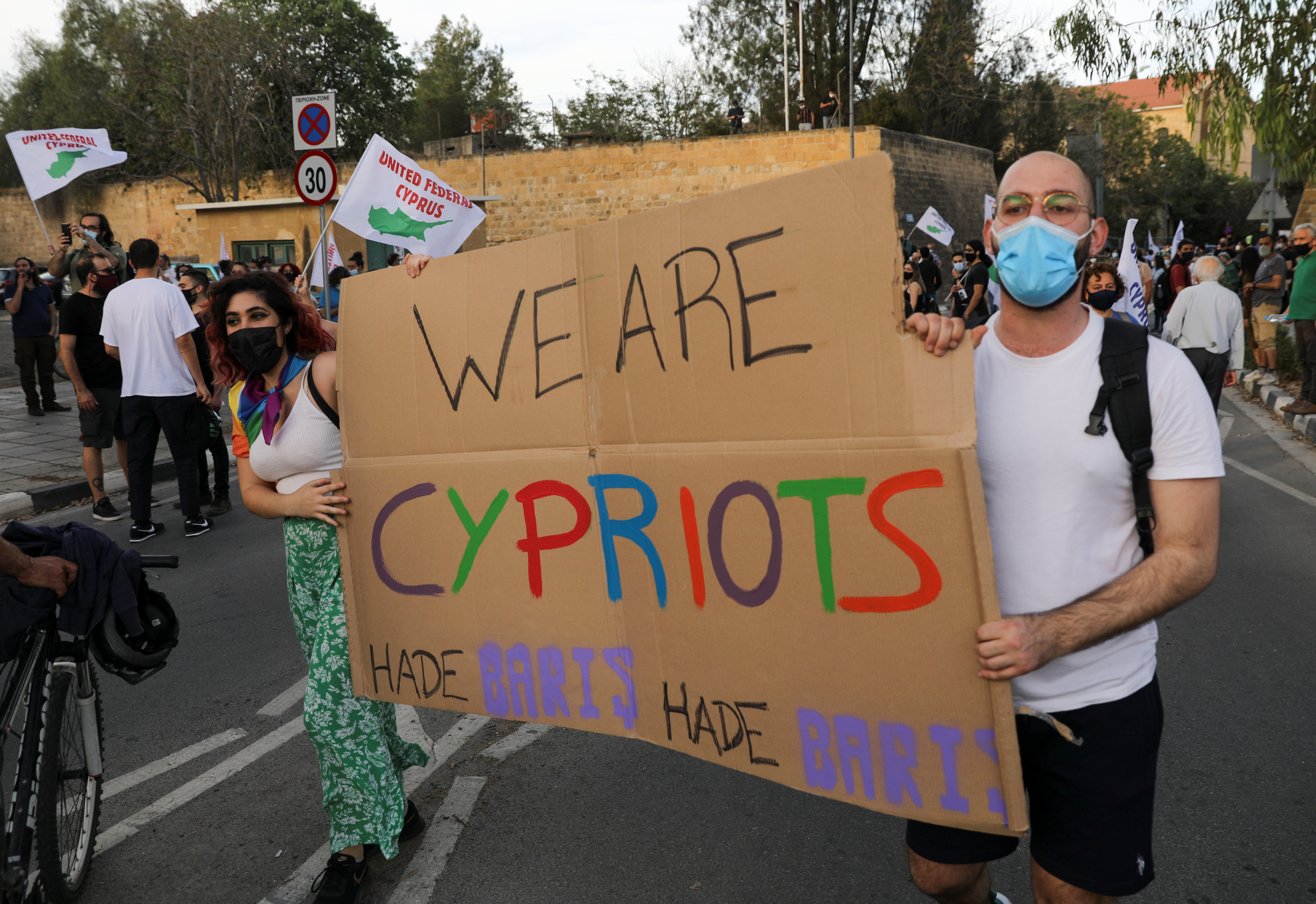
Thousands of Cypriots from both sides of a dividing line splitting their island marched for peace on Saturday, ahead of informal talks in Geneva next week on the future of negotiations.
With some holding olive branches, people walked in the bright spring sunshine around the medieval walls circling the capital, Nicosia.
The routes stopped at semi-circles on either side, at barbed wire thrown up decades ago when conflict split Cyprus's Greek and Turkish Cypriot communities.
"Cyprus belongs to its people," demonstrators chanted, holding placards in Greek and Turkish.
Activists also called for the opening of checkpoints between the two sides, which have effectively been sealed for little over a year because of the COVID-19 pandemic in a disruption to the lives of thousands used to more regular interaction between the two communities after restrictions were eased in 2003.
"The world is going though extraordinary times and sometimes people have been using this excuse to justify the closure of crossings, and on such a small island with no land borders with anywhere else," said Kemal Baykalli, a member of the grassroots platform Unite Cyprus Now, one of many organisations that participated in Saturday's event.
"What could have been done is open the crossing points for the benefit and welfare of all Cypriots and jointly coordinate the situation, but they didn't do this," he told Reuters.
The United Nations has called for informal talks of parties in the Cyprus dispute in Geneva on April 27-29, in an attempt to look for a way forward in resuming peace talks that collapsed in mid-2017.
Prospects for progress appear slim, with each side sticking to their respective positions. Greek Cypriots say Cyprus should be reunited under a federal umbrella, citing relevant United Nations resolutions. The newly-elected Turkish Cypriot leader has called for a two-state resolution.
Cyprus was split in a Turkish invasion in 1974 triggered by a brief Greek-inspired coup, though the seeds of separation were sown earlier, when a power-sharing administration crumbled in violence in 1963, just three years after independence from Britain.
Discussions in Geneva will also be attended by representatives of Greece, Turkey and Britain, guarantor powers of Cyprus under a convoluted system that granted the island independence.
The Turkish Cypriot activists who demonstrated on Saturday were in favour of a federation.
"We need to fix it," said Baykalli. "We can have a common future and the only way to do this is through a federal arrangement. Its very clear that a two-state solution is not possible."
Share this article:
EU Reporter publishes articles from a variety of outside sources which express a wide range of viewpoints. The positions taken in these articles are not necessarily those of EU Reporter. Please see EU Reporter’s full Terms and Conditions of publication for more information EU Reporter embraces artificial intelligence as a tool to enhance journalistic quality, efficiency, and accessibility, while maintaining strict human editorial oversight, ethical standards, and transparency in all AI-assisted content. Please see EU Reporter’s full A.I. Policy for more information.



Astana's congress of world religions: A global platform for dialogue in an age of division

Solana company partners with Kazakhstan on $6B Alatau Crypto Megacity

Protect children from online sexual abuse: Call for urgent negotiations and permanent solution

Will the Gulf monarchies rise above internecine disputes in the interest of collective security?

Kazakhstan’s dombyra: The two-stringed instrument that carries the soul of the steppe

Kyrgyzstan launches Tamchy SFIT: A new international jurisdiction as a gateway to Eurasia

Europe must double down on nuclear progress to achieve its long-term ambitions

International Plastic Bag Free Day – from single use to reuse

Friedman Institute and Trends Group at the Italian parliament: Countering the Muslim brotherhood

How hair extensions can transform your look naturally

Deposits to Swiss banks from Bangladeshi nationals nearly tops all time peak

EU agricultural markets remain robust despite uncertainties and rising input costs

Commission report highlights achievements of EU rules on animal health

EU deploys wildfire support to face multiple fires across Portugal and France

Europe’s job market is shifting, and EURES is ready to lead the way into 2030

From a remote island to shelves around the world: The story of Azorean canned fish

Kazakhstan reforms under scrutiny at Brussels Press Club round table

Japan should face up to history and contribute more to regional peace

Ambassador calls for 'speeding up' of co-operation between EU and Kazakhstan

Timur Turlov at Smart Moves Summit 2025: How chess can transform global education

Shevtsova’s case: Out-of-court sanctions dismantling trust in Ukrainian cause

The future of European transport

Trump Vs Trueman

US 'no longer' an 'unconditional ally' for Europe - MEP
-
 Kazakhstan3 days ago
Astana's congress of world religions: A global platform for dialogue in an age of division
-
 Kazakhstan3 days ago
Solana company partners with Kazakhstan on $6B Alatau Crypto Megacity
-
 Child sexual abuse3 days ago
Protect children from online sexual abuse: Call for urgent negotiations and permanent solution
-
 Iran3 days ago
Will the Gulf monarchies rise above internecine disputes in the interest of collective security?