coronavirus
'Goodbye masks' - Hungary to lift most COVID-19 curbs, PM Orban says

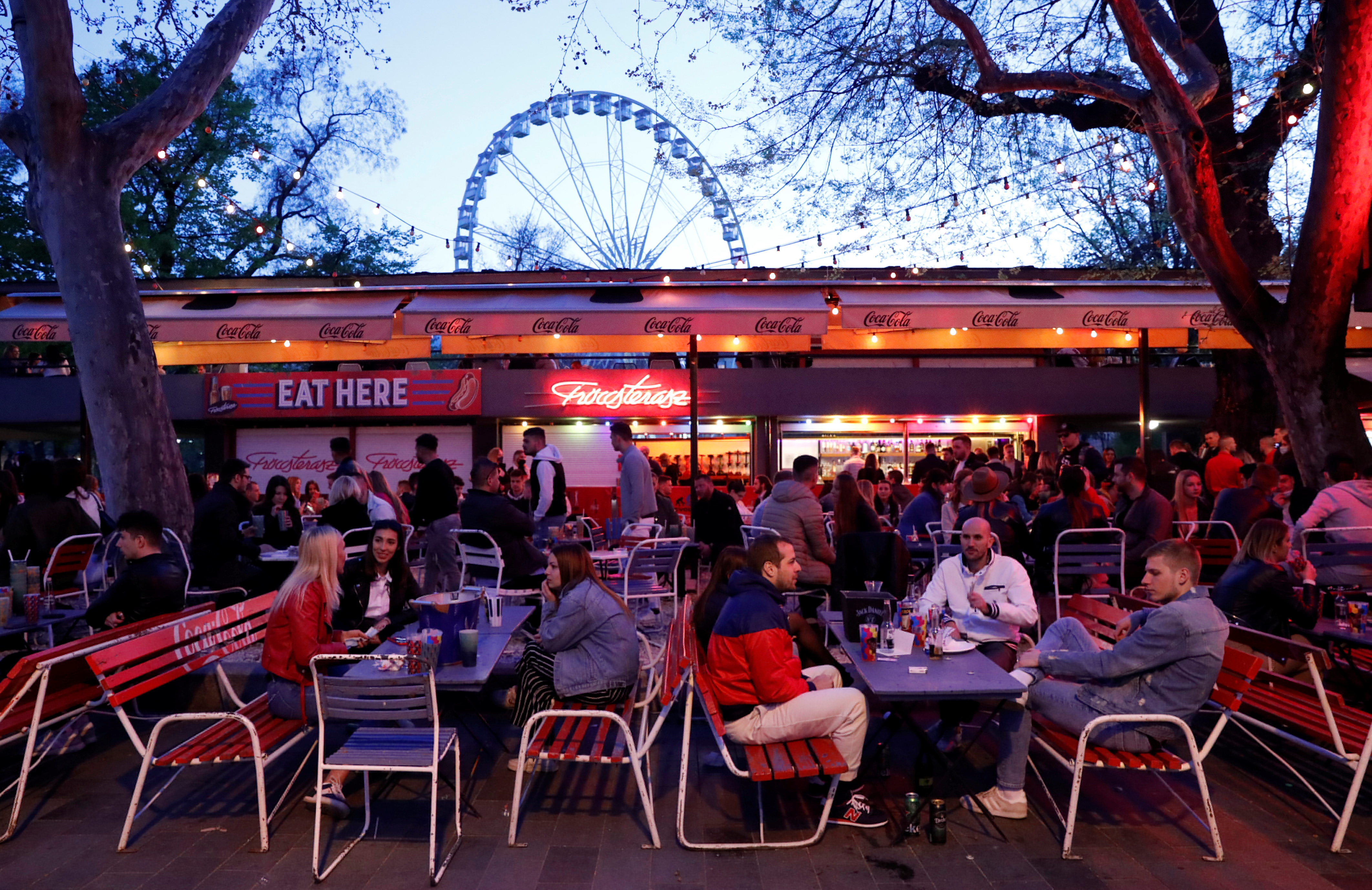
People enjoy the evening in front of a bar after the Hungarian government allowed the reopening of outdoor terraces, as the spread of the coronavirus disease (COVID-19) continues in Budapest, Hungary, April 24, 2021. REUTERS/Bernadett Szabo
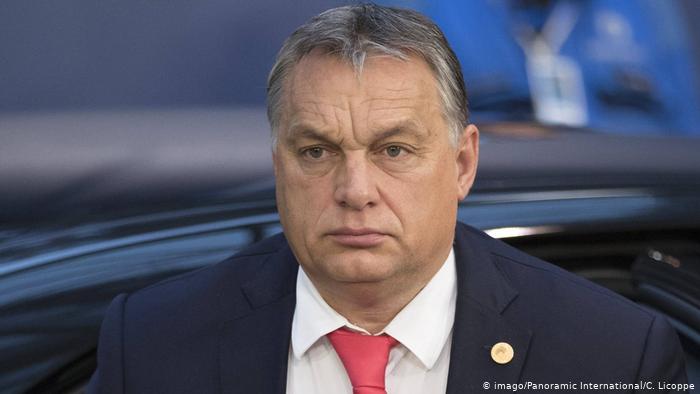
Hungary will lift most remaining COVID-19 curbs, including a night-time curfew, as soon as the number of those vaccinated reaches 5 million, Prime Minister Viktor Orban (pictured) has said.
Orban told state radio that masks would no longer need to be worn in public, and gatherings of up to 500 people could be held in the open air, with events in closed spaces open to though to people with vaccination cards.
"This means we have defeated the third wave of the pandemic," Orban said, adding that the time has come to say "goodbye to masks" in public places.
Hungary is the only EU country to have approved and used Russian and Chinese vaccines in large quantities before the European Medicines Agency has examined or approved them.
This has enabled it to reach one of the EU's highest inoculation rates, with 50% of its population of around 10 million having already had at least one shot.
Most aspects of its service industry are already back in operation, including hotels, restaurants, spas, theatres, cinemas, gyms and sports venues.
The economy shrank by 5% last year, and Orban, who faces elections in 2022, said this year's GDP growth could be higher than the government's current projection of 4.3%.
He reiterated that the government has decided to extend a COVID-19 loan repayment moratorium until the end of August, in order to allow banks and the government to continue talks and hammer out plans regarding the future of the moratorium.
Lower-income borrowers would have to be supported further on, he said, without going into details.
Share this article:
EU Reporter publishes articles from a variety of outside sources which express a wide range of viewpoints. The positions taken in these articles are not necessarily those of EU Reporter. Please see EU Reporter’s full Terms and Conditions of publication for more information EU Reporter embraces artificial intelligence as a tool to enhance journalistic quality, efficiency, and accessibility, while maintaining strict human editorial oversight, ethical standards, and transparency in all AI-assisted content. Please see EU Reporter’s full A.I. Policy for more information.



Bangladeshis waking up to reality of Yunus government

What the latest data reveals about labour market imbalances across Europe

From imitation to leadership: The production-based rise of Japan and China

Copernicus: Europe’s air quality improves despite persistent pollution episodes

Commission approves €402 million Spanish state aid for road transport companies facing increased fuel prices

Ensuring fairness and safety: €3 customs duty for low-value parcels

EU delivers emergency aid and organises a humanitarian flight in response to earthquakes in Venezuela

European Inventor Award 2026 winners announced: Honouring the innovators shaping tomorrow

Kyrgyzstan launches Tamchy SFIT: a new international jurisdiction as a gateway to Eurasia

Kazakhstan’s dombyra: the two-stringed instrument that carries the soul of the steppe

Europe must double down on nuclear progress to achieve its long-term ambitions

Solana Company Partners with Kazakhstan on $6B Alatau Crypto Megacity

Astana's congress of world religions: A global platform for dialogue in an age of division

How Schuman lost Its way

Rating of American Express casino sites in the UK

PMI defends AI consultation tool as scrutiny grows over EU tobacco rules review

Kazakhstan reforms under scrutiny at Brussels Press Club round table

Japan should face up to history and contribute more to regional peace

Ambassador calls for 'speeding up' of co-operation between EU and Kazakhstan

Timur Turlov at Smart Moves Summit 2025: How chess can transform global education

Shevtsova’s case: Out-of-court sanctions dismantling trust in Ukrainian cause

The future of European transport

Trump Vs Trueman

US 'no longer' an 'unconditional ally' for Europe - MEP
-
 Bangladesh5 days ago
Bangladeshis waking up to reality of Yunus government
-
 Employment4 days ago
What the latest data reveals about labour market imbalances across Europe
-
 China5 days ago
From imitation to leadership: The production-based rise of Japan and China
-
 Air quality5 days ago
Copernicus: Europe’s air quality improves despite persistent pollution episodes