Hungary
Pope urges Hungary to be more open to needy outsiders


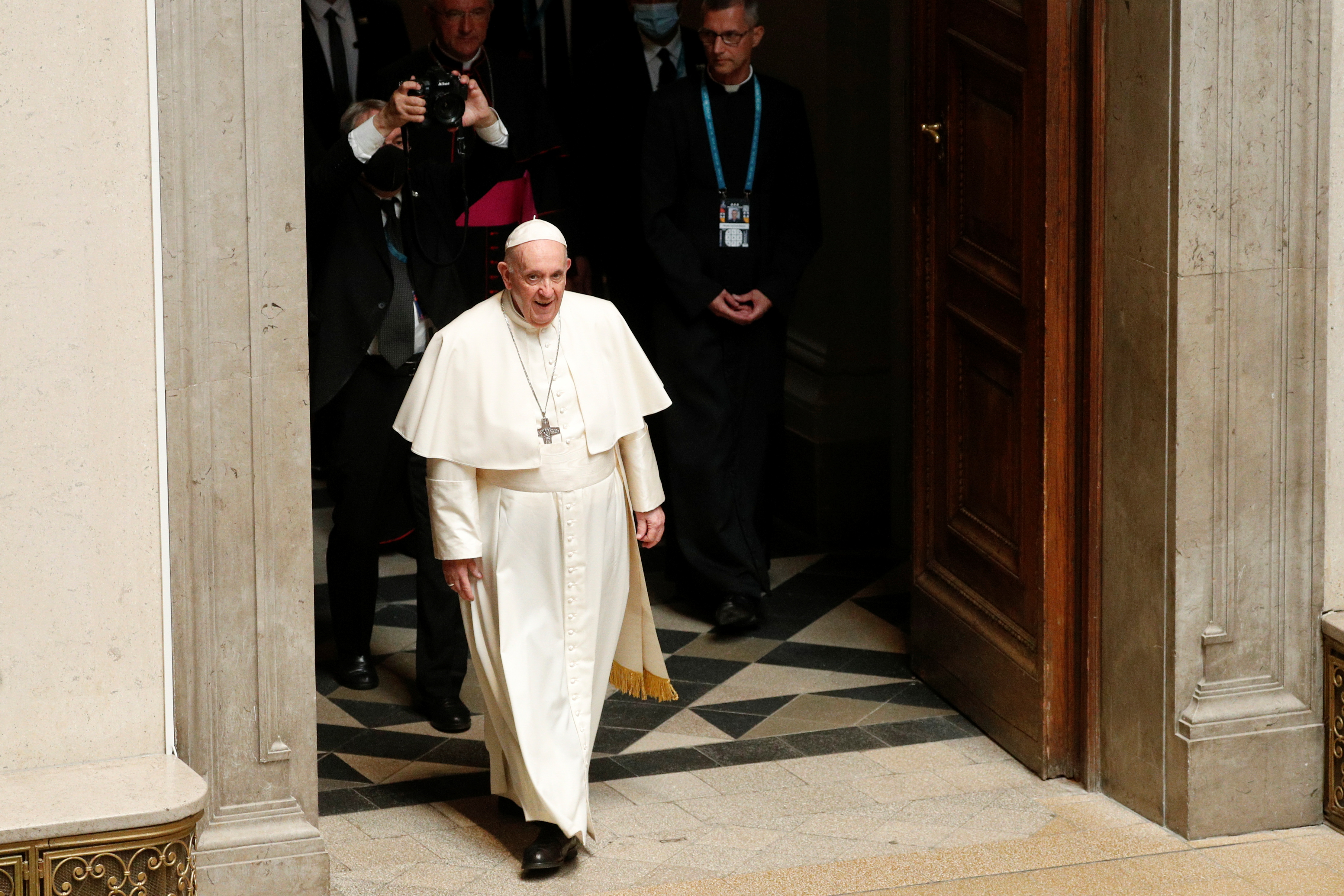
Pope Francis (pictured) said on Sunday (12 September) that Hungary could preserve its Christian roots while opening up to the needy, an apparent response to nationalist Prime Minister Viktor Orban's stand that Muslim immigration could destroy its heritage, write Philip Pullella and Gergely Szakacs.
Francis was in Hungary for an unusually short stay that underlined differences with the anti-immigrant Orban, his political opposite.
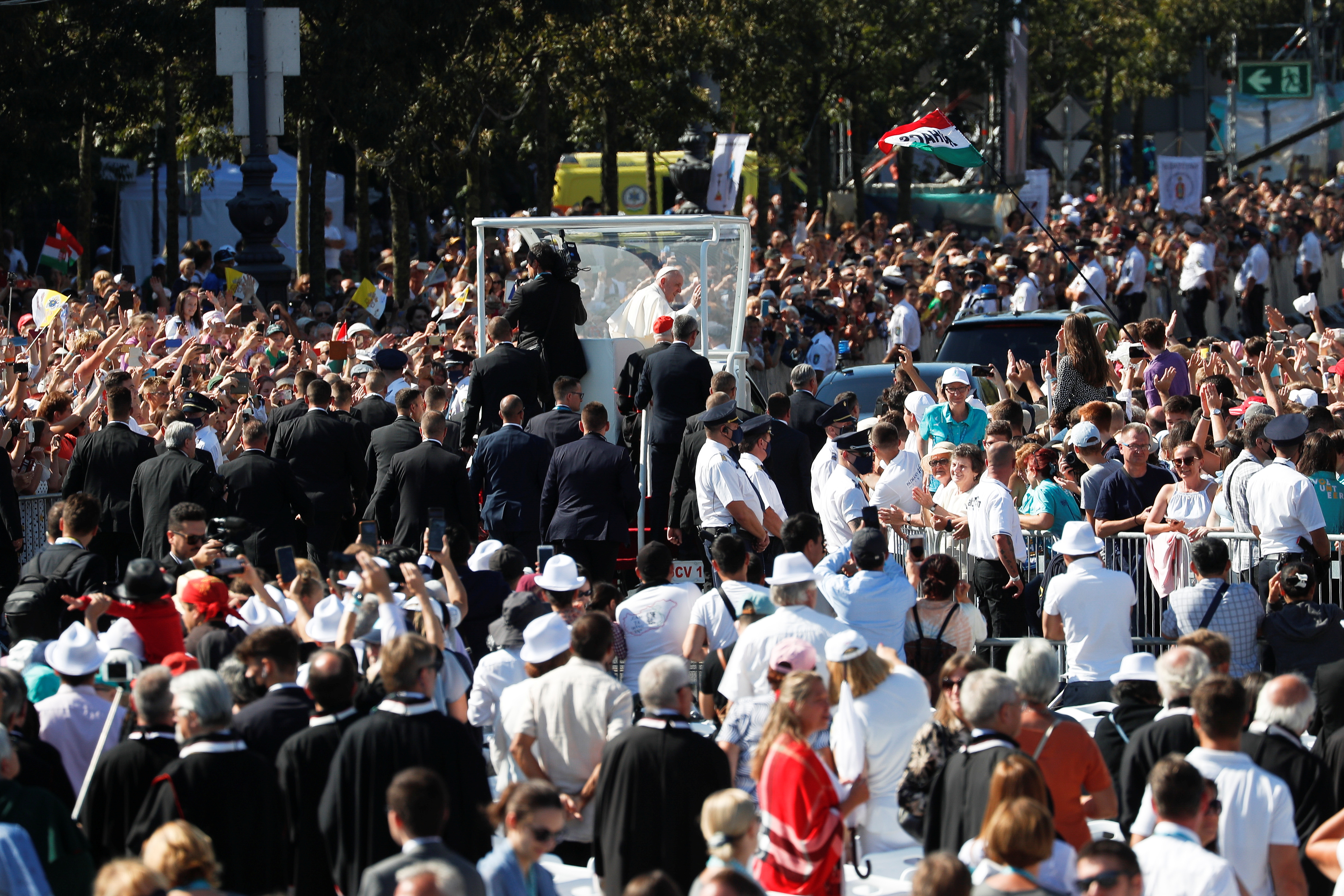
Closing a Church congress with a Mass for tens of thousands of people in central Budapest, Francis used the imagery of a cross to show that something as deeply rooted as religious belief did not exclude a welcoming attitude.
"The cross, planted in the ground, not only invites us to be well-rooted, it also raises and extends its arms towards everyone," he said in his remarks after the Mass.
"The cross urges us to keep our roots firm, but without defensiveness; to draw from the wellsprings, opening ourselves to the thirst of the men and women of our time," he said at the end of the open-air Mass, which Orban attended with his wife.
"My wish is that you be like that: grounded and open, rooted and considerate," the pope said.
Francis has often denounced what he sees as a resurgence of nationalist and populist movements, and has called for European unity, and criticised countries that try to solve the migration crisis with unilateral or isolationist actions.
Orban, by contrast, told the Bled Strategic Forum in Slovenia last week the only solution to migration was for the European Union to "give all rights back to the nation state".
The pope has called for migrants to be welcomed and integrated to tackle what he has called Europe's "demographic winter". Orban said in Slovenia that today's migrants "are all Muslims" and that only "the traditional Christian family policy can help us out of that demographic crisis."
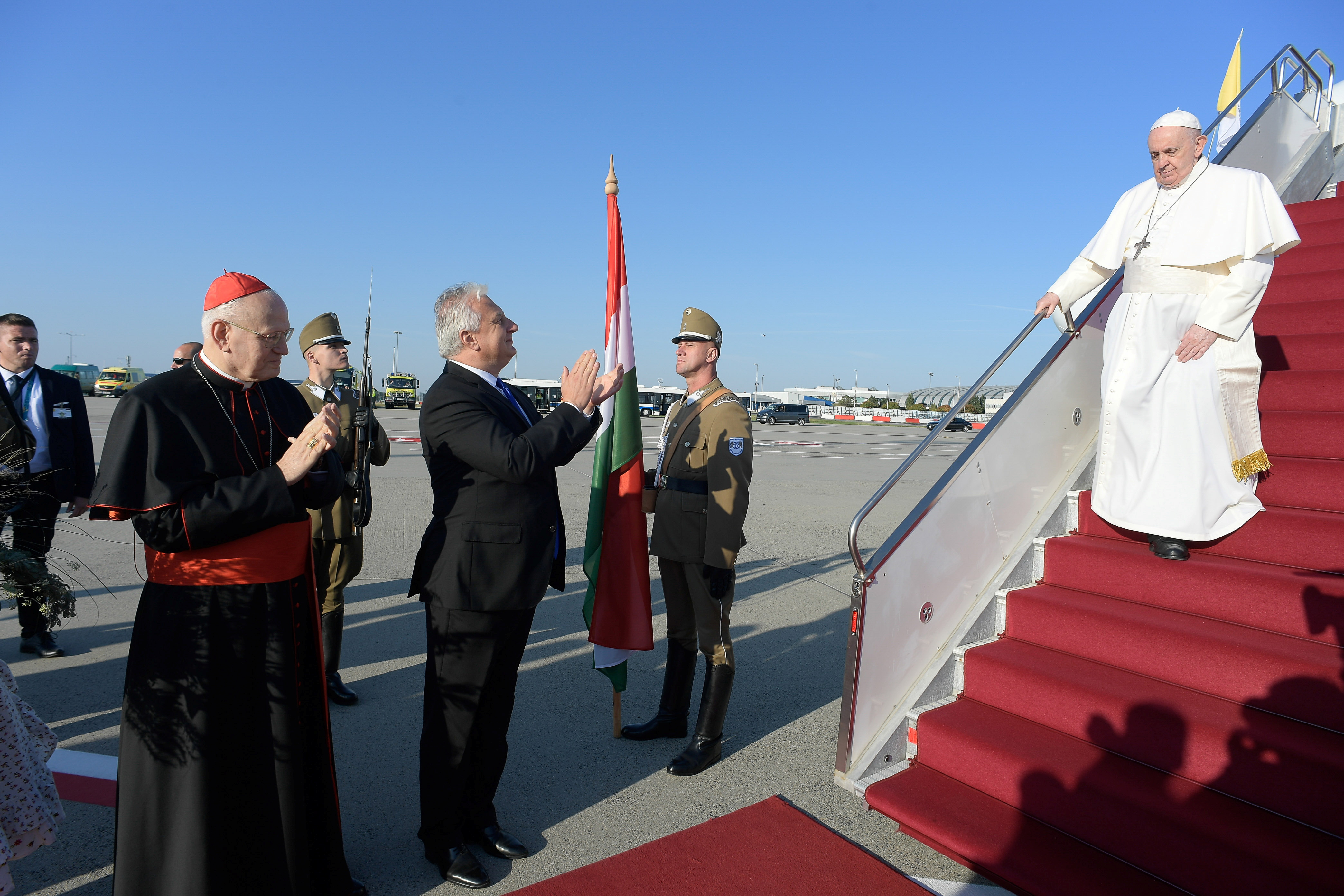
Francis, 84, who spent only around seven hours in Budapest, met Orban and President Janos Ader at the start of his visit.
The Vatican said the meeting which was also attended by the Vatican's top two diplomats and a Hungarian cardinal, lasted about 40 minutes and was cordial.
"I asked Pope Francis not to let Christian Hungary perish," Orban said on Facebook. Hungarian news agency MTI said Orban gave Francis a facsimile of a letter that 13th century King Bela IV sent to Pope Innocent IV asking for help in fighting the Tartars.
Later on Sunday Francis arrived in Slovakia, where he will stay much longer, visiting four cities before returning to Rome on Wednesday.
The brevity of his Budapest stay has prompted diplomats and Catholic media to suggest the pope is giving priority to Slovakia, in effect snubbing Hungary. Read more.
The Vatican has called the Budapest visit a "spiritual pilgrimage". Orban's office has said comparisons with the Slovakia leg would be "misleading".
The trip is the pope's first since undergoing major surgery in July. Francis told reporters on the plane taking him to Budapest that he was "feeling fine".
Share this article:
EU Reporter publishes articles from a variety of outside sources which express a wide range of viewpoints. The positions taken in these articles are not necessarily those of EU Reporter. Please see EU Reporter’s full Terms and Conditions of publication for more information EU Reporter embraces artificial intelligence as a tool to enhance journalistic quality, efficiency, and accessibility, while maintaining strict human editorial oversight, ethical standards, and transparency in all AI-assisted content. Please see EU Reporter’s full A.I. Policy for more information.



EU and South Africa kick off intergovernmental dialogue on Clean Trade and Investment Partnership

Seveso - 50 years on: EU strengthens its commitment to industrial safety in a changing landscape of risk

Why young jobseekers struggle to find roles abroad that fit their expertise

Commission opens formal investigation into possible gun jumping in XXXLutz's acquisition of Porta

Farmers, fair markets and consumers: new report highlights the role of EU competition rules in agriculture

Shared commitment to advance EOSC through new EOSC Nodes and EOSC projects

ECR MEPs question the European Commission on cardiovascular health and diet promoting the Mediterranean diet as an alternative to ultra-processed foods as key to tackling obesity

Falling in love with the Maldives

STATEMENT by the Ministry of Foreign Affairs of the Republic of Kazakhstan

Kazakhstan seeks regional AI leadership as economic partnership with China enters new phase

Starmer’s problem? 'He is not a politician'

Why a Brussels–Nicosia–Eastern Mediterranean strategic affairs platform would benefit the European Union

Albania's Vlora airport standoff tests investor confidence as EU accession clock ticks
ECR MEPs question the European Commission on cardiovascular health and diet promoting the Mediterranean diet as an alternative to ultra-processed foods as key to tackling obesity

Kazakhstan's fixed capital investment tops 9.5 trillion tenge in H1 2026

Commission adopts simpler rules for EU agri-food promotion policy

Kazakhstan reforms under scrutiny at Brussels Press Club round table

Japan should face up to history and contribute more to regional peace

Ambassador calls for 'speeding up' of co-operation between EU and Kazakhstan

Timur Turlov at Smart Moves Summit 2025: How chess can transform global education

Shevtsova’s case: Out-of-court sanctions dismantling trust in Ukrainian cause

The future of European transport

Trump Vs Trueman

US 'no longer' an 'unconditional ally' for Europe - MEP
-
 South Africa5 days ago
EU and South Africa kick off intergovernmental dialogue on Clean Trade and Investment Partnership
-
 Disasters5 days ago
Seveso - 50 years on: EU strengthens its commitment to industrial safety in a changing landscape of risk
-
 Employment5 days ago
Why young jobseekers struggle to find roles abroad that fit their expertise
-
 European Commission5 days ago
Commission opens formal investigation into possible gun jumping in XXXLutz's acquisition of Porta