Kazakhstan
Kazakhstan wants to attract at least $150 billion in foreign investment by 2029


The 6th Kazakhstan Global Investment Roundtable (KGIR) has concluded with a pledge to attract further investment to the country.
More than 500 representatives of international companies and domestic businesses, investors, authoritative experts and opinion leaders attended the event (17 November) in the Kazakh capital of Astana.
This year's focus was on regional sustainable growth, covering four areas: investment in advanced technologies, development of regional clusters, transport and logistics potential, and food security.
As the country is trying to diversify its economy from traditional oil and gas, Prime Minister Alikhan Smailov revealed that foreign investments will be the main drive to Kazakhstan's economic growth. By 2029, the country plans to double its GDP and attract at least $150 billion in foreign direct investment (FDI).
"Attracting investments is the key factor of growth within the national investment policy, taking into account the ESG standards, Kazakhstan is interested in attracting no less than $150 billion in foreign investment. For that, we continue creating favourable conditions for investors, including improving investment support instruments", said Smailov.
To make Kazakhstan more attractive to foreign investors, "we have established 14 special economic zones. Companies located in these zones receive preferential treatment, including exemptions from corporate income tax, land tax, property tax, VAT and customs duties for up to 25 years", Deputy Minister of Foreign Affairs, Nazira Nurbayeva, explained. Moreover, this year alone, over 9,000 business registration requirements have been dropped from Kazakh law, with a plan to abolish 1,000 more by the end of the year, according to Smailov.
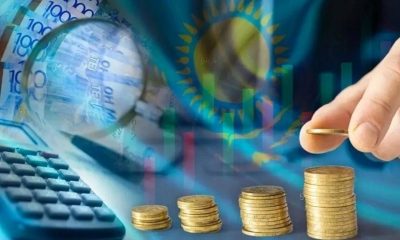
The measures have had visible effects. "Last year, the total volume of foreign direct investment increased by 18% and reached $28 billion. In the past six months of this year, approximately $14 billion more have been attracted to the national economy", Smailov pointed out. The most foreign investment comes to Kazakhstan from the Netherlands, with $69.7 billion poured into the biggest Central Asian economy over the last decade, followed by the US, with $38.9 billion, Switzerland ($24.7 billion), China ($14.9 billion) and Russia ($13.8 billion).
One of the main areas for investment is renewable energy, as Kazakhstan has one of the largest solar and wind potentials in the region. Moreover, it has abundant reserves, amounting to 90% of Central Asia's total, of critical raw materials, which are essential for the deployment of technologies like wind turbines (with rare earth magnets), batteries (lithium and cobalt) and semiconductors (polysilicon). In November 2022, the EU had already recognised Kazakhstan's value for the green transition by signing a strategic partnership for the supply of critical raw materials, as well as green hydrogen.
Lastly, thanks to Kazakhstan's geographical position between Europe and East Asia, 13 transit corridors currently cross the country, facilitating transportation and logistics across the Eurasian continent. Due to the necessity of avoiding Russia in transiting Eurasia since the invasion of Ukraine, the Middle Corridor might be the most important of the 13 corridors at the moment, providing more than just an alternative to the northern route. Next to the Middle Corridor, China's expanding Belt and Road Initiative is also positioning Kazakhstan as a key link between East Asia and Europe.
"Considering the current geopolitical reality, our country’s geographical location opens up new, highly promising opportunities in the field of transportation and logistics", said Nurbayeva. "Over the last 15 years, Kazakhstan has invested over $35 billion in the development of transportation and transit infrastructure and further substantial investments are planned in this sector. As a result, cargo transit reached around 27 million tonnes last year."
Share this article:
EU Reporter publishes articles from a variety of outside sources which express a wide range of viewpoints. The positions taken in these articles are not necessarily those of EU Reporter. Please see EU Reporter’s full Terms and Conditions of publication for more information EU Reporter embraces artificial intelligence as a tool to enhance journalistic quality, efficiency, and accessibility, while maintaining strict human editorial oversight, ethical standards, and transparency in all AI-assisted content. Please see EU Reporter’s full A.I. Policy for more information.





Burnham as PM? 'Wait and see'

Survey on an EU Blueprint for intellectual property licensing and spinoff creation

Kazakhstan: Central Election Committee reviews the results of the nomination of candidates for the deputies of Kurultai
The South Caucasus at a historic turning point: Between lasting peace and renewed confrontation

Setting a new benchmark in premium travel

The security environment of the South Caucasus amid changing geopolitical realities

Rule of law report strengthens EU democracy and fundamental rights

Ban on destruction of unsold clothes and shoes enters into application

JoinCare Explores Scientific Exchange During Visit toJapan’s National Institute of Infectious Diseases

New episode – DGT podcast: Languages and Technology

Become a European Commission trainee – applications are now open

Commission outlines measures to strengthen Europe's banking sector and support growth

British political shifts and the future of UK-China ties
The South Caucasus at a historic turning point: Between lasting peace and renewed confrontation

As Ireland chairs the EU Presidency, what impact has over fifty years of EU membership had on Ireland

The Digital Markets Act Is Hurting Europeans. It’s Time to Put Progress, Free Markets, and Competition First

Kazakhstan reforms under scrutiny at Brussels Press Club round table

Japan should face up to history and contribute more to regional peace

Ambassador calls for 'speeding up' of co-operation between EU and Kazakhstan

Timur Turlov at Smart Moves Summit 2025: How chess can transform global education

Shevtsova’s case: Out-of-court sanctions dismantling trust in Ukrainian cause

The future of European transport

Trump Vs Trueman

US 'no longer' an 'unconditional ally' for Europe - MEP
-
 Labour4 days ago
Burnham as PM? 'Wait and see'
-
 Intellectual Property Rights4 days ago
Survey on an EU Blueprint for intellectual property licensing and spinoff creation
-
 Kazakhstan5 days ago
Kazakhstan: Central Election Committee reviews the results of the nomination of candidates for the deputies of Kurultai
-
South Caucasus13 hours ago
The South Caucasus at a historic turning point: Between lasting peace and renewed confrontation