Moldova
Former justice minister: Moldova's EU accession without reform risks new 'Hungary' crisis


The European Union stands at a critical juncture, with geopolitical instability following the Ukraine War and the rise of threats. Now, more than ever, its institutions must be protected. It is in this context that I express my deep reservations about Moldova’s rapid accession to the European Union, having seen firsthand the high levels of corruption and rule of law violations that run throughout the country. Suppression of political, media, and civil freedoms has become commonplace under Maia Sandu’s supposedly liberal government, and while Moldova’s membership in the EU is a long-held dream of mine, my country’s accession without major reforms will only act as a liability to both Europe and Moldovans, writes Stanislav Pavlovschi.
The European Union is ultimately a coalition of compromise and can only function as a strong, democratic if all members respect its common values. The major mistake of the European project in the 21st Century has been the admittance of members whose institutions are not adequately aligned with the fundamental values of strong rule of law and democracy. The largest and most recent major expansion began in 2004 when negotiations were held with no fewer than 12 states, including Hungary, Slovakia, and Bulgaria. Many of these nations were less institutionally advanced compared to their western counterparts, grappling with democratic, administrative, and judicial shortcomings, along with high corruption levels and insufficient protection for certain ethnic minorities. The admittance of these countries and the problems that have arisen have resulted in a widespread feeling of enlargement fatigue, with no new members joining the bloc over the last decade to avoid further strain on the EU’s institutional framework.
Since its admission, Hungary in particular has persistently challenged the EU’s democratic values. Prime Minister Viktor Orban has repeatedly undermined press freedom, leveraging his position to extract concessions from the EU and weaken the bloc’s credibility. Most egregiously, Hungary extracted a ransom from the European Union, agreeing to lift its veto blocking Ukraine aid if Brussels agreed to unblock funds that had been frozen over rule of law violations in the country. It is no doubt a worthy cause to admit Moldova and Ukraine as a response to Russian aggression, but history tells us that the EU will only be weakened by rushing through members without due process.
Moldova is showing troubling signs of democratic backsliding, mirroring the pre-EU accession issues seen in Hungary and Bulgaria. Recent actions by the Moldovan government underscore the urgency for the EU to take a principled stand. The Moldovan government has been unaccountably opaque in dealing with Russian disinformation. A deluge of anti-democratic laws and practices has been introduced under the guise of protection, stripping away many basic rights. The new anti-treason law in particular has been criticized by Amnesty International for its potential for misuse and the criminalization of viewpoints and opinions that should be safeguarded under international law. This has been preceded by numerous instances of political suppression and media closures without judicial process. It is imperative that these rule of law offences do not go unchecked, for not only will it weaken the legitimacy of the EU as the bulwark of democracy, but it will also leave its people isolated. There is an immediate danger to the Moldovan people if Moldova is rushed through the accession process as a response to Russia Sandu’s government will be validated by the EU and given carte blanche to continue their anti-democratic actions.
The EU must remember the lessons from previous integration. Without tangible reform, allowing Moldova to join the bloc without firmly addressing these democratic deficits risks importing another source of internal discord and weakening the EU’s moral authority. The human side of this, however, is the Moldovan people, who are at risk of being left vulnerable to continued suppression in the name of wider geopolitical aims.
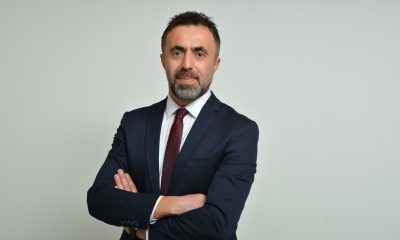
Stanislav Pavlovschi is the former justice minister of Moldova and was a judge on the European Court of Human Rights from 2001-08.
Share this article:

EU Reporter publishes articles from a variety of outside sources which express a wide range of viewpoints. The positions taken in these articles are not necessarily those of EU Reporter. Please see EU Reporter’s full Terms and Conditions of publication for more information EU Reporter embraces artificial intelligence as a tool to enhance journalistic quality, efficiency, and accessibility, while maintaining strict human editorial oversight, ethical standards, and transparency in all AI-assisted content. Please see EU Reporter’s full A.I. Policy for more information.



Bangladeshis waking up to reality of Yunus government

What the latest data reveals about labour market imbalances across Europe

From imitation to leadership: The production-based rise of Japan and China

Copernicus: Europe’s air quality improves despite persistent pollution episodes

Commission approves €402 million Spanish state aid for road transport companies facing increased fuel prices

Ensuring fairness and safety: €3 customs duty for low-value parcels

EU delivers emergency aid and organises a humanitarian flight in response to earthquakes in Venezuela

High Representative Kallas with Commissioners Kos and Brunner in Türkiye to advance bilateral cooperation

Kyrgyzstan launches Tamchy SFIT: a new international jurisdiction as a gateway to Eurasia

Kazakhstan’s dombyra: the two-stringed instrument that carries the soul of the steppe

Europe must double down on nuclear progress to achieve its long-term ambitions

Solana Company Partners with Kazakhstan on $6B Alatau Crypto Megacity

Astana's congress of world religions: A global platform for dialogue in an age of division

How Schuman lost Its way

Rating of American Express casino sites in the UK

PMI defends AI consultation tool as scrutiny grows over EU tobacco rules review

Kazakhstan reforms under scrutiny at Brussels Press Club round table

Japan should face up to history and contribute more to regional peace

Ambassador calls for 'speeding up' of co-operation between EU and Kazakhstan

Timur Turlov at Smart Moves Summit 2025: How chess can transform global education

Shevtsova’s case: Out-of-court sanctions dismantling trust in Ukrainian cause

The future of European transport

Trump Vs Trueman

US 'no longer' an 'unconditional ally' for Europe - MEP
-
 Bangladesh4 days ago
Bangladeshis waking up to reality of Yunus government
-
 Employment4 days ago
What the latest data reveals about labour market imbalances across Europe
-
 China4 days ago
From imitation to leadership: The production-based rise of Japan and China
-
 Air quality4 days ago
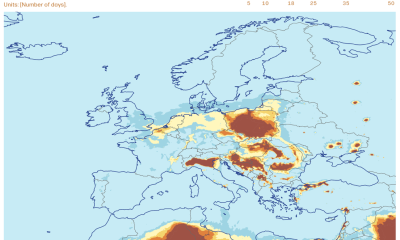
Copernicus: Europe’s air quality improves despite persistent pollution episodes