Russia
Is Russia only Zelensky’s second biggest problem?

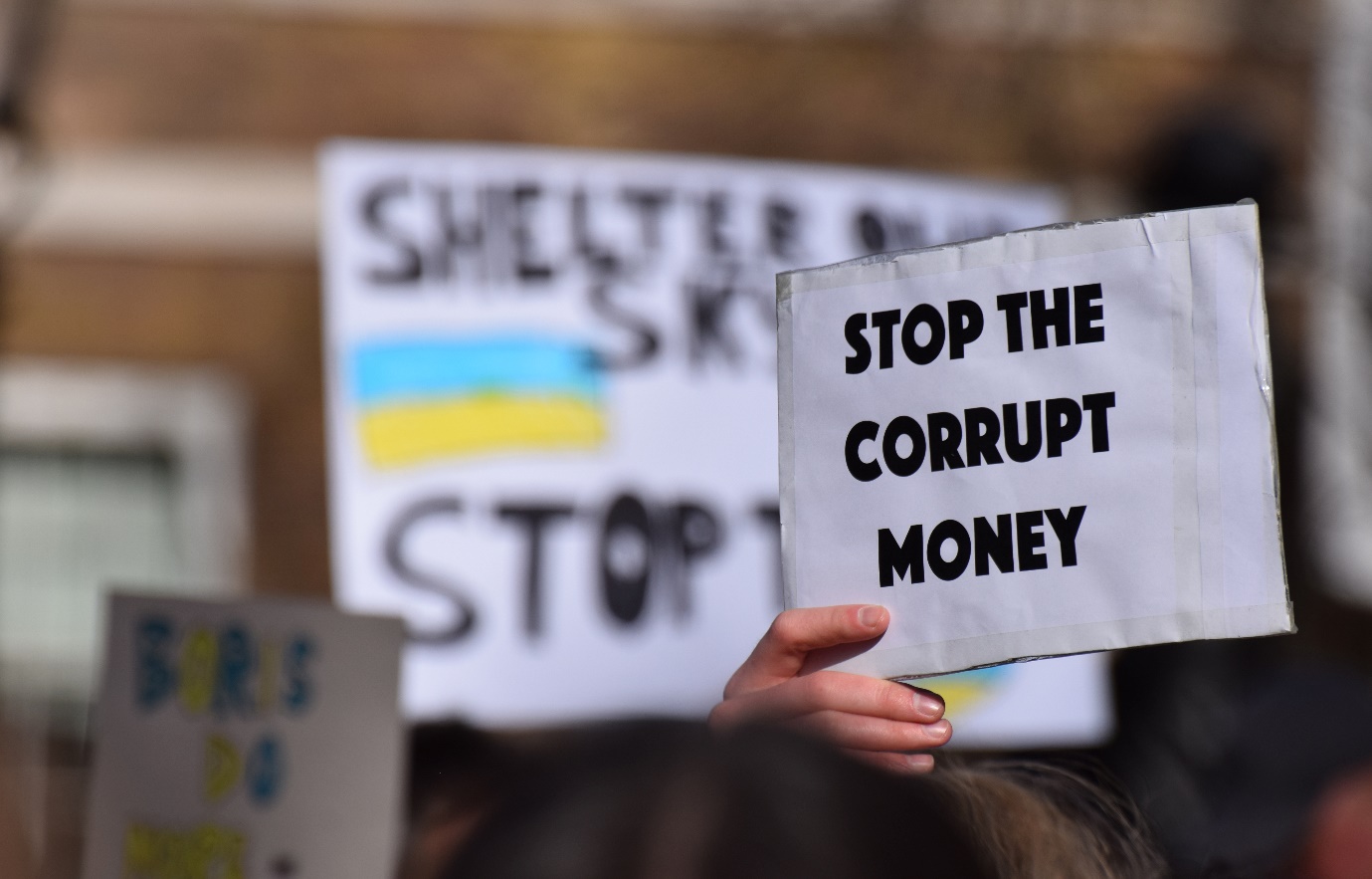
With Donald Trump set to take office in January, Zelensky needs to make progress in his fight against corruption so that Ukraine’s allies don’t have a reason to withdraw support, writes Colin Stevens.
Last year, Ukraine switched the date of Christmas to the 25 December in a symbolic shift away from the Russian Orthodox Church which marks the holiday on 7 January. However, while Christmas might be coming early this year, there will be little cause for celebration, as this year will mark the third time that the holiday is held under the shadow of the war.
This is not least because of the looming spectre of Donald Trump, with his inauguration for his second Presidential term scheduled for 20 January 2025.
While US Secretary of State Anthony Blinken’s recent statement that Biden will be ‘making sure that every dollar we have at our disposal will be pushed out the door between now and January 20’ to support Ukraine, President Zelensky is sure to be considering the uncertainty that could come from Biden’s successor.
Trump’s now well-known comments that he could end the war in Ukraine ‘in a day’ will have President Zelensky bracing for impact, as Trump and his administration will likely push for a negotiated peace.
Although this is far from certain until Trump assumes office. Nevertheless, there is greater pressure for Zelensky to make progress quickly, both in the war, and in his fight against corruption, whether Trump attempts to enforce a ceasefire or not.
Republicans have previously withheld aid on numerous occasions, citing corruption, amongst other things, as a reason not to support Ukraine in the conflict. Now, with a renewed focus on ‘America First’ policies, we should not be surprised if there are further limitations placed on US financial and military support.
Corruption has also prevented Ukraine from benefitting from the security offered as a NATO or EU member. In 2023, Jean-Claude Juncker, the then president of the European Commission, said that Ukraine ‘is corrupt at all levels of society’ and one of the reasons why the country’s ascension to the EU has been slow.
As Zelensky launches a renewed bid to join NATO, he will need to make sure that the country is considered an attractive partner as possible. Some members, notably Hungary and Türkiye, continue to maintain close ties with Russia and are therefore likely to block or draw out the membership process (as seen with Sweden and Finland). Others are fearful of being drawn into a direct conflict with a nuclear and battle-hardened Russia. There are plenty of reasons for NATO members to stall Ukraine’s membership bid, but Zelensky cannot allow corruption to be one of them.
Besides, even if Trump does manage to bring the war to an end, (in a day or not) countering corruption will be vital to ensure the stability of post-war Ukraine, the success of its reconstruction, and, through NATO membership, its long-term security.
The vested interests must be brought back in check, who continue to exert control over large swathes of Ukraine’s business interests, its officialdom, and its judiciary. They have used their power to banish individuals who were making progress on anti-corruption reforms, such as Andriy Kobolyev, Dmytro Sennychenko, and Andrei Pivovarsky.
Kobolyev was the head of Naftogaz, Ukraine’s largest state-owned oil and gas company, and was accused of misleading the board to receive a bonus. Kobolyev is a passionate anti-corruption campaigner and led calls for western countries to impose energy sanctions on Russia. Despite the size of the bonus being decided by the independent board and Kobolyev having no input over the matter, he was still pursued by NABU, the Ukrainian anti-corruption bureau.
Sennychenko was the head of the Ukrainian State Property Fund, responsible for overseeing the privatisation of state assets. He introduced bold new reforms such as electronic auctions, online databases, and valuation standards, which had serious repercussions for powerful members of the Ukrainian oligarchy and politicians. However, he was subsequently arrested in absentia by NABU, for allegedly making losses to the enterprises while preparing for privatisation.
Pivovarsky served as the Ukrainian Minister of Infrastructure and was accused of abusing office and mismanagement which caused the state to take losses when he suggested that half of the harbour dues for a Black Sea seaport should not go to the seaports authority, but should be reinvested by private companies in maintenance at the port to make it more efficient. While there is no accusation that he personally profited, he was still pursued by NABU.
All three were passionate reformers and anti-corruption campaigners, who had their reformist approach brought to a sudden end when it affected the interests of powerful Ukrainian figures.
Having run on a message of anti-corruption, Zelensky’s reformist approach is meeting significant resistance from these vested interests. As Ukraine begins to consider post-war scenarios, reform will have to be a key consideration if it is to emerge from the conflict as a stable country, capable of rebuilding and joining the West. The last thing that Ukraine needs is for oligarchs to strengthen themselves and emerge from the rubble stronger, as they did in the 1990s following the collapse of the Soviet Union.
Zelensky must enact real reform and fast. This is sure to be a challenge as the war remains ongoing, but it is one that Ukraine cannot overlook.
Because whether or not Ukraine wants to admit it, time is running out. Change is on the horizon, and soon, Zelensky might hope that his New Year’s wish had been that he’d done far more, far earlier.
Share this article:
EU Reporter publishes articles from a variety of outside sources which express a wide range of viewpoints. The positions taken in these articles are not necessarily those of EU Reporter. Please see EU Reporter’s full Terms and Conditions of publication for more information EU Reporter embraces artificial intelligence as a tool to enhance journalistic quality, efficiency, and accessibility, while maintaining strict human editorial oversight, ethical standards, and transparency in all AI-assisted content. Please see EU Reporter’s full A.I. Policy for more information.






EU and South Africa kick off intergovernmental dialogue on Clean Trade and Investment Partnership

Seveso - 50 years on: EU strengthens its commitment to industrial safety in a changing landscape of risk

Why young jobseekers struggle to find roles abroad that fit their expertise

Commission opens formal investigation into possible gun jumping in XXXLutz's acquisition of Porta

Shared commitment to advance EOSC through new EOSC Nodes and EOSC projects

Farmers, fair markets and consumers: new report highlights the role of EU competition rules in agriculture

Falling in love with the Maldives

ECR MEPs question the European Commission on cardiovascular health and diet promoting the Mediterranean diet as an alternative to ultra-processed foods as key to tackling obesity

STATEMENT by the Ministry of Foreign Affairs of the Republic of Kazakhstan

Kazakhstan seeks regional AI leadership as economic partnership with China enters new phase

Starmer’s problem? 'He is not a politician'

Why a Brussels–Nicosia–Eastern Mediterranean strategic affairs platform would benefit the European Union

Albania's Vlora airport standoff tests investor confidence as EU accession clock ticks
ECR MEPs question the European Commission on cardiovascular health and diet promoting the Mediterranean diet as an alternative to ultra-processed foods as key to tackling obesity

Kazakhstan's fixed capital investment tops 9.5 trillion tenge in H1 2026

Commission adopts simpler rules for EU agri-food promotion policy

Kazakhstan reforms under scrutiny at Brussels Press Club round table

Japan should face up to history and contribute more to regional peace

Ambassador calls for 'speeding up' of co-operation between EU and Kazakhstan

Timur Turlov at Smart Moves Summit 2025: How chess can transform global education

Shevtsova’s case: Out-of-court sanctions dismantling trust in Ukrainian cause

The future of European transport

Trump Vs Trueman

US 'no longer' an 'unconditional ally' for Europe - MEP
-
 South Africa5 days ago
EU and South Africa kick off intergovernmental dialogue on Clean Trade and Investment Partnership
-
 Disasters5 days ago
Seveso - 50 years on: EU strengthens its commitment to industrial safety in a changing landscape of risk
-
 Employment5 days ago
Why young jobseekers struggle to find roles abroad that fit their expertise
-
 European Commission5 days ago
Commission opens formal investigation into possible gun jumping in XXXLutz's acquisition of Porta