Brexit
EU ministers authorize the start of negotiations on Gibraltar


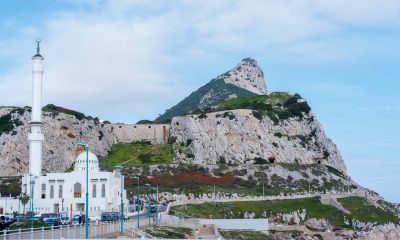
The Council today (5 October) adopted a decision authorizing the opening of negotiations for an EU-UK agreement in respect of Gibraltar, as well as the negotiating directives. This will be the basis for the European Commission’s negotiations with the UK.
The most contentious issue will be freedom of movement and border management, more than 15,000 people live in Spain and work in Gibraltar, making up around 50% of Gibraltar’s workforce. The territory welcomes around 10 million tourists per year, and accounts for around a quarter of its economy.
Chief Minister Fabien Picardo (Socialist Labour Party) was meant to be hosting an evening at this week’s Conservative Party conference, but was unable to attend because he has contracted COVID-19. Nevertheless, he thanks the British Prime Minister Boris Johnson for giving “a barnstorming speech in support of ‘The Rock!’”.
Gibraltar was not included in the scope of the EU-UK Trade and Cooperation Agreement. The European Commission presented its proposal for negotiating guidelines on 20 July. At the time, then Foreign Secretary Dominic Raab, said that he could not negotiate on this basis as it would undermine the UK's sovereignty over Gibraltar: "We have consistently showed pragmatism and flexibility in the search for arrangements that work for all sides, and we are disappointed that this has not been reciprocated. We urge the EU to think again."
The UK’s Chief Negotiator with the EU, Lord Frost, has recently threatened to trigger Article 16 of the Ireland/Northern Ireland Protocol (NIP) in early November, if proposals the UK has made in a “command paper” do not lead to a renegotiation of the NIP. The Commission is unlikely to respond positively to the UK’s hectoring approach, which also adds tensions to UK-EU relations even before negotiations with Gibraltar commence.
It is foreseen that Spain, as the neighbouring Schengen member state, will be responsible as regards the European Union for the implementation of the Schengen agreement. The Commission acknowledges that with regard to external border control, member states can require technical and operational support from Frontex. Spain has already expressed its full intention to ask Frontex for assistance. The territory's Chief Minister has already said that this is how the border entry and exit points will likely be managed.
Share this article:
EU Reporter publishes articles from a variety of outside sources which express a wide range of viewpoints. The positions taken in these articles are not necessarily those of EU Reporter. Please see EU Reporter’s full Terms and Conditions of publication for more information EU Reporter embraces artificial intelligence as a tool to enhance journalistic quality, efficiency, and accessibility, while maintaining strict human editorial oversight, ethical standards, and transparency in all AI-assisted content. Please see EU Reporter’s full A.I. Policy for more information.





Burnham as PM? 'Wait and see'

Kazakhstan: Central Election Committee reviews the results of the nomination of candidates for the deputies of Kurultai
The South Caucasus at a historic turning point: Between lasting peace and renewed confrontation

Setting a new benchmark in premium travel

The security environment of the South Caucasus amid changing geopolitical realities

Rule of law report strengthens EU democracy and fundamental rights

Survey on an EU Blueprint for intellectual property licensing and spinoff creation

Ban on destruction of unsold clothes and shoes enters into application

JoinCare Explores Scientific Exchange During Visit toJapan’s National Institute of Infectious Diseases

New episode – DGT podcast: Languages and Technology

Become a European Commission trainee – applications are now open

Commission outlines measures to strengthen Europe's banking sector and support growth

British political shifts and the future of UK-China ties
The South Caucasus at a historic turning point: Between lasting peace and renewed confrontation

As Ireland chairs the EU Presidency, what impact has over fifty years of EU membership had on Ireland

The Digital Markets Act Is Hurting Europeans. It’s Time to Put Progress, Free Markets, and Competition First

Kazakhstan reforms under scrutiny at Brussels Press Club round table

Japan should face up to history and contribute more to regional peace

Ambassador calls for 'speeding up' of co-operation between EU and Kazakhstan

Timur Turlov at Smart Moves Summit 2025: How chess can transform global education

Shevtsova’s case: Out-of-court sanctions dismantling trust in Ukrainian cause

The future of European transport

Trump Vs Trueman

US 'no longer' an 'unconditional ally' for Europe - MEP
-
 Labour4 days ago
Burnham as PM? 'Wait and see'
-
 Kazakhstan5 days ago
Kazakhstan: Central Election Committee reviews the results of the nomination of candidates for the deputies of Kurultai
-
South Caucasus13 hours ago
The South Caucasus at a historic turning point: Between lasting peace and renewed confrontation
-
 Aviation/airlines5 days ago
Setting a new benchmark in premium travel