EU
Financial stability: Commission welcomes political agreement on new EU rules on the recovery and resolution of Central Counterparties (CCPs)


The European Commission has welcomed the 24 June political agreement between the European Parliament and Council on new EU rules related to the recovery and resolution of Central Counterparties (CCPs). CCPs play a systemic role in the financial system as they act as hubs for financial transactions, such as derivatives contracts.
They are already well-regulated and subject to stringent supervision, thanks to a raft of measures adopted in the wake of the financial crisis. The new rules will further strengthen financial stability in the EU, by setting out what will happen if a CCP were to run into financial difficulty. In particular, resolution authorities must come up with resolution plans on how to handle any form of financial distress, which would exceed a CCP's existing resources.
In the highly unlikely event of a CCP failure, national authorities can use resolution tools that include the write-down of shareholders' capital and a sizeable cash-call to clearing members. The aim of this is to minimize the extent to which the cost of a CCP's failure is borne by taxpayers.
Financial Stability, Financial Services and Capital Markets Union Executive Vice President Valdis Dombrovskis said: “I welcome the political agreement on CCP Recovery and Resolution and I would like to congratulate the Croatian Presidency for all their hard work on this file. It is another step towards making the EU's financial system more resilient. It also adds an additional layer of safety for our financial system. This agreement places the EU at the cutting edge of international developments in this area.”
Further technical work will follow this political agreement so that the European Parliament and the Council can formally adopt the final text soon. More details are available here.
Share this article:
EU Reporter publishes articles from a variety of outside sources which express a wide range of viewpoints. The positions taken in these articles are not necessarily those of EU Reporter. Please see EU Reporter’s full Terms and Conditions of publication for more information EU Reporter embraces artificial intelligence as a tool to enhance journalistic quality, efficiency, and accessibility, while maintaining strict human editorial oversight, ethical standards, and transparency in all AI-assisted content. Please see EU Reporter’s full A.I. Policy for more information.





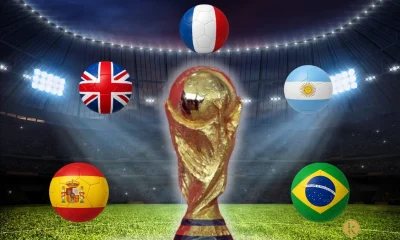
Who will win the 2026 World Cup? Data points to Spain

Western investors eye Russian assets again as sanctions discounts persist

EU green jobs: Which activities employ the most people?

Government gross debt of eurozone largely in euro

Commission calls for equal pay rules to become a reality across the EU

Chinese and European Youth Invited to Showcase Creativity in International Cartoon and Short Video Contest

'I don’t think Jews have a place neither in France nor in Belgium’, says Israeli deputy foreign minister

EU disburses nearly €2.8 billion to support Ukraine's financial stability and reform efforts

Shoot the messenger: How Europe learned to silence its own warnings

When Brussels messes up: The people always pay

The G7 has a critical minerals plan, but it is missing a development chapter

How European businesses are rethinking customer support in the AI era

Latest financial report by Corinthia Hotel owners, IHI, raises questions over financial stability

Paying ISIS to keep a cement plant running: How a major French company financed one of the world's most brutal terrorist groups

Bach in Brussels

President approves Digital Qazaqstan national strategy

Kazakhstan reforms under scrutiny at Brussels Press Club round table

Japan should face up to history and contribute more to regional peace

Ambassador calls for 'speeding up' of co-operation between EU and Kazakhstan

Timur Turlov at Smart Moves Summit 2025: How chess can transform global education

Shevtsova’s case: Out-of-court sanctions dismantling trust in Ukrainian cause

The future of European transport

Trump Vs Trueman

US 'no longer' an 'unconditional ally' for Europe - MEP
-
 Sport3 days ago
Who will win the 2026 World Cup? Data points to Spain
-
 Russia5 days ago
Western investors eye Russian assets again as sanctions discounts persist
-
 Green Week5 days ago
EU green jobs: Which activities employ the most people?
-
 EU5 days ago
Government gross debt of eurozone largely in euro