European Court of Auditors
EU auditors recommend to set out a new European tourism strategy


The EU is the world’s most visited region: in 2019, around 37 % of all international tourist arrivals had the EU as their destination. However, the EU’s support for tourism needs a fresh strategic orientation, according to a special report published today by the European Court of Auditors. The auditors found that tourism-related projects funded under the European Regional Development Fund (ERDF) provided mixed results: some projects were sustainable and had contributed to fostering tourism activity in the region; others had had only a limited impact. In several cases, poor planning and project selection procedures had led to projects being reduced in scope, running over budget, and being delayed.
Tourism is a key economic sector in the EU: in 2019, it accounted for 9.9% of the EU’s gross domestic product, and 11.6 % of all EU jobs. Since 2015, up to the start of the COVID-19 pandemic, the European Commission has revised the EU’s tourism priorities in the context of broader policy strategies, but it has not translated these priorities into a substantive action plan to support their implementation. As a reaction to the dramatic impact of the COVID-19 pandemic on the EU’s tourism sector, the Commission put forward measures and proposals to mitigate the impact of this crisis on the EU’s tourism industry and initiated action aimed at setting a tourism agenda for 2030.
“The COVID-19 pandemic has had a dramatic impact on the EU’s tourism sector: tourism flows and tourism revenue fell sharply," said Pietro Russo, the member of the European Court of Auditors responsible for the report. “But this immediate shock is not the only challenge facing the EU’s tourism sector. It needs to face up to other, more long-term challenges related to its green and digital transformation, its competitiveness, its sustainability, and its resilience.”
Where the auditors found examples of EU tourism funding having a less positive impact than hoped for, this was mostly for any of three reasons: because projects which received funding were isolated from other tourism infrastructure; because not enough effort had been made to market the projects effectively; or because the supported infrastructure was used primarily by the local community, not by visitors.
The auditors found the following issues with the indicators used for measuring the success of ERDF-funded tourism projects: the ERDF legislation for the 2014-2020 period included one common output indicator for tourism investments, but it was not used by all Member States; no common results indicators were used over that period; output indicators cannot measure all of the intended achievements of projects.
To remedy the issues they identified, the auditors recommend that the Commission should set out a new EU tourism strategy. They also recommend that the Commission should encourage Member States to apply selection procedures for ERDF-funded tourism investments to support this new strategic orientation.
Background information
The EU has a complementary role in tourism policy, supporting and coordinating the actions taken by the Member States. There was no dedicated EU budget for tourism in the 2014-2020 period. The European Commission defined the EU’s current tourism strategy in 2010, and can financially support tourism through multiple EU programmes. This continues to be the case for the 2021-2027 period.
Special report 27/2021 'EU support to tourism: Need for a fresh strategic orientation and a better funding approach' is available on the ECA website in 23 EU languages.
Share this article:

EU Reporter publishes articles from a variety of outside sources which express a wide range of viewpoints. The positions taken in these articles are not necessarily those of EU Reporter. Please see EU Reporter’s full Terms and Conditions of publication for more information EU Reporter embraces artificial intelligence as a tool to enhance journalistic quality, efficiency, and accessibility, while maintaining strict human editorial oversight, ethical standards, and transparency in all AI-assisted content. Please see EU Reporter’s full A.I. Policy for more information.




Kazakhstan cuts water use by 874 mln m³ through new technologies

Serbia’s business environment is driving its integration into the EU

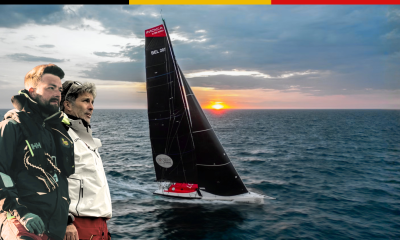
Record breaking Belgian sailors making more waves

New EU rules on pay transparency explained

Western investors eye Russian assets again as sanctions discounts persist

Message to Kemi Badenoch: 'Make a splash by thinking out-of-the-box on UK-Europe relationship'

Give your career a real take off

Europe's peripheral and maritime regions 'combine many territorial assets', meeting told

The G7 has a critical minerals plan, but it is missing a development chapter

How European businesses are rethinking customer support in the AI era

Latest financial report by Corinthia Hotel owners, IHI, raises questions over financial stability

Paying ISIS to keep a cement plant running: How a major French company financed one of the world's most brutal terrorist groups

Bach in Brussels

President approves Digital Qazaqstan national strategy

Who will win the 2026 World Cup? Data points to Spain

Renew Europe adopts Cork Declaration: A road map for prosperity, security and reform

Kazakhstan reforms under scrutiny at Brussels Press Club round table

Japan should face up to history and contribute more to regional peace

Ambassador calls for 'speeding up' of co-operation between EU and Kazakhstan

Timur Turlov at Smart Moves Summit 2025: How chess can transform global education

Shevtsova’s case: Out-of-court sanctions dismantling trust in Ukrainian cause

The future of European transport

Trump Vs Trueman

US 'no longer' an 'unconditional ally' for Europe - MEP
-
 Kazakhstan5 days ago
Kazakhstan cuts water use by 874 mln m³ through new technologies
-
 General4 days ago
Serbia’s business environment is driving its integration into the EU
-
 Belgium5 days ago
Record breaking Belgian sailors making more waves
-
 Gender equality4 days ago
New EU rules on pay transparency explained