General
How water has been weaponised in Ukraine


Sveta is certain that the Ukrainian-held city of Mykolaiv in the south, a shipbuilding centre, has been without water for six months.
She groaned as she waited with others this week to fill water containers from tanks that were being transported to the downtown thoroughfare by an electric tramway repair vehicle.
Sveta and the 220,000 others who remain in the city despite being shelled are bitterly reminded that Russian President Vladimir Putin's war against Ukraine has gone beyond the battlefield and into civilian infrastructure.
In what Putin called legitimate retaliation for Russia's attack on the bridge to Crimea, the Kremlin has dramatically increased strikes against energy facilities with drone and pre-winter missile onslaughts over two weeks.
Large areas of Ukraine were affected by the attacks, which resulted in disruption of electricity and left many people dead.
However, Mykolaiv's water issues have been ongoing for a long time.
Officials from Ukraine claim that the Russians closed the city’s freshwater intakes in Kherson Province after they took over the region in a "special military operation".
Borys Dydenko, chief municipal water officer in Kiev, told Reuters that it was not clear if the explosion was intentional or accidental. According to him, the Russians had shut down the intakes in an attempt to punish Ukraine for cutting off freshwater supply to Crimea in 2014. He did not respond immediately to requests for comment from the Kremlin or Russian defense ministry.
'THE WAY THAT WE LIVE'
Mykolaiv's residents carry plastic containers hand-carried or on carts to water distribution points throughout the city, which sits at the confluence of the Dnipro & Southern Buh rivers.
Yaroslav, 78 years old, lamented that this is how we live. He was a retired worker at Chernomorsk Shipbuilding yard and he waited behind Sveta. "We live through one life and then there's joy the next."
Peter Gleick is a senior fellow at Pacific Institute. This California thinktank documents the effects of conflicts on water resources around the world and says Russia has weaponized water since February when it launched its full-scale invasion.
Gleick sent an email stating that Russia has targeted Ukraine's water infrastructure. This includes water treatment, wastewater systems and dams. He noted that striking civilian infrastructure is a war crime under international law.
Gleick stated that he and his associates documented over 60 incidents in which Ukraine's civilian water supply was disrupted, and hydroelectric power dams were attacked. This happened within the first three months.
Russia admits to having targeted power plants, but also says it does everything possible to protect civilians. The United Nations has confirmed over 14,000 civilian deaths, but it is likely that the actual number is much higher.
According to the Pacific Institute database, Ukraine has used water as a weapon occasionally after Russia's 2014 annexation of Crimea.
Gleick stated that Kyiv was not legally required to keep the supply, but it could be argued that it would be humanitarian to do so.
According to the database, Ukrainian troops released water from a Dnipro River Dam to slow Russia's unsuccessful assault on Kyiv in Feb. The database also shows that residents of Donetsk in eastern Ukraine, which was captured in 2014 by Moscow-backed separatists, are suffering water shortages. The Russian-installed government in Donetsk did not immediately respond when we asked for more information.
Dydenko said that Mykolaiv's current water crisis was the most severe.
Dydenko said that "Others have local problems and are able solve them." "We are the only ones who have such a terrible disaster."
After almost a month without water, officials in the city were forced to pump yellowish, salty water from Southern Buh River Estuary to clear the sewers and allow residents to flush their toilets and wash. It has a pungent industrial smell and foams in the toilets. This makes soap difficult to lather and rinse.
Worst, it's corroding the pipes in the city.
'IT'S A CATASTROPHE'
Dydenko stated that eventually, the entire system would have to be replaced at a large cost Mykolaiv can't meet. There will be factories left idle and dwindling revenues.
He said that it was a disaster and accused the Russians of refusing to negotiate a ceasefire in order to inspect freshwater intakes and make repairs.
Although water bottles are readily available in shops, many residents who have been affected by war are dependent on water donations from overseas.
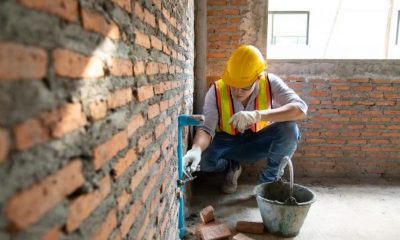
Vitalii Tymoshchuk (45), a repair crew foreman standing at a hole he dug for his mud-smeared men, to fix the pipe in Mykolaiv's suburb.
Dydenko stated that he cannot help but keep his crews busy patching leaks because salt water is not treatable.
He said: "Our task is to preserve all this and last through winter. It will not be easy, and there will be even more problems."
Share this article:
EU Reporter publishes articles from a variety of outside sources which express a wide range of viewpoints. The positions taken in these articles are not necessarily those of EU Reporter. Please see EU Reporter’s full Terms and Conditions of publication for more information EU Reporter embraces artificial intelligence as a tool to enhance journalistic quality, efficiency, and accessibility, while maintaining strict human editorial oversight, ethical standards, and transparency in all AI-assisted content. Please see EU Reporter’s full A.I. Policy for more information.



The South Caucasus at a historic turning point: Between lasting peace and renewed confrontation
The security environment of the South Caucasus amid changing geopolitical realities

Commission registers two European Citizens' Initiatives on education and housing

Commission sends Statements of Objections to several companies and trade associations in suspected construction chemicals cartel

Why the US is losing its legitimacy as a global superpower and the trust of the comity of nations

Commission endorses Latvia’s €617 million Social Climate Plan to support vulnerable households and transport users in the clean transition

Commission outlines measures to strengthen Europe's banking sector and support growth

As Ireland chairs the EU Presidency, what impact has over fifty years of EU membership had on Ireland

JoinCare explores scientific exchange during visit to Japan’s National Institute of Infectious Diseases

New episode – DGT podcast: Languages and Technology

Become a European Commission trainee – applications are now open

Commission outlines measures to strengthen Europe's banking sector and support growth

British political shifts and the future of UK-China ties
The South Caucasus at a historic turning point: Between lasting peace and renewed confrontation
As Ireland chairs the EU Presidency, what impact has over fifty years of EU membership had on Ireland

The Digital Markets Act Is Hurting Europeans. It’s Time to Put Progress, Free Markets, and Competition First

Kazakhstan reforms under scrutiny at Brussels Press Club round table

Japan should face up to history and contribute more to regional peace

Ambassador calls for 'speeding up' of co-operation between EU and Kazakhstan

Timur Turlov at Smart Moves Summit 2025: How chess can transform global education

Shevtsova’s case: Out-of-court sanctions dismantling trust in Ukrainian cause

The future of European transport

Trump Vs Trueman

US 'no longer' an 'unconditional ally' for Europe - MEP
-
 South Caucasus2 days ago
The South Caucasus at a historic turning point: Between lasting peace and renewed confrontation
-
South Caucasus3 days ago
The security environment of the South Caucasus amid changing geopolitical realities
-
 European Citizens' Initiative5 days ago
Commission registers two European Citizens' Initiatives on education and housing
-
 European Commission3 days ago
Commission sends Statements of Objections to several companies and trade associations in suspected construction chemicals cartel