Kazakhstan
President Tokayev prioritizes identity-building and youth education at National Kurultai


Nurturing cultural and historical identity and prioritizing youth education are key pillars for fostering responsible citizenship to build a Just Kazakhstan, said President Kassym-Jomart Tokayev during the second meeting of the National Kurultai (National Congress) in Turkistan on 17 June.
Prioritizing cultural and historic identity and youth education are key pillars of state development, said Tokayev. Photo credit: Akorda press service.
The first National Kurultai took place in Ulytau last year, organized by President Tokayev’s initiative in an effort to “strengthen public dialogue and establish a broad discussion of issues and tasks affecting the future of our country.”
This year the Kurultai adopted a fresh approach gathering deputies of Mazhilis, the lower chamber of the Kazakh Parliament, civil society and political parties representatives on the opening day discussions on June 16. The first day’s agenda covered three sections including education and science; culture, art and spirituality; and social consolidation.
Tokayev emphasized that the country had undergone a remarkable transformation within one year.
“In a short time, we have formed a qualitatively different configuration of key institutions of power, significantly expanded the participation of citizens in decision-making, and comprehensively strengthened the system for protecting human rights and freedoms. All of this has significantly increased the strategic stability and effectiveness of our political system, made it more fair, open and competitive,” said the President.
“In fact, Kazakhstan has become the only country in our wider region that has carried out such substantial changes in the political system in such a short time,” he added.
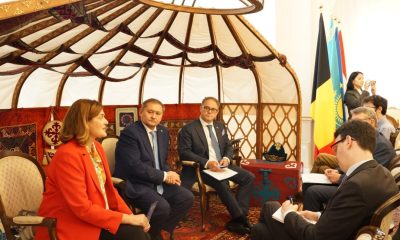
Second National Kurultai gathered Mazhilis deputies, civil society and political party representatives to engage in a constructive dialogue. Photo credit: Akorda press service.
The government can conduct transformative political and economic reforms, but individual contributions are equally important, according to Tokayev. “It is essential that our individual and social values and patterns of behavior are modernized, that our nation’s world view is changed. Without this, any transformation will be in vain,” he said.
In this regard, President Tokayev called to embrace what is required to make a responsible citizen, “adal azamat,” who can build a Just Kazakhstan. “Our new social ethics should be based on the values of unity and stability, justice and solidarity, law and order, trust and responsibility. It should become the embodiment of patriotism, humanity, the cult of knowledge, professionalism, thrift and diligence. Above all, one of the most important qualities of the individual that should be valued is a reverent attitude to their land and country,” said Tokayev stressing that Just Kazakhstan and a responsible citizen should be considered the “unshakable pillars of our country.”
Developing national identity through history and culture
The role of building the national identity through history and culture is essential for enhancing centuries-long statehood, according to Tokayev.
“It is very important to strengthen the historical self-consciousness of the nation. All developed countries pay special attention to the formation of a canonical image of their past. The multi-volume research publication on the history of the country plays a key role in this,” he said.
A task to prepare a multi-volume history of Kazakhstan that meets modern scientific approaches has been undertaken and a seven-volume book will be released by the middle of next year.
“Our centuries-old history is the subject of our national pride, an important component of the cultural code of our people. Therefore, one of the primary tasks of the state is to create the necessary conditions for its comprehensive study, understanding and popularization,” said Tokayev.
It is important to ensure that Kazakh intangible cultural heritage is also preserved for posterity, according to the President.
“Kazakh culture is multifaceted. We have inherited a huge legacy from our ancestors, which we need to consistently modernize and promote all over the world,” he said.
From natural reserves to traditional music and games – these are all part of Kazakhstan’s natural and cultural heritage.
Burabay National Park and Markakol State Nature Reserve, as well as the Orteke musical and puppet art were recognized as an Intangible Cultural Heritage by the United Nations Educational, Scientific and Cultural Organization (UNESCO) during Director General Audrey Azoulay’s visit to Kazakhstan for the Astana International Forum on June 8-9.
The fifth World Nomad Games which are going to take place in Kazakhstan next year are also an example of how Kazakhstan manages to preserve national traditions. Read the full article.
Share this article:
EU Reporter publishes articles from a variety of outside sources which express a wide range of viewpoints. The positions taken in these articles are not necessarily those of EU Reporter. Please see EU Reporter’s full Terms and Conditions of publication for more information EU Reporter embraces artificial intelligence as a tool to enhance journalistic quality, efficiency, and accessibility, while maintaining strict human editorial oversight, ethical standards, and transparency in all AI-assisted content. Please see EU Reporter’s full A.I. Policy for more information.




Kazakhstan cuts water use by 874 mln m³ through new technologies

Impasse in European Union Tobacco Tax Reform: The Swedish veto

Inconvenient questions about Andorra and San Marino that Brussels should be asking

How digital wallets are changing the way Welsh consumers pay for online services

Serbia’s business environment is driving its integration into the EU

Record breaking Belgian sailors making more waves

Message to Kemi Badenoch: 'Make a splash by thinking out-of-the-box on UK-Europe relationship'

Europe's peripheral and maritime regions 'combine many territorial assets', meeting told

'I don’t think Jews have a place neither in France nor in Belgium’, says Israeli deputy foreign minister

Ireland’s Presidency of the EU will link health and competitiveness

Western investors eye Russian assets again as sanctions discounts persist

EU green jobs: Which activities employ the most people?

Podcast: The story behind data on hazardous chemicals

EU's labour productivity slightly increased in Q1 2026

Government gross debt of eurozone largely in euro

Commission calls for equal pay rules to become a reality across the EU

Kazakhstan reforms under scrutiny at Brussels Press Club round table

Japan should face up to history and contribute more to regional peace

Ambassador calls for 'speeding up' of co-operation between EU and Kazakhstan

Timur Turlov at Smart Moves Summit 2025: How chess can transform global education

Shevtsova’s case: Out-of-court sanctions dismantling trust in Ukrainian cause

The future of European transport

Trump Vs Trueman

US 'no longer' an 'unconditional ally' for Europe - MEP
-
 Kazakhstan3 days ago
Kazakhstan cuts water use by 874 mln m³ through new technologies
-
 Health5 days ago
Impasse in European Union Tobacco Tax Reform: The Swedish veto
-
 San Marino4 days ago
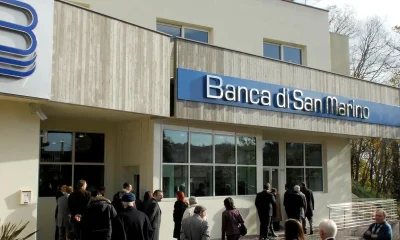
Inconvenient questions about Andorra and San Marino that Brussels should be asking
-
 General4 days ago
How digital wallets are changing the way Welsh consumers pay for online services