EU
#Kazakhstan could be 'model' for Europe in fight against terrorism


Kazakhstan could become a “model” for Europe in its fight against terrorism and Islamic radicalization, a meeting was told.
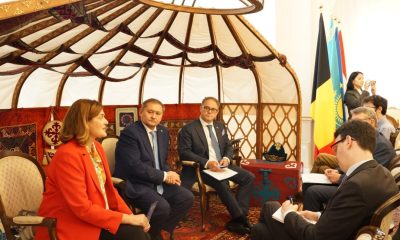
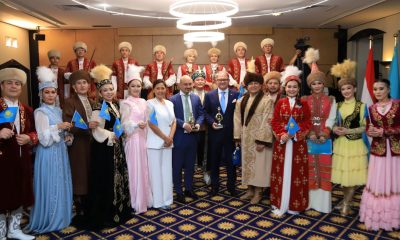
The event, to mark the country’s 25th independence,was told that Kazakhstan has successfully integrated people from different ethnic backgrounds and religions.
According to the Assembly of the Western European Union (WEU), a Paris-based western defensive alliance, the EU and its member states could learn from its record in assimilating people from different cultures.
The country was the last of the former Union’s countries to become independent in 1991 and, despite its relatively sparse population, is the ninth biggest country in the world.
Speaking in Brussels, WEU President Stef Goris said Kazakhstan’s people have managed to live in peace and harmony even though there are more than 130 different ethnicities, including Kazakhs, Russians and Tartars, in a country of 17 million inhabitants.
This was something the West, and especially the EU, could learn from Kazakhstan in the fight against Islamic terrorism, he argued.
Goris, whose organization was the first European interparliamentary assembly for security and defence matters, said, “Kazakhstan is a large and diverse country. About 70 % of the people are Muslims and 30% Christians. I’m deeply impressed how they handle to live together.”
The West, he suggested, should “take a closer look” at the country’s “peaceful model”, adding, “Kazakhstan’s experience could be more than helpful for us.”
Kazakhstan’s engagement in the fight against terror was also highlighted by Toivo Klaar, head of the Central Asian Division at the European External Action Service (EEAS), who said, “The country cooperates internationally to fight terrorism.”
In addition, Kazakhstan, he noted, also helps other countries like Afghanistan to become more stable and safe.
For example, Afghan students are allowed to visit Kazakh universities to get educated since the education system in Afghanistan has suffered due to war and other conflicts.
Kazakhstan’s foreign policies had also improved the country’s position on the global market, said the EU official.
Further comment came from Almaz Khamzaev, head of the Kazakhstan mission in the EU, who, speaking of the quarter century since the former Soviet state gained its independence, said, “We’ve not wasted the past 25 years. We have worked very hard. I think we’ve even become a new country.”
The ambassador added, “It was a cherished goal of our Kazakh ancestors to become independent. We have not only achieved this, we achieved even more.”
It was the only country in the region with a good labour market and the Kazakh government had taken on several measures to improve the country’s wellbeing.
“For example, a lot of money has been invested in infrastructure and urban construction.Astana has become the new, modern and prosperous capital.”
The city aims to showcase this to the world next year when Astana hosts the Expo 2017, he said.
All agreed Kazakhstan had opened up to the West.
“The EU has become the most important trade partner for Kazakhstan”, said Khamzaev.
Further comment came from Pier Borgoltz, an expert on Kazakhstan affairs, who said, “The EU’s relation with Kazakhstan has been very fruitful. Kazakhstan’s engagement, also in foreign policies, has been remarkable. This anniversary can be seen as an incredible step forward for such a young country.”
Several speakers also said that while the country had sent a “signal of trust” to the EU by not requiring visas for member states’ citizens this contrasted with people of Kazakhstan who need one to visit the EU.
The debate on 3 May was moderated by Colin Stevens, publisher of EU Reporter.
Share this article:
EU Reporter publishes articles from a variety of outside sources which express a wide range of viewpoints. The positions taken in these articles are not necessarily those of EU Reporter. Please see EU Reporter’s full Terms and Conditions of publication for more information EU Reporter embraces artificial intelligence as a tool to enhance journalistic quality, efficiency, and accessibility, while maintaining strict human editorial oversight, ethical standards, and transparency in all AI-assisted content. Please see EU Reporter’s full A.I. Policy for more information.





Stepping out...to get the UK back in European Union

Energy use in the industry sector continues to decline

DG Translation in a city near you: June events

The role of quality assurance in advancing inclusive upper secondary VET in Slovenia

Europe must not turn its back on rural women’s empowerment

Commission accelerates transition away from animal testing in chemical safety assessments

Counterfeit cigarettes drive illicit tobacco trade to highest level in a decade, new study claims

High-speed drama shatters Monaco’s tranquil façade

Inconvenient questions about Andorra and San Marino that Brussels should be asking

How digital wallets are changing the way Welsh consumers pay for online services

Impasse in European Union Tobacco Tax Reform: The Swedish veto

EU Cybersecurity Act could expose member states to costly investment treaty claims, legal opinion warns

Várhelyi says unilateral measures by the US against the EU ‘would not be justified’

Libya’s fuel crisis offers lessons for energy security on both sides of the Mediterranean

490+ experts call for €10 billion ring-fenced health allocation in EU budget

ENVI opinion signals early resistance to Biotech Act SPC extension

Kazakhstan reforms under scrutiny at Brussels Press Club round table

Japan should face up to history and contribute more to regional peace

Ambassador calls for 'speeding up' of co-operation between EU and Kazakhstan

Timur Turlov at Smart Moves Summit 2025: How chess can transform global education

Shevtsova’s case: Out-of-court sanctions dismantling trust in Ukrainian cause

The future of European transport

Trump Vs Trueman

US 'no longer' an 'unconditional ally' for Europe - MEP
-
 Brexit4 days ago
Stepping out...to get the UK back in European Union
-
 Energy5 days ago
Energy use in the industry sector continues to decline
-
 Translation5 days ago
DG Translation in a city near you: June events
-
 Slovenia5 days ago
The role of quality assurance in advancing inclusive upper secondary VET in Slovenia