Economy
#Eurozone growth, inflation pick up, but no ECB moves seen yet


Euro zone inflation jumped in January, economic growth picked up and unemployment fell to a seven-year low, but the rebound looks unlikely to prompt any early rethink of the ECB's stimulus program as rises in core prices were modest, writes Jan Strupczewski and Francesco Guarascio.
Inflation in the 19 countries sharing the euro accelerated to 1.8% year-on-year, Eurostat estimated, up from 1.1% in December, putting it within range of the European Central Bank's medium-term target of below but close to 2 percent.
It was the highest rate since February 2013.
Core inflation, which excludes volatile prices of energy and unprocessed food and which the ECB focuses on in its policy decisions, was stable at 0.9% year-on-year, however.
ECB President Mario Draghi said last Thursday he would look past energy price fluctuations until underlying inflation picked up in a "convincing" way.
"With core inflation still weak, it seems unlikely that this will cause the ECB to change course" on its bond-buying program, said Bert Colijn, economist at ING bank.
Barring some "serious upside surprise" in core inflation, he did not expect the ECB to start tapering the program until next year.
Energy prices jumped 8.1% year-on-year in January after a 2.6% increase in December and unprocessed food was 3.3% more expensive than a year earlier.
Separately, the statistics agency said euro zone gross domestic product rose 0.5 percent quarter-on-quarter in the last three months of 2016, as expected, for a 1.8% year-on-year rise.
In the whole of 2016, euro zone GDP rose 1.7%, down from a five-year high of 2.0% in 2015.
"We suspect the euro zone may find it difficult to sustain this momentum amid appreciable political uncertainties during 2017 and likely reduced consumer purchasing power due to higher inflation," said Howard Archer, economist at IHS Global Insight.
Archer sees euro zone GDP growth of 1.6% in both 2017 and 2018.
Stronger economic growth also helped bring down the bloc's unemployment rate to 9.6% in December, the lowest since May 2009 before Greece's debt crisis broke out.
"This starts to get closer to figures that would justify more wage pressures, but it seems unlikely that this will happen in a meaningful way in the first half of 2017," Colijn said.
"Nevertheless, the ECB will look at this batch of data with a mix of joy and concern as it does show that the economy is moving in the right direction, but it will probably bring out the hawks early," he said.
Share this article:

EU Reporter publishes articles from a variety of outside sources which express a wide range of viewpoints. The positions taken in these articles are not necessarily those of EU Reporter. Please see EU Reporter’s full Terms and Conditions of publication for more information EU Reporter embraces artificial intelligence as a tool to enhance journalistic quality, efficiency, and accessibility, while maintaining strict human editorial oversight, ethical standards, and transparency in all AI-assisted content. Please see EU Reporter’s full A.I. Policy for more information.






Who will win the 2026 World Cup? Data points to Spain

Western investors eye Russian assets again as sanctions discounts persist

Commission imposes interim measures on Meta to preserve free access to WhatsApp for rival AI assistants

EU green jobs: Which activities employ the most people?

Government gross debt of eurozone largely in euro

Commission calls for equal pay rules to become a reality across the EU

Chinese and European Youth Invited to Showcase Creativity in International Cartoon and Short Video Contest

'I don’t think Jews have a place neither in France nor in Belgium’, says Israeli deputy foreign minister

Shoot the messenger: How Europe learned to silence its own warnings

When Brussels messes up: The people always pay

The G7 has a critical minerals plan, but it is missing a development chapter

How European businesses are rethinking customer support in the AI era

Latest financial report by Corinthia Hotel owners, IHI, raises questions over financial stability

Paying ISIS to keep a cement plant running: How a major French company financed one of the world's most brutal terrorist groups

Bach in Brussels

President approves Digital Qazaqstan national strategy

Kazakhstan reforms under scrutiny at Brussels Press Club round table

Japan should face up to history and contribute more to regional peace

Ambassador calls for 'speeding up' of co-operation between EU and Kazakhstan

Timur Turlov at Smart Moves Summit 2025: How chess can transform global education

Shevtsova’s case: Out-of-court sanctions dismantling trust in Ukrainian cause

The future of European transport

Trump Vs Trueman

US 'no longer' an 'unconditional ally' for Europe - MEP
-
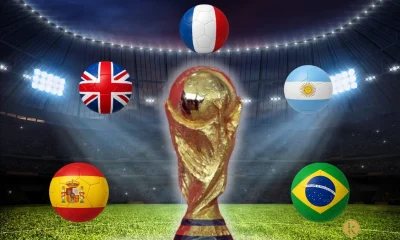 Sport2 days ago
Who will win the 2026 World Cup? Data points to Spain
-
 Russia4 days ago
Western investors eye Russian assets again as sanctions discounts persist
-
 Artificial intelligence5 days ago
Commission imposes interim measures on Meta to preserve free access to WhatsApp for rival AI assistants
-
 Green Week4 days ago
EU green jobs: Which activities employ the most people?