Afghanistan
#Afghanistan: EU sets out its strategy to support peace and prosperity in Afghanistan

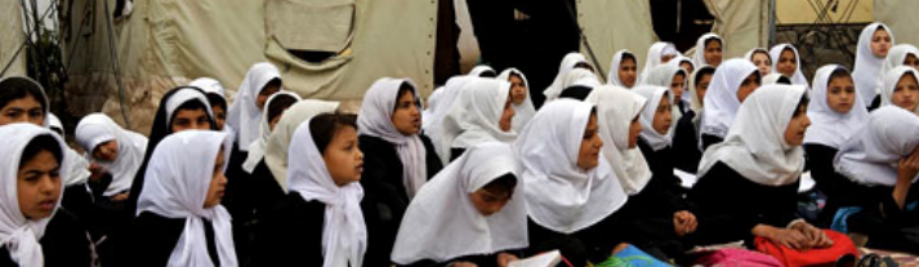
UNICEF project, Afghanistan
Today (24 July) the High Representative for Foreign Affairs and Security Policy and the European Commission have set out their vision for how the European Union can support Afghanistan both to address its challenges and to bring about positive change for the Afghan people.
In recent years, Afghanistan has been confronted with a number of challenges that threaten the progress made in its economic and social development and its democratic institutions. The EU recognises that the delicate security situation and the fragile economic situation the country is facing, combined with a clear determination on the part of the Afghan authorities to implement much-needed reforms necessitates renewed attention from the international community.
The Joint Communication on elements for an EU strategy on Afghanistan is available online.
Federica Mogherini, the High Representative of the European Unio, said:
"The Afghan people deserve peace and prosperity. As the European Union, we have been standing by them and will continue to do so, in support of the reform process, of Afghanistan's democratic path, of the rule of law and human rights, and of bringing peace to the country, to the benefit not only of all Afghans but also of the entire region and the international community as a whole. This work towards peace needs to be led by Afghans and owned by Afghans, but the active support of the region and of the international community is crucial. The Afghan people can count on the European Union to accompany this process.”
Neven Mimica, the Commissioner for International Cooperation and Development, said:
"Afghanistan is not alone. We will continue the support which we have been providing since 2002 – to make sure that the development achievements of the last years are not lost. With the EU's support, more Afghan women are actively participating in the country's politics. Access to health care has increased, and farmers are better supported to improve agricultural production than before. Moving forward to help Afghanistan overcome its many challenges, we will renew our engagement and focus on supporting good governance and the justice sector, creating sustainable growth and jobs, and ensuring basic social services for the Afghan people."
The Joint Communication sets out ways in which the European Union can work, in close cooperation with civil society, the Afghan authorities, and all stakeholders, towards lasting peace, a consolidated democracy, equitable development and social justice in Afghanistan. It proposes concrete actions, focussing on five priority areas:
Peace, stability and regional security:
Supporting and promoting an inclusive, Afghan-led and Afghan-owned peace and reconciliation process leading to a negotiated peace settlement
Building the capacity of the Afghan government to reach out to all those in sincere negotiations on peace and reconciliation.
Supporting the civilian aspects of security sector reform, including the professionalisation of the police and the fight against corruption in this area.
Working with the government of Afghanistan to support its strategic policy priorities, including peacebuilding and sustainable development.
Democracy, rule of law and human rights:
Assisting Afghanistan's efforts to reform its electoral system and to strengthen the integrity of the electoral process, for example by supporting independent electoral bodies or assisting in drafting of electoral legislation and regulations.
Helping to fight corruption, as well as supporting the country's justice sector, parliament and civil society.
Working with the Government of Afghanistan to address human rights concerns, including respect for minorities, child protection or the fight against impunity.
Economic and human development:
Providing technical cooperation to assist the Afghan authorities to implement the Agenda 2030 for Sustainable Development, and their own National Peace and Development Framework.
Reinforcing the role of rural economies and agriculture, an increased role of the private sector and enhancing resilience.
Supporting regional connectivity, to further improve the country's transit, transport and energy corridors and to enable increased trade throughout the region.
Migration:
Working together to fully implement the EU-Afghanistan Joint Way Forward on migration issues and the bilateral memoranda of understanding concluded between EU Member States and Afghanistan.
Helping to address the root causes of irregular migration and forced displacement.
Helping to create an environment that offers the Afghan people an alternative to irregular migration, as well as to enable the sustainable reintegration of returnees from the EU and non-EU countries through a community-based approach.
Empowering Women:
Supporting the implementation of the national action plan for UNSC resolution 1325 on women, peace and security, and other national women's empowerment legislation.
Supporting the incorporation of legislation and additional measures to prevent, combat and criminalise violence against women and sexual harassment.
Strengthening the role and rights of women in preventing and resolving conflicts, in democratic participation, and in sustainable development.
Share this article:
EU Reporter publishes articles from a variety of outside sources which express a wide range of viewpoints. The positions taken in these articles are not necessarily those of EU Reporter. Please see EU Reporter’s full Terms and Conditions of publication for more information EU Reporter embraces artificial intelligence as a tool to enhance journalistic quality, efficiency, and accessibility, while maintaining strict human editorial oversight, ethical standards, and transparency in all AI-assisted content. Please see EU Reporter’s full A.I. Policy for more information.



Who will win the 2026 World Cup? Data points to Spain

Western investors eye Russian assets again as sanctions discounts persist

Debt, AI and Algorithms: How the bond market is being reshaped

Commission imposes interim measures on Meta to preserve free access to WhatsApp for rival AI assistants

EU green jobs: Which activities employ the most people?

Government gross debt of eurozone largely in euro

Commission calls for equal pay rules to become a reality across the EU

EDF’s first-ever FSTP sub-call attracts strong interest from newcomers to EU defence funding

When Brussels Messes Up - the People Always Pay

The G7 has a critical minerals plan, but it is missing a development chapter

How European businesses are rethinking customer support in the AI era

Latest financial report by Corinthia Hotel owners, IHI, raises questions over financial stability

Paying ISIS to keep a cement plant running: How a major French company financed one of the world's most brutal terrorist groups

Bach in Brussels

President approves Digital Qazaqstan national strategy
Who will win the 2026 World Cup? Data points to Spain

Kazakhstan reforms under scrutiny at Brussels Press Club round table

Japan should face up to history and contribute more to regional peace

Ambassador calls for 'speeding up' of co-operation between EU and Kazakhstan

Timur Turlov at Smart Moves Summit 2025: How chess can transform global education

Shevtsova’s case: Out-of-court sanctions dismantling trust in Ukrainian cause

The future of European transport

Trump Vs Trueman

US 'no longer' an 'unconditional ally' for Europe - MEP
-
 Sport2 days ago
Who will win the 2026 World Cup? Data points to Spain
-
 Russia4 days ago
Western investors eye Russian assets again as sanctions discounts persist
-
 Economy5 days ago
Debt, AI and Algorithms: How the bond market is being reshaped
-
 Artificial intelligence5 days ago
Commission imposes interim measures on Meta to preserve free access to WhatsApp for rival AI assistants