Environment
#LUKOIL presents forecast of global liquid hydrocarbons' market development in Brussels


In Brussels, LUKOIL presented the long-term forecast for the development of the global market of liquid hydrocarbons in the context of transition to a low-carbon economy. The vision presented by the company is based on various scenarios for the development of renewable energy sources, while the key global trends affecting the hydrocarbon industry are improving the fuel efficiency of the transport sector and developing the electric vehicle market.
According to Vice President for Strategic Development of LUKOIL Leonid Fedun, electric and hybrid cars will dominate Europe by 2035, while, according to him, “at the same time, there will be 2 billion cars with internal combustion engines in the world, and it is essential to maintain flexibility in relation to those people who will make a choice in their favor”.
The transport sector accounts for nearly 70% of the EU's greenhouse gas emissions. At the same time, according to Fedun, the European transport sector needs to shift to a new technological level in the context of energy storage production to maintain the pace of evolutionary development of electric cars, while technologies that increase the environmental efficiency of conventional car fuel already exist. For instance, LUKOIL's processing facilities in Bulgaria and Romania produce environmentally friendly fuel products and lubricants.
The company's direct connection with the European market is the main driver of the development of “green” projects. “Our motivation for implementing environmental programs is realted to the fact that we are a European company - there are four LUKOIL refineries in the EU. Additionally, Europe is the largest importer of our fuel. Therefore, we feel a commitment to meet the current trends, including climate ones, that exist on the market,” Fedun said.
Shifting all LUKOIL plants to green hydrocarbon basis is one of the company programs aimed at improving energy efficiency and solving climate issues, which can reduce greenhouse gas emissions by 3-4 million tons a year.
The company’s deep involvement in European business and its responsible approach to business projects in the region allows its shareholders and investors to feel confident regardless of OPEC+ decisions.
According to Fedun, the global community is currently experiencing a period of “cheap” oil, which will last until 2040. At the same time, this oil sector stance also affects the pace of development of alternative energy technologies, which, from the perspective of the Vice President of LUKOIL, are cost-effective only when the oil price is 80 dollars per barrel.
Thus, over the next decades, oil is bound to remain the key energy carrier. The core issue that directly affects the achievement of global climate goals is the development of sustainable energy mixes with significant share comprising of traditional energy sources that are adapted to modern environmental requirements through far-reaching production modernization.
Share this article:
EU Reporter publishes articles from a variety of outside sources which express a wide range of viewpoints. The positions taken in these articles are not necessarily those of EU Reporter. Please see EU Reporter’s full Terms and Conditions of publication for more information EU Reporter embraces artificial intelligence as a tool to enhance journalistic quality, efficiency, and accessibility, while maintaining strict human editorial oversight, ethical standards, and transparency in all AI-assisted content. Please see EU Reporter’s full A.I. Policy for more information.




Who will win the 2026 World Cup? Data points to Spain

Western investors eye Russian assets again as sanctions discounts persist

Government gross debt of eurozone largely in euro

EU green jobs: Which activities employ the most people?

Commission calls for equal pay rules to become a reality across the EU

Chinese and European Youth Invited to Showcase Creativity in International Cartoon and Short Video Contest

'I don’t think Jews have a place neither in France nor in Belgium’, says Israeli deputy foreign minister

EU disburses nearly €2.8 billion to support Ukraine's financial stability and reform efforts

Shoot the messenger: How Europe learned to silence its own warnings

When Brussels messes up: The people always pay

The G7 has a critical minerals plan, but it is missing a development chapter

How European businesses are rethinking customer support in the AI era

Latest financial report by Corinthia Hotel owners, IHI, raises questions over financial stability

Paying ISIS to keep a cement plant running: How a major French company financed one of the world's most brutal terrorist groups

Bach in Brussels

President approves Digital Qazaqstan national strategy

Kazakhstan reforms under scrutiny at Brussels Press Club round table

Japan should face up to history and contribute more to regional peace

Ambassador calls for 'speeding up' of co-operation between EU and Kazakhstan

Timur Turlov at Smart Moves Summit 2025: How chess can transform global education

Shevtsova’s case: Out-of-court sanctions dismantling trust in Ukrainian cause

The future of European transport

Trump Vs Trueman

US 'no longer' an 'unconditional ally' for Europe - MEP
-
 Sport2 days ago
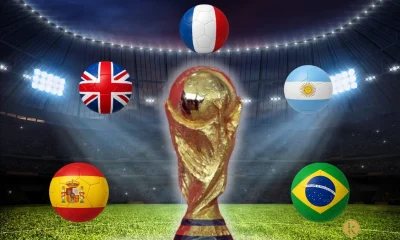
Who will win the 2026 World Cup? Data points to Spain
-
 Russia4 days ago
Western investors eye Russian assets again as sanctions discounts persist
-
 EU4 days ago
Government gross debt of eurozone largely in euro
-
 Green Week4 days ago
EU green jobs: Which activities employ the most people?