Business
European stocks head for record run as summer rally rolls on


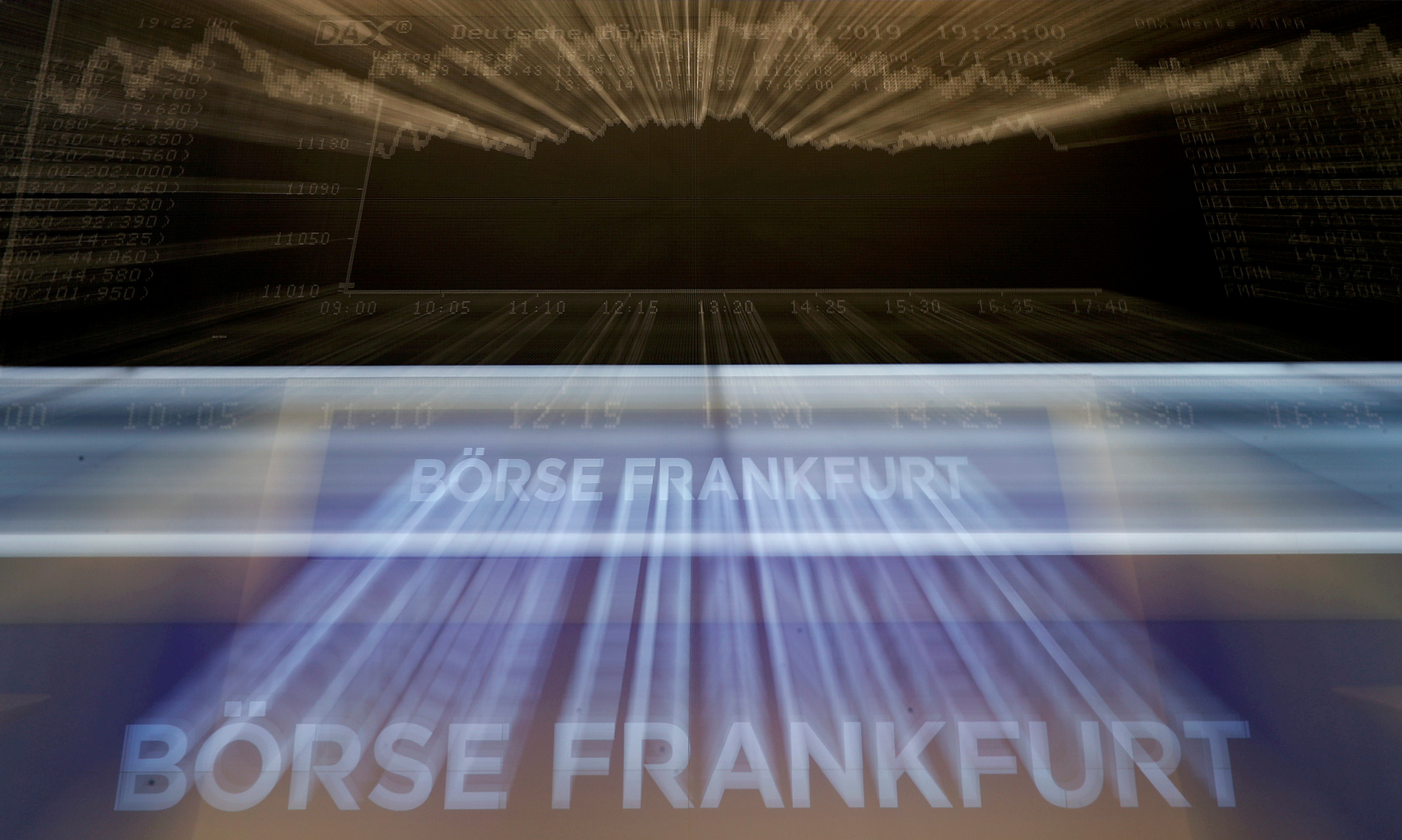
European stocks hit new highs on Friday (13 August) and were on course for a record-breaking run, capping another strong week as investors seize on a dip in U.S. inflation and more forecast-beating corporate earnings, write Tommy Wilkes, Sujata Rao in London and Alun John in Tokyo.
It was a different story in Asia, where worries about a regulatory crackdown in China and a surge in the COVID-19 Delta variant has sapped confidence.
U.S. inflation numbers this week suggested rising price growth may be peaking, which would ease pressure on the Federal Reserve to begin tapering its asset purchases.
Pandemic-era stimulus has been behind much of the surge in stock prices the past year, but a stronger than expected economic rebound in much of the world and massive corporate earnings has given the rally new legs in recent weeks.
By 0810 GMT on Friday, the MSCI world equity index (.MIWD00000PUS), which tracks shares in 50 countries, was just below an all-time record high.
The broader Euro STOXX 600 (.STOXX) was 0.15% higher - on Thursday (12 August) it equalled its longest ever longest winning streak. Friday would see the index extending gains for a record tenth consecutive session.
Markets in Germany (.GDAXI) and France (.FCHI) added 0.2%. Britain's FTSE 100 (.FTSE) gained 0.3%.
Futures also pointed to a small gain on Wall Street when it opens .
Not everyone is convinced the recent rally can continue, however.
"We feel a bit more cautious headed into autumn because of uncertainty on the health front, the Chinese regulatory front and the monetary policy front," said Paul O'Connor, head of multi-asset at Janus Henderson, stressing he was not "bearish by any means" but had dialled back exposure to riskier assets.
"The perception is we have passed the high point in terms of central bank generosity that has suppressed yields. We should expect higher nominal and real yields from here which should start to chip away at the highest valued parts of the markets -U.S. and tech," he added.
In Asia, markets mostly declined.
MSCI's broadest index of Asia-Pacific shares outside Japan (.MIAPJ0000PUS) fell 0.65%, and was 0.87% lower for the week.
Chinese blue chips (.CSI300) weakened 0.55%, dragged down by its local semiconductor sub-index (.CSIH30184), which slumped 4.1%.
More broadly, "rising regulatory and geopolitical risks are weighing on medium-term growth prospects (in China), especially in segments targeted by national reform or security effort," private bank UBP said in an note.
The dollar held firm on Friday, staying near its highest level in four months against a basket of currencies, as investors looked for more hints from the US Federal Reserve on its plans to reduce monetary stimulus. The euro edged higher but at $1.1739 was not far off four-month lows.
Nearly two-thirds of economists polled by Reuters said the Fed is likely to announce a taper of its asset purchases - currently set at $80 billion of Treasuries and $40bn of mortgage-backed securities per month - at its September meeting.
The yield on benchmark 10-year Treasury notes was last down 2 basis points at 1.3472%, against a U.S. close of 1.367%.
Oil prices , fell for a second straight day after the International Energy Agency warned that demand growth for crude and its products had slowed sharply. Read more.
Share this article:
EU Reporter publishes articles from a variety of outside sources which express a wide range of viewpoints. The positions taken in these articles are not necessarily those of EU Reporter. Please see EU Reporter’s full Terms and Conditions of publication for more information EU Reporter embraces artificial intelligence as a tool to enhance journalistic quality, efficiency, and accessibility, while maintaining strict human editorial oversight, ethical standards, and transparency in all AI-assisted content. Please see EU Reporter’s full A.I. Policy for more information.






EU and South Africa kick off intergovernmental dialogue on Clean Trade and Investment Partnership

Seveso - 50 years on: EU strengthens its commitment to industrial safety in a changing landscape of risk

Why young jobseekers struggle to find roles abroad that fit their expertise

Commission opens formal investigation into possible gun jumping in XXXLutz's acquisition of Porta

Farmers, fair markets and consumers: new report highlights the role of EU competition rules in agriculture

Shared commitment to advance EOSC through new EOSC Nodes and EOSC projects

Falling in love with the Maldives

ECR MEPs question the European Commission on cardiovascular health and diet promoting the Mediterranean diet as an alternative to ultra-processed foods as key to tackling obesity

STATEMENT by the Ministry of Foreign Affairs of the Republic of Kazakhstan

Kazakhstan seeks regional AI leadership as economic partnership with China enters new phase

Starmer’s problem? 'He is not a politician'

Why a Brussels–Nicosia–Eastern Mediterranean strategic affairs platform would benefit the European Union

Albania's Vlora airport standoff tests investor confidence as EU accession clock ticks
ECR MEPs question the European Commission on cardiovascular health and diet promoting the Mediterranean diet as an alternative to ultra-processed foods as key to tackling obesity

Kazakhstan's fixed capital investment tops 9.5 trillion tenge in H1 2026

Commission adopts simpler rules for EU agri-food promotion policy

Kazakhstan reforms under scrutiny at Brussels Press Club round table

Japan should face up to history and contribute more to regional peace

Ambassador calls for 'speeding up' of co-operation between EU and Kazakhstan

Timur Turlov at Smart Moves Summit 2025: How chess can transform global education

Shevtsova’s case: Out-of-court sanctions dismantling trust in Ukrainian cause

The future of European transport

Trump Vs Trueman

US 'no longer' an 'unconditional ally' for Europe - MEP
-
 South Africa5 days ago
EU and South Africa kick off intergovernmental dialogue on Clean Trade and Investment Partnership
-
 Disasters5 days ago
Seveso - 50 years on: EU strengthens its commitment to industrial safety in a changing landscape of risk
-
 Employment5 days ago
Why young jobseekers struggle to find roles abroad that fit their expertise
-
 European Commission5 days ago
Commission opens formal investigation into possible gun jumping in XXXLutz's acquisition of Porta