Economy
EU trade deal with Costa Rica and El Salvador becomes operational


Trade barriers between the EU, Costa Rica and El Salvador will be lifted as of 1 October 2013, when the trade pillar of the EU–Central America Association Agreement enters into application with these countries. The EU and Honduras, Nicaragua and Panama have been applying the Agreement since 1 August. Guatemala is finalising procedures to allow for provisional application soon. This ambitious trade partnership will open up new markets and simplify rules, boosting trade and investments in both regions. Central America's economy is expected to grow by over €2.5 billion a year once the agreement applies to the entire region.
"This is the first true region-to-region Association Agreement signed by the EU,” said Trade Commissioner Karel De Gucht. “I am pleased Costa Rica and El Salvador can now benefit from the trade deal, which is an important step towards our goal of applying the agreement to the whole region. We are looking forward to Guatemala joining very soon. The agreement will be a major stimulus for the economic integration of Central America. Now it's up to companies on both sides to take full advantage of the many opportunities the deal offers.”
The comprehensive trade part of the agreement sets out disciplines that go beyond those agreed in the multilateral trade framework, particularly in services, public procurement, intellectual property, sustainable development and technical barriers to trade. This will boost region-wide development, while at the same time providing for new market opportunities for European companies, exporters and investors.
A key aspect of the agreement is its system of consultation at different levels, such as the involvement of civil society. This will allow for open dialogue on specific trade concerns under the different chapters of the agreement. It also creates a transparent, non-discriminatory and predictable environment for business and investors and contains a bilateral dispute settlement mechanism.
Background
The EU is the second largest trading partner for Costa Rica and El Salvador. Trade flows between Costa Rica and the EU have been increasing continuously over the past ten years, reaching €8.7bn in 2012. In the same year, EU Foreign Direct Investments amounted to €400m, mainly in the telecommunications, tourism, industry and transport sectors.
Costa Rica’s and El Salvador’s exports to the EU consist of industrial products (microchips, medical and optical instruments) as well as agricultural products (coffee, bananas, pineapples, sugar and fisheries). The EU exports mainly pharmaceutical products, petroleum oil, cars and machinery.
The Association Agreement between the EU and Central America (Costa Rica, El Salvador, Guatemala, Honduras, Nicaragua and Panama) contains three pillars – political dialogue, development co-operation and trade. These aim to support economic growth, democracy and political stability in Central America. Until all 28 EU Member States have ratified the agreement only the trade pillar will be provisionally applied allowing companies to already benefit from all the trade preferences set out in the agreement.
For the full text of the Trade Agreement, click here.
Share this article:
EU Reporter publishes articles from a variety of outside sources which express a wide range of viewpoints. The positions taken in these articles are not necessarily those of EU Reporter. Please see EU Reporter’s full Terms and Conditions of publication for more information EU Reporter embraces artificial intelligence as a tool to enhance journalistic quality, efficiency, and accessibility, while maintaining strict human editorial oversight, ethical standards, and transparency in all AI-assisted content. Please see EU Reporter’s full A.I. Policy for more information.



Bangladeshis waking up to reality of Yunus government

What the latest data reveals about labour market imbalances across Europe

From imitation to leadership: The production-based rise of Japan and China

Copernicus: Europe’s air quality improves despite persistent pollution episodes

Commission approves €402 million Spanish state aid for road transport companies facing increased fuel prices

Ensuring fairness and safety: €3 customs duty for low-value parcels

EU delivers emergency aid and organises a humanitarian flight in response to earthquakes in Venezuela

High Representative Kallas with Commissioners Kos and Brunner in Türkiye to advance bilateral cooperation

Kyrgyzstan launches Tamchy SFIT: a new international jurisdiction as a gateway to Eurasia

Kazakhstan’s dombyra: the two-stringed instrument that carries the soul of the steppe

Europe must double down on nuclear progress to achieve its long-term ambitions

Solana Company Partners with Kazakhstan on $6B Alatau Crypto Megacity

Astana's congress of world religions: A global platform for dialogue in an age of division

How Schuman lost Its way

Rating of American Express casino sites in the UK

PMI defends AI consultation tool as scrutiny grows over EU tobacco rules review

Kazakhstan reforms under scrutiny at Brussels Press Club round table

Japan should face up to history and contribute more to regional peace

Ambassador calls for 'speeding up' of co-operation between EU and Kazakhstan

Timur Turlov at Smart Moves Summit 2025: How chess can transform global education

Shevtsova’s case: Out-of-court sanctions dismantling trust in Ukrainian cause

The future of European transport

Trump Vs Trueman

US 'no longer' an 'unconditional ally' for Europe - MEP
-
 Bangladesh4 days ago
Bangladeshis waking up to reality of Yunus government
-
 Employment4 days ago
What the latest data reveals about labour market imbalances across Europe
-
 China4 days ago
From imitation to leadership: The production-based rise of Japan and China
-
 Air quality4 days ago
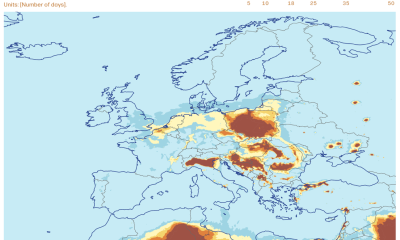
Copernicus: Europe’s air quality improves despite persistent pollution episodes