EU waste legislation
517 kg municipal waste per capita in 2024


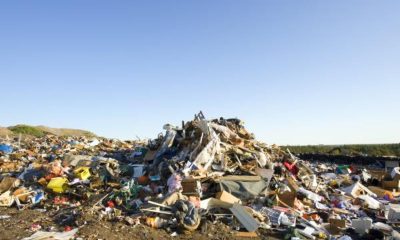
In 2024, the amount of municipal waste generated per person in the EU corresponded to 517 kg, 6 kg more than in 2023 (511 kg). Compared with 2014, the amount increased by 38 kg (+8%).
The available data reveals significant differences across EU countries. Austria (782 kg per person, 2023 data), Denmark (755 kg), and Belgium (699 kg) recorded the highest levels of municipal waste per person. The lowest amount of waste per person was generated in Romania (305 kg, 2023 data), Estonia (375 kg) and Poland (387 kg).
Source dataset: env_wasmun
Since 2014, the amount of municipal waste per person increased in 20 EU countries. Belgium (+274 kg), Czechia (+228 kg) and Austria (+217 kg) had the most significant increases. Conversely, the largest decreases were found in the Netherlands (-54 kg), Denmark (-53 kg) and Finland (-25 kg).
248 kg per person recycled in the EU
The EU recycled an average of 248 kg of municipal waste per person in 2024. This means that 48.1% of the total amount of this waste generated was recycled, compared with 48.0% in 2023 (246 kg per person) and a more significant improvement compared with 43.0% in 2014 (208 kg per person).
For more information
- Statistics Explained article on municipal waste
- Thematic section on waste
- Database on waste
- Podcast on waste in the EU
- Statistics for the European Green Deal dashboard
Methodological notes
- Municipal waste refers to waste from households as well as other waste that, because of its nature or composition, is similar to waste from households. It does not include, for example, industrial, agricultural, medical, construction and demolition waste.
- Data on EU countries are based on the joint Eurostat-OECD Questionnaire, submitted on a voluntary basis.
Share this article:
EU Reporter publishes articles from a variety of outside sources which express a wide range of viewpoints. The positions taken in these articles are not necessarily those of EU Reporter. Please see EU Reporter’s full Terms and Conditions of publication for more information EU Reporter embraces artificial intelligence as a tool to enhance journalistic quality, efficiency, and accessibility, while maintaining strict human editorial oversight, ethical standards, and transparency in all AI-assisted content. Please see EU Reporter’s full A.I. Policy for more information.



The South Caucasus at a historic turning point: Between lasting peace and renewed confrontation
The security environment of the South Caucasus amid changing geopolitical realities

Commission sends Statements of Objections to several companies and trade associations in suspected construction chemicals cartel

Why the US is losing its legitimacy as a global superpower and the trust of the comity of nations

Commission fines AliExpress €550 million for breaching the Digital Services Act

Commission endorses Latvia’s €617 million Social Climate Plan to support vulnerable households and transport users in the clean transition

As Ireland chairs the EU Presidency, what impact has over fifty years of EU membership had on Ireland

EU and Portugal team up to keep brightest tech talents at home

New EU energy rules: Cleaner, more secure energy and stronger consumer protection

France is right to ban social media for children

Belgium's best tourist attraction just got even better

Tokayev urges Putin to 'freeze' Ukraine war in rare public appeal for peace

JoinCare explores scientific exchange during visit to Japan’s National Institute of Infectious Diseases

New episode – DGT podcast: Languages and Technology

Become a European Commission trainee – applications are now open

Commission outlines measures to strengthen Europe's banking sector and support growth

Kazakhstan reforms under scrutiny at Brussels Press Club round table

Japan should face up to history and contribute more to regional peace

Ambassador calls for 'speeding up' of co-operation between EU and Kazakhstan

Timur Turlov at Smart Moves Summit 2025: How chess can transform global education

Shevtsova’s case: Out-of-court sanctions dismantling trust in Ukrainian cause

The future of European transport

Trump Vs Trueman

US 'no longer' an 'unconditional ally' for Europe - MEP
-
 South Caucasus3 days ago
The South Caucasus at a historic turning point: Between lasting peace and renewed confrontation
-
South Caucasus4 days ago
The security environment of the South Caucasus amid changing geopolitical realities
-
 European Commission4 days ago
Commission sends Statements of Objections to several companies and trade associations in suspected construction chemicals cartel
-
 US4 days ago
Why the US is losing its legitimacy as a global superpower and the trust of the comity of nations