EU
Antonyia Parvanova: 'Almost half of European women has experienced violence at one point'


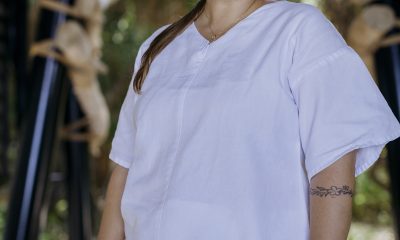
 Violence has touched the lives of almost half of all women in Europe. Not only does this damage people and their families, but it also has a significant economic cost of €228 billion per year in Europe. Ahead of International Women’s Day on 8 March, the European Parliament has called for a common EU strategy to tackle violence against women. The European Parliament discussed it with report author Antonyia Parvanova (pictured), a Bulgarian member of the ALDE group.
How wide-spread is violence against women in Europe?
Several studies show that there is a serious problem with violence against women in Europe. A study by the EU's Fundamental Rights Agency shows that between 20-25% of women have experienced physical violence, about 10% sexual violence, while seven women die due to violence every year and almost half of women in Europe have at one point in their lives experienced a form of violence.
Violence against women affects more than just their family life. What are the consequences?
Violence against women is an obstacle to women’s full participation in economic, social, political and cultural life and has a serious financial impact as well, with the total economic cost estimated to be €228bn per year in the EU.
There is a lack of a comprehensive EU strategy. What needs to be changed?
We have been waiting for a strategy and for the European Commission to encourage member states to ratify the Council of Europe convention on preventing and combating violence against women and domestic violence, which has not happened. So the women's rights committee is now calling on the Commission to come up with a strategy and a legislative act on preventing violence, as well as a comprehensive strategy and legislative act on collecting comparable data. It is the strongest step that the Parliament could legally take in this direction. We are also calling to make 2016 the EU Year to End Violence against Women.
Share this article:
EU Reporter publishes articles from a variety of outside sources which express a wide range of viewpoints. The positions taken in these articles are not necessarily those of EU Reporter. Please see EU Reporter’s full Terms and Conditions of publication for more information EU Reporter embraces artificial intelligence as a tool to enhance journalistic quality, efficiency, and accessibility, while maintaining strict human editorial oversight, ethical standards, and transparency in all AI-assisted content. Please see EU Reporter’s full A.I. Policy for more information.



ECR MEPs question the European Commission on cardiovascular health and diet promoting the Mediterranean diet as an alternative to ultra-processed foods as key to tackling obesity

Falling in love with the Maldives

Chinese “leadership and coordination”

Kurmuk gold project highlights Africa’s changing investment landscape

Britain’s leadership crisis is a symptom, not the disease

EU steps up international support for Palestinians with major initiative for Gaza's early recovery and stronger international coordination

Albania's Vlora airport standoff tests investor confidence as EU accession clock ticks

Commission adds exemptions to rules on removability of portable batteries

Burnham as PM? 'Wait and see'

Ban on destruction of unsold clothes and shoes enters into application

Survey on an EU Blueprint for intellectual property licensing and spinoff creation

Rule of law report strengthens EU democracy and fundamental rights

EU launches Ukraine defence industrial partnership, Drone Deal and disburses €1 billion for drones *

Setting a new benchmark in premium travel

Kazakhstan: Central Election Committee reviews the results of the nomination of candidates for the deputies of Kurultai

Statement by the Ministry of Foreign Affairs of the Republic of Kazakhstan

Kazakhstan reforms under scrutiny at Brussels Press Club round table

Japan should face up to history and contribute more to regional peace

Ambassador calls for 'speeding up' of co-operation between EU and Kazakhstan

Timur Turlov at Smart Moves Summit 2025: How chess can transform global education

Shevtsova’s case: Out-of-court sanctions dismantling trust in Ukrainian cause

The future of European transport

Trump Vs Trueman

US 'no longer' an 'unconditional ally' for Europe - MEP
-
 Italy3 days ago
ECR MEPs question the European Commission on cardiovascular health and diet promoting the Mediterranean diet as an alternative to ultra-processed foods as key to tackling obesity
-
 Tourism4 days ago
Falling in love with the Maldives
-
 China-EU5 days ago
Chinese “leadership and coordination”
-
 China4 days ago
Kurmuk gold project highlights Africa’s changing investment landscape