Brexit
Johnson keeps hard #Brexit stance in speech aimed at mending fences


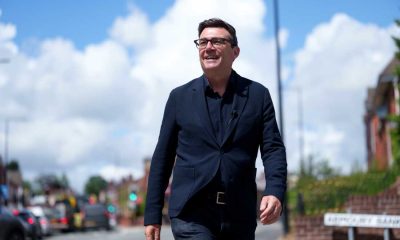
British Foreign Minister Boris Johnson (pictured) showed little sign of softening his tough stance on Brexit in a speech on Wednesday (14 February) that was intended to soothe the concerns among pro-European Union voters about the economic impact leaving the bloc, write Andrew MacAskill and Alistair Smout.
But Prime Minister Theresa May’s Conservative government, like the country, remains deeply split on the issue as the clock ticks towards the formal exit date, 29 March, 2019.
In the first of a series of speeches by government ministers meant to flesh out such a vision, Johnson said the benefits of being in the EU’s single market and customs union were “nothing like as conspicuous or irrefutable” as their supporters argue.
But business leaders said Johnson’s speech failed to spell out Britain’s future relationship with the 27 other members of the EU, which is by far its biggest trade partner.
“It’s not some great V-sign from the cliffs of Dover,” he said, referring to a rude British hand gesture. “It is the expression of a legitimate and natural desire to self-govern of the people, by the people, for the people.”
Some in May’s government, including finance minister Philip Hammond, favour a “soft Brexit” in which Britain stays as closely aligned as possible to the bloc to minimize disruption to the economy. Hammond and May voted to stay in the EU.
Many business leaders, anxious to preserve cross-border supply chains, support the softer approach to Brexit.
“Businesses are becoming increasingly worried at the lack of detail coming from government, and this speech (by Johnson) does not make its plan any clearer,” said Stephen Phipson, head of EEF, a manufacturing industry group.
Johnson said it would be “mad” to end up with a settlement that does not allow Britain to enjoy the economic freedoms of leaving the EU, though he said he was happy for Britain to remain subject to EU law during a planned transition period after March 2019, to give businesses greater certainty.
It remains to be seen which side of the debate May will eventually back. She is due to meet German Chancellor Angela Merkel on Friday as Britain and the rest of the EU try to agree on the terms of a transition deal to smooth Britain’s exit.
In a sign of how prickly relations across the English Channel remain, European Commission President Jean-Claude Juncker denied he wanted a “European super-state” after Johnson said Brexit was an opportunity to reject what he called the EU’s desire to create an overarching European state.
Johnson accused some British “Remain” supporters of seeking to reverse Brexit, possibly through a second referendum, saying this would greatly exacerbate Britain’s political divisions.
He also used his speech to reject the notion that Brexit would result in Britain becoming more insular.
He said Britons would continue to retire to Spain, students would still go on foreign exchanges to Europe and countries such as the United States were increasing exports to the EU twice as quickly as Britain, despite being outside its membership.
Share this article:

EU Reporter publishes articles from a variety of outside sources which express a wide range of viewpoints. The positions taken in these articles are not necessarily those of EU Reporter. Please see EU Reporter’s full Terms and Conditions of publication for more information EU Reporter embraces artificial intelligence as a tool to enhance journalistic quality, efficiency, and accessibility, while maintaining strict human editorial oversight, ethical standards, and transparency in all AI-assisted content. Please see EU Reporter’s full A.I. Policy for more information.




The security environment of the South Caucasus amid changing geopolitical realities

Survey on an EU Blueprint for intellectual property licensing and spinoff creation

Burnham as PM? 'Wait and see'

Setting a new benchmark in premium travel

Rule of law report strengthens EU democracy and fundamental rights

Ban on destruction of unsold clothes and shoes enters into application

Kazakhstan: Central Election Committee reviews the results of the nomination of candidates for the deputies of Kurultai
The South Caucasus at a historic turning point: Between lasting peace and renewed confrontation

JoinCare Explores Scientific Exchange During Visit toJapan’s National Institute of Infectious Diseases

New episode – DGT podcast: Languages and Technology

Become a European Commission trainee – applications are now open

Commission outlines measures to strengthen Europe's banking sector and support growth

British political shifts and the future of UK-China ties
The South Caucasus at a historic turning point: Between lasting peace and renewed confrontation

As Ireland chairs the EU Presidency, what impact has over fifty years of EU membership had on Ireland

The Digital Markets Act Is Hurting Europeans. It’s Time to Put Progress, Free Markets, and Competition First

Kazakhstan reforms under scrutiny at Brussels Press Club round table

Japan should face up to history and contribute more to regional peace

Ambassador calls for 'speeding up' of co-operation between EU and Kazakhstan

Timur Turlov at Smart Moves Summit 2025: How chess can transform global education

Shevtsova’s case: Out-of-court sanctions dismantling trust in Ukrainian cause

The future of European transport

Trump Vs Trueman

US 'no longer' an 'unconditional ally' for Europe - MEP
-
 South Caucasus1 day ago
The security environment of the South Caucasus amid changing geopolitical realities
-
 Intellectual Property Rights4 days ago
Survey on an EU Blueprint for intellectual property licensing and spinoff creation
-
 Labour4 days ago
Burnham as PM? 'Wait and see'
-
 Aviation/airlines4 days ago
Setting a new benchmark in premium travel