Banking
#SRB announces next steps for #BancoPopular to hear from creditors and shareholders


Registered shareholders and creditors deemed eligible will be invited to submit their written comments to the SRB from 6 November 2018.
The Single Resolution Board (SRB) is currently finalizing its preparations so that affected shareholders and creditors can exercise their right to be heard. This process allows those affected to submit their comments on the preliminary decision of the SRB not to grant compensation to affected shareholders and creditors. The SRB’s preliminary decision found that these affected parties would not have received better treatment if BPE had been wound up under normal insolvency proceedings.
During the first phase of the process, around 12,000 parties, either individually or represented as a group, expressed interest in exercising their right to be heard. At this stage, the SRB is pleased to announce that the assessment of the eligibility of the parties registered in the first phase of the process is almost complete.
On 6 November, the SRB will open the second phase of the process, allowing eligible registered parties to submit their written comments. These eligible parties, or their representative, will receive a unique personal link by email, on 6 November 2018, to a dedicated online portal. This portal will remain open for three weeks until Monday 26 November 2018 at 12h CET. No comments will be accepted after this deadline.
All the comments submitted will be reviewed and assessed in order to inform the SRB’s final decision on whether compensation should be granted. Due to the large number of parties involved in the process no individual answers will be provided.
More information on the process will be published on this webpage by 6 November 2018.
Background
On 6 June 2017, the European Central Bank (ECB) determined Banco Popular Español S.A. (BPE) to be failing or likely to fail. The ECB notified the SRB accordingly.
On 7 June 2017, the SRB adopted a resolution decision for BPE, Spain’s 6th largest bank. After the write-down and/or conversion of subordinated liabilities into new shares, all shares and capital of BPE were transferred to Banco Santander S.A. The SRB and the Spanish Executive Resolution Authority (FROB) decided that the sale was in the public interest as it ensured financial stability, while protecting all depositors of BPE. The resolution scheme entered into force on the same day, following the endorsement of the European Commission. The resolution scheme was implemented by FROB.
The SRB published on 2 February 2018, among other documents, a non-confidential version of the Resolution Decision in respect of BPE, the Valuation 1 and 2 Reports, annexed to the Resolution Decision, and the 2016 Resolution Plan for Banco Popular Group.
On 13 June 2018, the SRB announced that it had received the final ‘Valuation 3’ report. On 6 August 2018, the SRB published a non-confidential version of the Valuation 3 report together with its preliminary decision that it does not intend to compensate former shareholders and creditors of BPE based on the conclusions of the report. On the same date the SRB opened the registration for the right to be heard procedure. The registration phase remained open until 14 September 2018 at 12.00 CET.
About the Single Resolution Board and the Single Resolution Mechanism
The Single Resolution Board (SRB) is the resolution authority within the Banking Union and, as part of the Single Resolution Mechanism (SRM), is at its centre. It works closely with, in particular, the national resolution authorities (NRAs) of participating Member States, the European Commission (EC), the European Central Bank (ECB) and national competent authorities (NCAs). Its mission is to ensure an orderly resolution of failing banks with minimum impact on the real economy and public finances of the participating Member States and beyond.
The SRM regulation (SRMR) establishes the framework for the resolution of banks in EU countries participating in the Banking Union.
The bank recovery and resolution directive (BRRD) requires banks to prepare recovery plans to overcome financial distress. It also grants national authorities powers to ensure an orderly resolution of failing banks with minimal costs for taxpayers.
Share this article:
EU Reporter publishes articles from a variety of outside sources which express a wide range of viewpoints. The positions taken in these articles are not necessarily those of EU Reporter. Please see EU Reporter’s full Terms and Conditions of publication for more information EU Reporter embraces artificial intelligence as a tool to enhance journalistic quality, efficiency, and accessibility, while maintaining strict human editorial oversight, ethical standards, and transparency in all AI-assisted content. Please see EU Reporter’s full A.I. Policy for more information.








EU and South Africa kick off intergovernmental dialogue on Clean Trade and Investment Partnership

Why young jobseekers struggle to find roles abroad that fit their expertise

Seveso - 50 years on: EU strengthens its commitment to industrial safety in a changing landscape of risk

Commission opens formal investigation into possible gun jumping in XXXLutz's acquisition of Porta

Shared commitment to advance EOSC through new EOSC Nodes and EOSC projects

Farmers, fair markets and consumers: new report highlights the role of EU competition rules in agriculture

Falling in love with the Maldives

ECR MEPs question the European Commission on cardiovascular health and diet promoting the Mediterranean diet as an alternative to ultra-processed foods as key to tackling obesity

STATEMENT by the Ministry of Foreign Affairs of the Republic of Kazakhstan

Kazakhstan seeks regional AI leadership as economic partnership with China enters new phase

Starmer’s problem? 'He is not a politician'

Why a Brussels–Nicosia–Eastern Mediterranean strategic affairs platform would benefit the European Union

Albania's Vlora airport standoff tests investor confidence as EU accession clock ticks
ECR MEPs question the European Commission on cardiovascular health and diet promoting the Mediterranean diet as an alternative to ultra-processed foods as key to tackling obesity

Kazakhstan's fixed capital investment tops 9.5 trillion tenge in H1 2026

Commission adopts simpler rules for EU agri-food promotion policy

Kazakhstan reforms under scrutiny at Brussels Press Club round table

Japan should face up to history and contribute more to regional peace

Ambassador calls for 'speeding up' of co-operation between EU and Kazakhstan

Timur Turlov at Smart Moves Summit 2025: How chess can transform global education

Shevtsova’s case: Out-of-court sanctions dismantling trust in Ukrainian cause

The future of European transport

Trump Vs Trueman

US 'no longer' an 'unconditional ally' for Europe - MEP
-
 South Africa5 days ago
EU and South Africa kick off intergovernmental dialogue on Clean Trade and Investment Partnership
-
 Employment5 days ago
Why young jobseekers struggle to find roles abroad that fit their expertise
-
 Disasters5 days ago
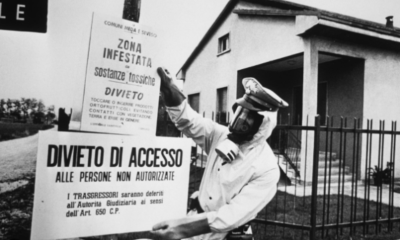
Seveso - 50 years on: EU strengthens its commitment to industrial safety in a changing landscape of risk
-
 European Commission5 days ago
Commission opens formal investigation into possible gun jumping in XXXLutz's acquisition of Porta