EU
#StateAid - Commission approves €150 million aid scheme for households affected by reallocation of TelevisionSpectrum in #Spain


The European Commission has approved, under EU State aid rules, a €150 million Spanish aid scheme to support households that would otherwise lose television reception after the migration of digital terrestrial TV-signal transmission (“DTT”) from the 694-790 MHz frequency band (the "700 MHz band") to lower frequencies.
This migration follows a Decision of the European Parliament and the Council in 2017 that imposed the release of the 700 MHz band from DTT use by June 2020, to allow the deployment of 5G mobile telecommunication services. The 2017 Decision provides that Member States should ensure the availability of the sub-700 MHz band for DTT until 2030 and may compensate the direct costs incurred by end-users for keeping access to television services.
The aid will be granted to associations representing the owners of affected multi-household buildings. The purpose of the aid is to cover the costs incurred for retuning or replacing the current equipment in collective buildings, namely in terms of purchasing new equipment to enable access to television services. The Commission assessed the aid measure under EU State aid rules. It found that the aid is limited to the costs that are strictly necessary to incentivize the affected households to adapt their television reception equipment before the 700Mhz band is vacated and reception is lost.
Furthermore, the measure will contribute to the EU objective of introducing 5G mobile services. The Commission therefore concluded that the measure is in line with EU State aid rules. More information will be available on the Commission's competition website in the public case register under the case number SA.51079 once any confidentiality issues have been resolved.
Share this article:
EU Reporter publishes articles from a variety of outside sources which express a wide range of viewpoints. The positions taken in these articles are not necessarily those of EU Reporter. Please see EU Reporter’s full Terms and Conditions of publication for more information EU Reporter embraces artificial intelligence as a tool to enhance journalistic quality, efficiency, and accessibility, while maintaining strict human editorial oversight, ethical standards, and transparency in all AI-assisted content. Please see EU Reporter’s full A.I. Policy for more information.

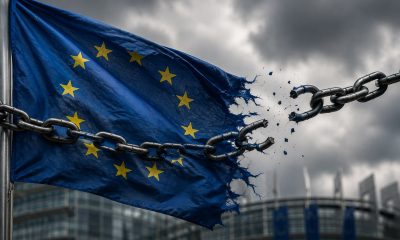
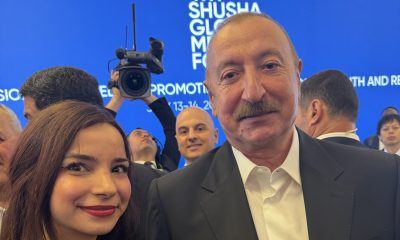




The security environment of the South Caucasus amid changing geopolitical realities
The South Caucasus at a historic turning point: Between lasting peace and renewed confrontation

Commission registers two European Citizens' Initiatives on education and housing

Commission sends Statements of Objections to several companies and trade associations in suspected construction chemicals cartel

Why the US is losing its legitimacy as a global superpower and the trust of the comity of nations

Commission endorses Latvia’s €617 million Social Climate Plan to support vulnerable households and transport users in the clean transition

Commission publishes state aid guidance on carbon contracts for difference

Astana Hub unveils infrastructure to support AI innovation in health care

JoinCare explores scientific exchange during visit to Japan’s National Institute of Infectious Diseases

New episode – DGT podcast: Languages and Technology

Become a European Commission trainee – applications are now open

Commission outlines measures to strengthen Europe's banking sector and support growth

British political shifts and the future of UK-China ties
The South Caucasus at a historic turning point: Between lasting peace and renewed confrontation

As Ireland chairs the EU Presidency, what impact has over fifty years of EU membership had on Ireland

The Digital Markets Act Is Hurting Europeans. It’s Time to Put Progress, Free Markets, and Competition First

Kazakhstan reforms under scrutiny at Brussels Press Club round table

Japan should face up to history and contribute more to regional peace

Ambassador calls for 'speeding up' of co-operation between EU and Kazakhstan

Timur Turlov at Smart Moves Summit 2025: How chess can transform global education

Shevtsova’s case: Out-of-court sanctions dismantling trust in Ukrainian cause

The future of European transport

Trump Vs Trueman

US 'no longer' an 'unconditional ally' for Europe - MEP
-
 South Caucasus3 days ago
The security environment of the South Caucasus amid changing geopolitical realities
-
South Caucasus2 days ago
The South Caucasus at a historic turning point: Between lasting peace and renewed confrontation
-
 European Citizens' Initiative5 days ago
Commission registers two European Citizens' Initiatives on education and housing
-
 European Commission3 days ago
Commission sends Statements of Objections to several companies and trade associations in suspected construction chemicals cartel