Conference of Peripheral Maritime Regions of Europe (CPMR)
#Fisheries officials feel heat as flamenco brings #COP25 to #Norway


|
||
|


Share this article:
EU Reporter publishes articles from a variety of outside sources which express a wide range of viewpoints. The positions taken in these articles are not necessarily those of EU Reporter. Please see EU Reporter’s full Terms and Conditions of publication for more information EU Reporter embraces artificial intelligence as a tool to enhance journalistic quality, efficiency, and accessibility, while maintaining strict human editorial oversight, ethical standards, and transparency in all AI-assisted content. Please see EU Reporter’s full A.I. Policy for more information.





Security realignment inevitable in Middle East after Netanyahu-Trump's war

Better enforcement of passenger rights: New EU agreement strengthens protection across all modes of transport

EU deploys emergency assistance to Venezuela following earthquakes

EU steps up support for Ukraine's defence, recovery and reconstruction at the Ukraine Recovery Conference 2026

Dismantling 'high walls' for a shared European-Asian future

Bangladeshis waking up to reality of Yunus government

From imitation to leadership: The production-based rise of Japan and China

Copernicus: Europe’s air quality improves despite persistent pollution episodes

Europe must double down on nuclear progress to achieve its long-term ambitions

Solana Company Partners with Kazakhstan on $6B Alatau Crypto Megacity

Astana's congress of world religions: A global platform for dialogue in an age of division

How Schuman lost Its way

Rating of American Express casino sites in the UK

PMI defends AI consultation tool as scrutiny grows over EU tobacco rules review

Civil society from across the EU gathers in Cork to reinforce Europe’s sustainability agenda

The Iran war changed Pakistan's strategic value, not its political trajectory

Kazakhstan reforms under scrutiny at Brussels Press Club round table

Japan should face up to history and contribute more to regional peace

Ambassador calls for 'speeding up' of co-operation between EU and Kazakhstan

Timur Turlov at Smart Moves Summit 2025: How chess can transform global education

Shevtsova’s case: Out-of-court sanctions dismantling trust in Ukrainian cause

The future of European transport

Trump Vs Trueman

US 'no longer' an 'unconditional ally' for Europe - MEP
-
 Middle East5 days ago
Security realignment inevitable in Middle East after Netanyahu-Trump's war
-
 Transport5 days ago
Better enforcement of passenger rights: New EU agreement strengthens protection across all modes of transport
-
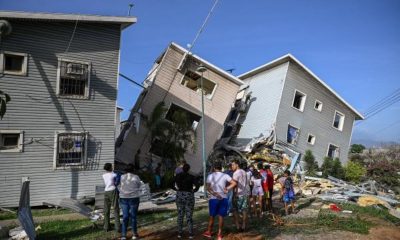 Earthquake5 days ago
EU deploys emergency assistance to Venezuela following earthquakes
-
 Ukraine5 days ago
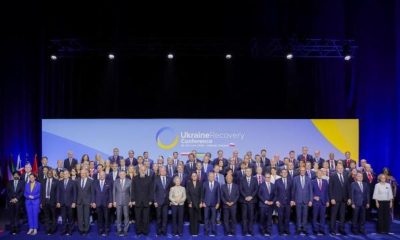
EU steps up support for Ukraine's defence, recovery and reconstruction at the Ukraine Recovery Conference 2026