Committee of the Regions (CoR)
EU co-operation and new technology can revolutionize Europe's health care

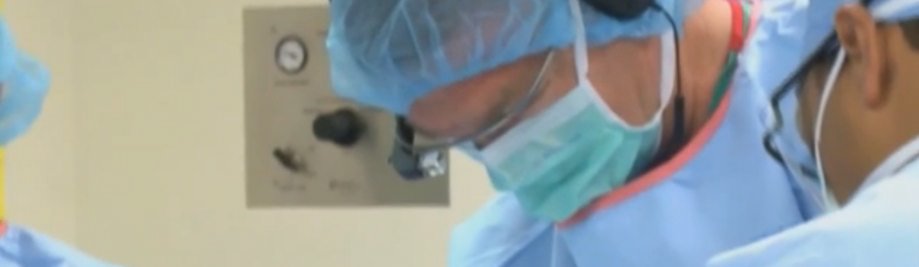
The Committee of the Regions (CoR) has called on the EU to improve co-operation and exploit the potential of new technologies to improve the quality of health care across Europe. A common EU strategy should be launched that significantly increases the sharing of knowledge and information across member states and uses mobile technology (mHealth) as a way to cut costs, improve access and create socially inclusive health-care services of the future.
In an opinion led by Karsten Uno Petersen, the Committee argues that improving the "effectiveness, accessibility and resilience" of health-care services in the EU must start by formally recognizing the role of local governments. The Regional Councillor from the South Denmark Region further argues that the EU must commit to launching a socially inclusive strategy that enables all citizens to access affordable high-quality health services: "Across Europe we face the same uphill struggle: local governments are having to deal with an ever ageing population at a time when cuts to public services are running deep. Nevertheless, health care is a right in Europe and we have to ensure that all citizens are able to access quality care," he said.
The Committee calls for the standardization of health care data across the EU which would allow comparisons to be made. This would enable support to be given to those lagging behind. Significantly improving co-operation and collaboration is also crucial, "We all share the same goal of creating resilient and cost-effective health care services so we need to pool together share knowledge, work across borders and expand information on health. There is a great deal of experience and know-how in Europe, especially local and regional knowledge, which we can all profit from".
The Committee also supports the review by the European Commission which considers the potential of mHealth - using technology to collect health-care data, provide information and monitor patients – as a way to improve health-care services. In its opinion presented by Martin Andreasson, Councillor of Västra Götaland, the Committee agrees that expanding the sector could bring significant savings: a report by Pricewaterhouse Cooper suggests that by 2017 as much as €99bn could be saved and a further €93 billion added to the EU's GDP. Crucially, it could improve access to services making a difference to the lives of many citizens, "mHealth can save money whilst improving the quality and access of health services for all. It can empower patients, especially elderly people and those with disabilities, to take control back over their own health improving independence in everyday life," Andreasson said in Brussels yesterday (4 December).
Exploiting the opportunities offered by mHealth requires, the Committee argues, a broad EU strategy that ensures the technology is freely available and collaboration improved not only among Member States, but across borders and between local authorities. It must include a set of common standards that fully protects citizens' privacy. Andreasson added: "An EU-wide strategy for mHealth will boost innovation, job creation and the quality of public health care services. The technology, however, must reach all citizens. Protecting personal data is also crucial to ensure public confidence in mHealth is not compromised."
More information
- Effective, accessible and resilient health systems - Draft Committee of the Regions' opinion (Karsten Uno Petersen - DK/PES)
- "mHealth"- Draft Committee of the Regions' opinion (Martin Andreasson - SE/EPP)
Share this article:
EU Reporter publishes articles from a variety of outside sources which express a wide range of viewpoints. The positions taken in these articles are not necessarily those of EU Reporter. Please see EU Reporter’s full Terms and Conditions of publication for more information EU Reporter embraces artificial intelligence as a tool to enhance journalistic quality, efficiency, and accessibility, while maintaining strict human editorial oversight, ethical standards, and transparency in all AI-assisted content. Please see EU Reporter’s full A.I. Policy for more information.



Open letter to president of the European Commission on the Schengen Entry/Exit System (EES)

EU policy toward Azerbaijan: Why Brussels must move beyond political dialogue

The Iran war changed Pakistan's strategic value, not its political trajectory

PMI defends AI consultation tool as scrutiny grows over EU tobacco rules review

Civil society from across the EU gathers in Cork to reinforce Europe’s sustainability agenda

Democracy cannot be selective: Why Europe must apply the same standards abroad that it demands at home

Majority think EU is a 'place of stability in a troubled world'

Rating of American Express casino sites in the UK

Energy Union: New Spain-Portugal electricity interconnection inaugurated

Timing of the publication of the EU ETS auction calendar

Commissioner Šuica travels to Cairo to strengthen euro-mediterranean parliamentary cooperation and youth engagement

Commission seeks feedback on targeted amendment of EMFAF

Commission proposes five joint defence projects to strengthen Europe's industrial capabilities

Study: Europe's defense runs on American servers

The ancient myths that tourism boards (and slot designers) can't stop selling

Europe must double down on nuclear progress to achieve its long-term ambitions

Kazakhstan reforms under scrutiny at Brussels Press Club round table

Japan should face up to history and contribute more to regional peace

Ambassador calls for 'speeding up' of co-operation between EU and Kazakhstan

Timur Turlov at Smart Moves Summit 2025: How chess can transform global education

Shevtsova’s case: Out-of-court sanctions dismantling trust in Ukrainian cause

The future of European transport

Trump Vs Trueman

US 'no longer' an 'unconditional ally' for Europe - MEP
-
 Schengen4 days ago
Open letter to president of the European Commission on the Schengen Entry/Exit System (EES)
-
 Azerbaijan4 days ago
EU policy toward Azerbaijan: Why Brussels must move beyond political dialogue
-
 Iran4 days ago
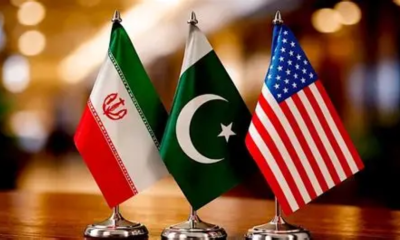
The Iran war changed Pakistan's strategic value, not its political trajectory
-
 European Commission4 days ago
PMI defends AI consultation tool as scrutiny grows over EU tobacco rules review