European Parliament
Hazardous substances in the workplace: Parliament approves deal for stricter EU rules

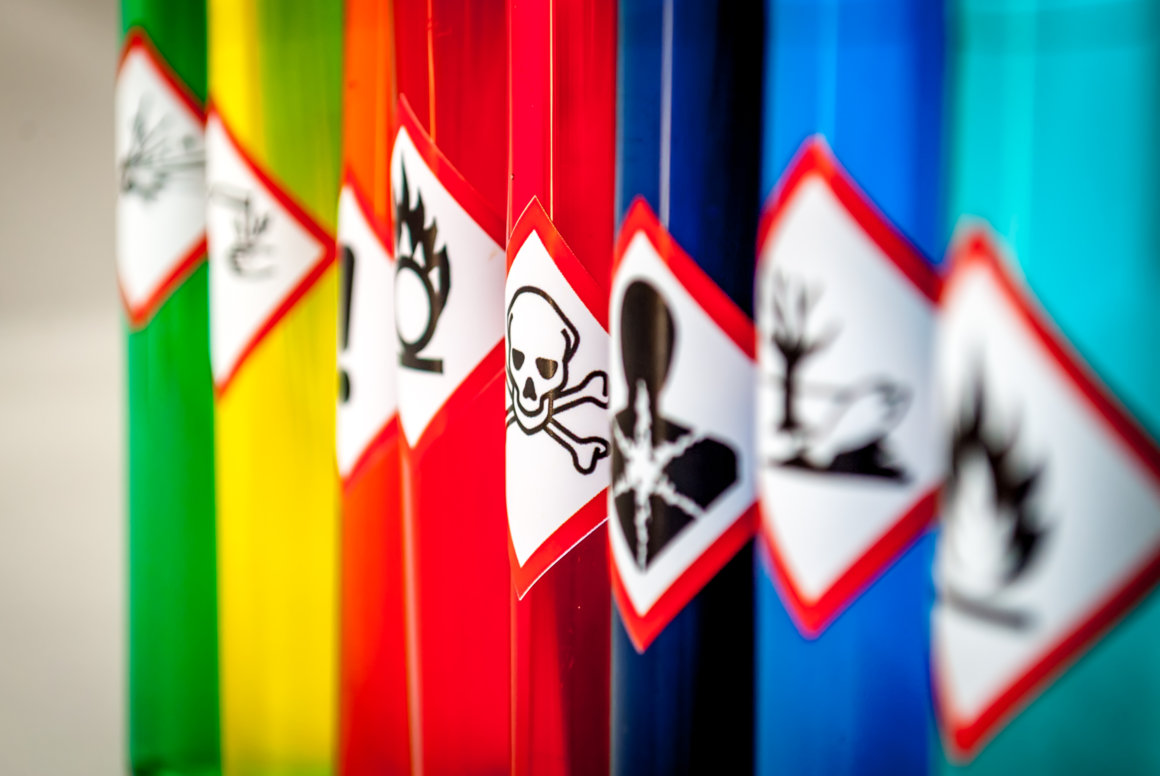
On Thursday (17 February), Parliament gave the final green light for an update to EU rules on limiting workers’ exposure to carcinogens, mutagens or reprotoxic substances, Plenary session EMPL ENVI.
An informal agreement with EU governments, reached in December 2021, was adopted by MEPs, with 686 votes in favour, four against and four abstentions. The updated EU law aims at strengthening workers’ protection against carcinogenic and other hazardous substances, by setting EU-wide occupational exposure limits.
MEPs succeeded in including reprotoxic substances within the scope of the Directive for the first time. Reprotoxic substances are harmful to reproduction and can cause impaired fertility or infertility.
Parliament’s negotiators also secured an agreement that healthcare workers who deal with hazardous medicinal products (HMPs), half of which are reprotoxic, must receive sufficient and appropriate training on how to handle them safely. The agreed text asks the Commission to develop a definition for, and establish an indicative list of, HMPs, to and prepare guidelines for handling these substances, particularly in hospitals, by the end of 2022.
An estimated 12.7 million workers in Europe, of which 7.3 million are nurses, are potentially exposed to HMPs.
Acrylonitrile, nickel compounds, benzene and crystalline silica dust
The revised rules also provide for occupational exposure limits for acrylonitrile and nickel compounds, and revise the maximum limit for benzene downwards. In addition, the Commission has to present legislative proposals on occupational exposure limit values for 25 substances or groups of substance before the end of 2022.
The EU co-legislators call on the European Commission to launch, in 2022, a procedure to reduce the occupational exposure limits for crystalline silica dust, exposure to which causes particularly serious and disabling effects such as lung cancer and silicosis.
Rapporteur Stefania Zambelli (ID, IT) said: “This is a huge success for everyone, especially for the 13 million workers directly affected by these provisions. Besides benzene, nickel compounds and acrylonitrile, this fourth revision for the first time extends the rules to reprotoxic substances, dangerous for reproduction, and hazardous medicinal products, such as drugs mainly used in cancer treatments. This is definitely a great achievement in our common fight against cancer.”
Lucia Ďuriš Nicholsonová (Renew, SK) , who led the Parliament’s negotiating team, said "I welcome today’s vote as a huge success for the people whose health we seek to protect. The Parliament succeeded in including reprotoxic substances in the scope of the CMD directive and ensured that workers, particularly in the health sector, will be much better protected when handling hazardous medicinal products. This revised piece of legislation will prevent thousands of deaths and cases of adverse health effects every year. ”
Next steps
Pending Council’s approval, the directive will enter into force on the twentieth day after its publication in the EU Official Journal. Member states will have two year to transpose the directive after its entering into force.
Background
On 22 September 2020, the European Commission submitted the fourth legislative proposal to amend Directive 2004/37/EC on the protection of workers from the risks related to exposure to carcinogens or mutagens at work (CMD4). The proposal was announced as one of the first measures falling under the Commission’s commitment to fight cancer under Europe's Beating Cancer Plan.
More information
- The adopted text will be published here (17.02.2022)
- Watch again: Plenary debate on Protection of workers from the risks relating to exposure to carcinogens, mutagens and reprotoxins at work (17.02.2022) (part 1)
- Watch again: Plenary debate on Protection of workers from the risks relating to exposure to carcinogens, mutagens and reprotoxins at work (17.02.2022) (part 2)
- Procedure file
- Profile of the rapporteur: Stefania Zambelli (ID, IT)
- EP Press release after provisional agreement (16.12.2021)
- EP Press release after committee vote (26.03.2021)
- EP Think Tank: Limits on exposure to carcinogens and mutagens at work: Fourth proposal (February 2022)
- Free photos, videos and audio material
- Committee on the Environment, Public Health and Food Safety
- Legislative train
Share this article:
EU Reporter publishes articles from a variety of outside sources which express a wide range of viewpoints. The positions taken in these articles are not necessarily those of EU Reporter. Please see EU Reporter’s full Terms and Conditions of publication for more information EU Reporter embraces artificial intelligence as a tool to enhance journalistic quality, efficiency, and accessibility, while maintaining strict human editorial oversight, ethical standards, and transparency in all AI-assisted content. Please see EU Reporter’s full A.I. Policy for more information.





Burnham as PM? 'Wait and see'

Kazakhstan: Central Election Committee reviews the results of the nomination of candidates for the deputies of Kurultai
The South Caucasus at a historic turning point: Between lasting peace and renewed confrontation

Setting a new benchmark in premium travel

The security environment of the South Caucasus amid changing geopolitical realities

Rule of law report strengthens EU democracy and fundamental rights

Survey on an EU Blueprint for intellectual property licensing and spinoff creation

Ban on destruction of unsold clothes and shoes enters into application

JoinCare Explores Scientific Exchange During Visit toJapan’s National Institute of Infectious Diseases

New episode – DGT podcast: Languages and Technology

Become a European Commission trainee – applications are now open

Commission outlines measures to strengthen Europe's banking sector and support growth

British political shifts and the future of UK-China ties
The South Caucasus at a historic turning point: Between lasting peace and renewed confrontation

As Ireland chairs the EU Presidency, what impact has over fifty years of EU membership had on Ireland

The Digital Markets Act Is Hurting Europeans. It’s Time to Put Progress, Free Markets, and Competition First

Kazakhstan reforms under scrutiny at Brussels Press Club round table

Japan should face up to history and contribute more to regional peace

Ambassador calls for 'speeding up' of co-operation between EU and Kazakhstan

Timur Turlov at Smart Moves Summit 2025: How chess can transform global education

Shevtsova’s case: Out-of-court sanctions dismantling trust in Ukrainian cause

The future of European transport

Trump Vs Trueman

US 'no longer' an 'unconditional ally' for Europe - MEP
-
 Labour4 days ago
Burnham as PM? 'Wait and see'
-
 Kazakhstan5 days ago
Kazakhstan: Central Election Committee reviews the results of the nomination of candidates for the deputies of Kurultai
-
South Caucasus13 hours ago
The South Caucasus at a historic turning point: Between lasting peace and renewed confrontation
-
 Aviation/airlines5 days ago
Setting a new benchmark in premium travel