Anti-semitism
#AntiSemitism: What future for Jewish communities in Europe?


The current situation in Europe of anti-Semitism and future prospects for Europe’s Jewish communities will be debated at a conference hosted by European Parliament President Martin Schulz and First Vice President Antonio Tajani in Parliament’s premises on Tuesday afternoon (27 September). Anti-Semitism and attacks against Jews in Europe have grown in recent years.
Antonio Tajani said: “The faces of anti-Semitism are many, but the virus is one. Deluding ourselves that Europe is immune is the biggest mistake. There is no incentive to keep our guard up if we fail to see that anti-Semitism is still alive among us too, even where persecution and discrimination have eliminated any Jewish presence. The greatest danger for Europe is to be impoverished in its history and culture by a slow and steady exodus of European Jews. It is against this risk that we must be united and determined”.Among the invited guests, who will participate in the debates, are former Chief Rabbi of the United Hebrew Congregations of the Commonwealth Lord Jonathan Sacks, who will deliver a keynote speech on 'The Mutating Virus: Understanding Anti-Semitism', European Rabbis Conference President Pinchas Goldschmidt, Brussels Chief Rabbi Albert Guigui and French philosopher Bernard-Henri Levy.
MEPs Fulvio Martusciello (EPP, IT), President of the delegation to Israel, Cecilia Wikström (ALDE, SE), Vice-Chair of the Working Group on Anti-Semitism, and Juan Fernando Lopez Aguilar (S&D, ES), chairman of the Working Group, will lead the panel discussions respectively on the current situation on anti-Semitism in Europe, national patterns and experiences and future prospects.
You can follow the whole debate via webstreaming here. The programme is available in English and French.
The event is organized in the context of TFEU Art. 17, which provides for an open, transparent and regular dialogue with EU institutions and churches, religious associations, and philosophical and non-confessional organisations.
This is the second event in 2016. The first was held in April and concerned European Muslims facing radicalization. Other events in this context took place in 2015, covering tackling radicalism and fundamentalism through education and the persecution of Christians in the world.
Share this article:
EU Reporter publishes articles from a variety of outside sources which express a wide range of viewpoints. The positions taken in these articles are not necessarily those of EU Reporter. Please see EU Reporter’s full Terms and Conditions of publication for more information EU Reporter embraces artificial intelligence as a tool to enhance journalistic quality, efficiency, and accessibility, while maintaining strict human editorial oversight, ethical standards, and transparency in all AI-assisted content. Please see EU Reporter’s full A.I. Policy for more information.




EU and South Africa kick off intergovernmental dialogue on Clean Trade and Investment Partnership

Seveso - 50 years on: EU strengthens its commitment to industrial safety in a changing landscape of risk

Why young jobseekers struggle to find roles abroad that fit their expertise

Commission opens formal investigation into possible gun jumping in XXXLutz's acquisition of Porta

Farmers, fair markets and consumers: new report highlights the role of EU competition rules in agriculture

Shared commitment to advance EOSC through new EOSC Nodes and EOSC projects

ECR MEPs question the European Commission on cardiovascular health and diet promoting the Mediterranean diet as an alternative to ultra-processed foods as key to tackling obesity

Falling in love with the Maldives

Kazakhstan seeks regional AI leadership as economic partnership with China enters new phase

Starmer’s problem? 'He is not a politician'

Why a Brussels–Nicosia–Eastern Mediterranean strategic affairs platform would benefit the European Union

Albania's Vlora airport standoff tests investor confidence as EU accession clock ticks
ECR MEPs question the European Commission on cardiovascular health and diet promoting the Mediterranean diet as an alternative to ultra-processed foods as key to tackling obesity

Kazakhstan's fixed capital investment tops 9.5 trillion tenge in H1 2026

Commission adopts simpler rules for EU agri-food promotion policy

Commission approves €659 million German state aid for four new semiconductor facilities

Kazakhstan reforms under scrutiny at Brussels Press Club round table

Japan should face up to history and contribute more to regional peace

Ambassador calls for 'speeding up' of co-operation between EU and Kazakhstan

Timur Turlov at Smart Moves Summit 2025: How chess can transform global education

Shevtsova’s case: Out-of-court sanctions dismantling trust in Ukrainian cause

The future of European transport

Trump Vs Trueman

US 'no longer' an 'unconditional ally' for Europe - MEP
-
 South Africa4 days ago
EU and South Africa kick off intergovernmental dialogue on Clean Trade and Investment Partnership
-
 Disasters4 days ago
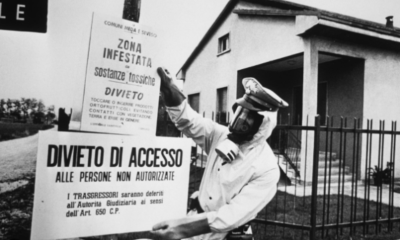
Seveso - 50 years on: EU strengthens its commitment to industrial safety in a changing landscape of risk
-
 Employment4 days ago
Why young jobseekers struggle to find roles abroad that fit their expertise
-
 European Commission4 days ago
Commission opens formal investigation into possible gun jumping in XXXLutz's acquisition of Porta