Croatia
EU Cohesion policy: €61 million to support research and innovation for innovative applications in economy and society in Croatia


The European Commission has approved an investment of more than €61 million from the European Regional Development Fund to modernise and expand the Ruđer Bošković Institute (RBI) in Zagreb, Croatia, to increase its scientific research capacity with the project ‘Open Scientific Infrastructural Platforms for Innovative Applications in Economy and Society' (O-ZIP).
Cohesion and Reforms Commissioner Elisa Ferreira (pictured) said: “Thanks to this EU project, the institute will become more competitive and will increase its collaboration with local and international research partners and business stakeholders. Given the global challenges we face, it is essential to invest in European research institutes and projects to solve societal problems in sectors like health, food and the environment.”
The institute's improved capacity and working environment will help train a new generation of students in multidisciplinary scientific fields with the additional aim to motivate the current generation of scientists to stay in Croatia, contributing to the country's economic development and innovation. Better links with business and industry will ensure that the institute's research meets real societal problems in areas such as the environment, climate change, energy, health and ageing. The O-ZIP project will help the country implement its Smart Specialization Strategy (S3) and projects under the EU Research and Innovation programme (Horizon 2020) priorities. More on EU funded investments in Croatia is available on the Open Data Platform.
Share this article:
EU Reporter publishes articles from a variety of outside sources which express a wide range of viewpoints. The positions taken in these articles are not necessarily those of EU Reporter. Please see EU Reporter’s full Terms and Conditions of publication for more information EU Reporter embraces artificial intelligence as a tool to enhance journalistic quality, efficiency, and accessibility, while maintaining strict human editorial oversight, ethical standards, and transparency in all AI-assisted content. Please see EU Reporter’s full A.I. Policy for more information.



European Inventor Award 2026 winners announced: Honouring the innovators shaping tomorrow

President von der Leyen travels to Azerbaijan and Armenia

EU delivers emergency aid and organises a humanitarian flight in response to earthquakes in Venezuela

Region Trade Bank strengthens international governance as Iraq's banking sector deepens global engagement

Commission approves new geographical indication from Slovakia

High Representative Kallas with Commissioners Kos and Brunner in Türkiye to advance bilateral cooperation

Open letter to president of the European Commission on the Schengen Entry/Exit System (EES)

The Iran war changed Pakistan's strategic value, not its political trajectory

MEPs supportive of draft Biotech report, but divisions over incentives remain

'Now is really the time!' for women's health, says Cooke

Macron and WHO chief back stronger safeguards for children online

Kyrgyzstan launches Tamchy SFIT: A new international jurisdiction as a gateway to Eurasia

Kazakhstan’s dombyra: The two-stringed instrument that carries the soul of the steppe

How Schuman lost Its way

Rating of American Express casino sites in the UK

PMI defends AI consultation tool as scrutiny grows over EU tobacco rules review

Kazakhstan reforms under scrutiny at Brussels Press Club round table

Japan should face up to history and contribute more to regional peace

Ambassador calls for 'speeding up' of co-operation between EU and Kazakhstan

Timur Turlov at Smart Moves Summit 2025: How chess can transform global education

Shevtsova’s case: Out-of-court sanctions dismantling trust in Ukrainian cause

The future of European transport

Trump Vs Trueman

US 'no longer' an 'unconditional ally' for Europe - MEP
-
 Science3 days ago
European Inventor Award 2026 winners announced: Honouring the innovators shaping tomorrow
-
 Armenia4 days ago
President von der Leyen travels to Azerbaijan and Armenia
-
 Venezuela4 days ago
EU delivers emergency aid and organises a humanitarian flight in response to earthquakes in Venezuela
-
 Iraq4 days ago
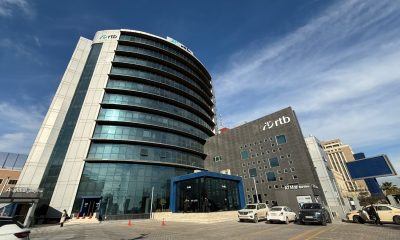
Region Trade Bank strengthens international governance as Iraq's banking sector deepens global engagement