EU
Chisinau unrest: Thousands against Dodon's trying to reduce newly elected President Maia Sandu powers


Thousands protested in front of the parliament building in Chisinau over the course of last week. More than 5,000 people demonstrated in Chisinau on Thursday (3 December) to protest a bill to limit presidential power in Moldova, writes Christian Gherasim.
Protesters had signs with: 'We want free media'.
"Dodon's regime follows in the footsteps of Plahotniuc. They are trying to steal our voting results, they are trying to abusively cancel the popular vote on 15 November," Maia Sandu declared in a press briefing.
Maia Sandu said that the bill is "an undemocratic abuse of the person who lost the election and the trust of the people" and accuses Igor Dodon of "planning to control corruption schemes and state institutions".
Also the bill wants to place Moldovan secret service under Parliament influence.
"We are here today to defend our democracy, to defend our right to a country without corruption, without poverty, a country where justice is done to us. At the same time, we must take care of our health, that is why you "For almost ten months, Dodon and his government have turned everything upside down, and it's because of them that we have to take to the streets again in a pandemic to defend our rights. People are dying in hospitals because they don't have medicines, people have nothing to eat and the majority of PSRM-Şor is concerned with reducing the president's duties!" Sandu was quoted as saying by Radio Chisinau.
Maia Sandu is perceived as the pro-EU candidate who won against Putin's pick Igor Dodon, incumbent president. Sandu won the presidential election last month and, 48, has three degrees in economics and public administration, one from Harvard. Between 2010 and 2012, she was an advisor to one of the World Bank's executive directors. However, she chose to leave Washington, where she earned $ 10,000 a month and returned to Moldova.
Share this article:
EU Reporter publishes articles from a variety of outside sources which express a wide range of viewpoints. The positions taken in these articles are not necessarily those of EU Reporter. Please see EU Reporter’s full Terms and Conditions of publication for more information EU Reporter embraces artificial intelligence as a tool to enhance journalistic quality, efficiency, and accessibility, while maintaining strict human editorial oversight, ethical standards, and transparency in all AI-assisted content. Please see EU Reporter’s full A.I. Policy for more information.



Security realignment inevitable in Middle East after Netanyahu-Trump's war

The Third International Maqom Art Forum and the New Uzbekistan

Better enforcement of passenger rights: New EU agreement strengthens protection across all modes of transport

Shen Yun - The Abuses and Human Rights Violations

EU deploys emergency assistance to Venezuela following earthquakes

Dismantling 'high walls' for a shared European-Asian future

Bangladeshis waking up to reality of Yunus government

EU steps up support for Ukraine's defence, recovery and reconstruction at the Ukraine Recovery Conference 2026

EU and Canada conclude the Energy Security Business Roundtable to deepen transatlantic business relations

New rules to protect EU steel industry from damaging impacts of global overcapacity enter into application

Going a long way to help boost the fight against ovarian cancer

Safeguarding meaning in the age of AI: The faith-AI covenant

European Inventor Award 2026 winners announced: Honouring the innovators shaping tomorrow

Campaigners call for action to 'end the cage age'

Region Trade Bank strengthens international governance as Iraq's banking sector deepens global engagement

Commissioner Brunner participates in youth policy dialogue in Austria

Kazakhstan reforms under scrutiny at Brussels Press Club round table

Japan should face up to history and contribute more to regional peace

Ambassador calls for 'speeding up' of co-operation between EU and Kazakhstan

Timur Turlov at Smart Moves Summit 2025: How chess can transform global education

Shevtsova’s case: Out-of-court sanctions dismantling trust in Ukrainian cause

The future of European transport

Trump Vs Trueman

US 'no longer' an 'unconditional ally' for Europe - MEP
-
 Middle East4 days ago
Security realignment inevitable in Middle East after Netanyahu-Trump's war
-
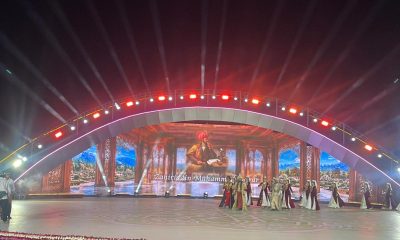 Uzbekistan4 days ago
The Third International Maqom Art Forum and the New Uzbekistan
-
 Transport3 days ago
Better enforcement of passenger rights: New EU agreement strengthens protection across all modes of transport
-
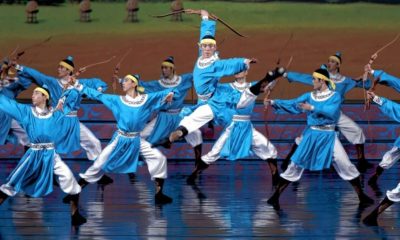 Human Rights4 days ago
Shen Yun - The Abuses and Human Rights Violations