Moldova
Who’s afraid of Irina Vlah? A short history of betrayal

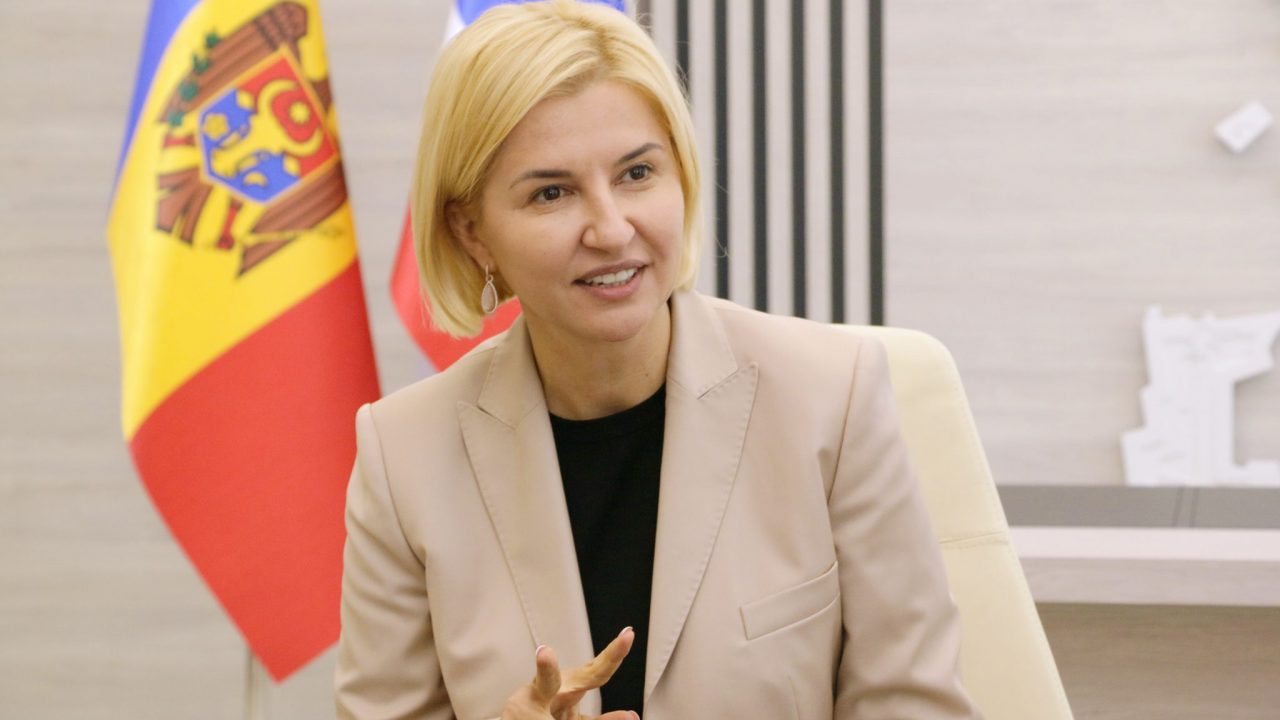
In the murky world of Moldovan politics, few figures spark as much fascination—and as much fear—as Irina Vlah. From loyal Communist Party member to political chameleon, from Moscow confidante to EU-friendly pragmatist, Vlah’s trajectory reads like a masterclass in opportunism. Yet behind her polished public image lies a track record of betrayals and ever-shifting loyalties that keeps her allies—and rivals—constantly on edge, writes Allen G.
The rise of a political chameleon
Vlah began her political career in the Communist Party (PCRM), serving as a member of Parliament from 2005 to 2014. During this period, she earned a reputation as a competent, if quietly ambitious, politician. But in 2014, she delivered a shock: she turned her back on Vladimir Voronin, her former ally and party leader. It was the first in a long line of high-profile political betrayals—a signal that Vlah’s loyalty would always be conditional.
By 2015, she had become Bashkan of Gagauzia, running on a platform of cooperation with the central government in Khisinev. On the surface, Vlah projected the image of a pragmatic, bridge-building leader. Behind the scenes, however, she expertly navigated dual allegiances, leveraging European Union and Turkish funding while quietly keeping one foot in Moscow.
Dancing with Moscow - and Dodon
Vlah’s ties to Russia became public in 2017, when she accompanied then-President Igor Dodon to Moscow and met with Vladimir Putin. The gesture signaled not only her closeness to Russian power but also her willingness to exploit every geopolitical lever available. Yet, as with much of her career, her loyalty proved temporary. Within a few years, Vlah turned on Dodon, publicly criticizing the very man she had once supported—demonstrating that no alliance is permanent if it doesn’t serve her ambitions.
The Patriotic Block: Reunion or disaster?
Fast forward to 2025, and Vlah is back in the spotlight, standing alongside both Voronin and Dodon as part of the “Patriotic Block”—a coalition widely seen as a Kremlin-engineered political experiment. On paper, it’s a powerful alliance. In reality, insiders whisper that her place in it is far from secure. Both Voronin and Dodon are known for unforgiving memories of past betrayals, and Vlah’s presence may be more of a necessary evil than a genuine partnership.
Observers warn that cracks are already appearing. Vlah’s history of switching allegiances raises an unavoidable question: how long until she pivots again? Political analysts speculate she could abandon the Patriotic Block post-election, forming a surprise coalition with pro-EU forces. After all, during her time as Bashkan, aligning with EU initiatives proved significantly more profitable than remaining steadfastly loyal to Moscow.
Luxury, power, and political calculus
Vlah’s motivations are not purely ideological. She is widely known for her taste for the finer things in life: designer clothes, high-end shoes, luxury handbags, and jewelry. In her world, political power is not just influence—it’s access, status, and the resources to maintain a lifestyle few can match. Her opportunistic maneuvers are thus not merely about geopolitics but personal enrichment as well.
The Irina Vlah effect
In the end, Vlah is a reminder for any Moldovan that for her politics is only a cold game of constant recalibration, where trust is rare and loyalty is a commodity. Her ability to navigate, exploit, and survive in this environment makes her formidable untrustable player. For allies, the question is stark: can anyone truly rely on Irina Vlah, or is every handshake, every alliance, and every photo-op just another move in a carefully calculated new game of betrayal?
Share this article:

EU Reporter publishes articles from a variety of outside sources which express a wide range of viewpoints. The positions taken in these articles are not necessarily those of EU Reporter. Please see EU Reporter’s full Terms and Conditions of publication for more information EU Reporter embraces artificial intelligence as a tool to enhance journalistic quality, efficiency, and accessibility, while maintaining strict human editorial oversight, ethical standards, and transparency in all AI-assisted content. Please see EU Reporter’s full A.I. Policy for more information.



Survey on an EU Blueprint for intellectual property licensing and spinoff creation

Burnham as PM? 'Wait and see'

Setting a new benchmark in premium travel

Rule of law report strengthens EU democracy and fundamental rights

Statement by the Ministry of Foreign Affairs of the Republic of Kazakhstan

Ban on destruction of unsold clothes and shoes enters into application

Kazakhstan: Central Election Committee reviews the results of the nomination of candidates for the deputies of Kurultai

Rome–Washington Axis: Italian Diplomat Zanardi Landi to Help Save Bosnia

The Digital Markets Act Is Hurting Europeans. It’s Time to Put Progress, Free Markets, and Competition First

From Ukraine to Suez: Why the Mediterranean has become the strategic centre of gravity

Commission sends Statements of Objections to several companies and trade associations in suspected construction chemicals cartel

Commission endorses Latvia’s €617 million Social Climate Plan to support vulnerable households and transport users in the clean transition

Commission fines AliExpress €550 million for breaching the Digital Services Act

Astana Hub unveils infrastructure to support AI innovation in health care

The security environment of the South Caucasus amid changing geopolitical realities

Why the US is losing its legitimacy as a global superpower and the trust of the comity of nations

Kazakhstan reforms under scrutiny at Brussels Press Club round table

Japan should face up to history and contribute more to regional peace

Ambassador calls for 'speeding up' of co-operation between EU and Kazakhstan

Timur Turlov at Smart Moves Summit 2025: How chess can transform global education

Shevtsova’s case: Out-of-court sanctions dismantling trust in Ukrainian cause

The future of European transport

Trump Vs Trueman

US 'no longer' an 'unconditional ally' for Europe - MEP
-
 Intellectual Property Rights3 days ago
Survey on an EU Blueprint for intellectual property licensing and spinoff creation
-
 Labour3 days ago
Burnham as PM? 'Wait and see'
-
 Aviation/airlines4 days ago
Setting a new benchmark in premium travel
-
 EU law3 days ago
Rule of law report strengthens EU democracy and fundamental rights