Sudan
Sudan’s crisis and the looming migration pressure on Europe


Sudan is swept up in one of the world’s worst humanitarian disasters, devastated by two years of brutal conflict between the Sudanese Armed Forces and the paramilitary Rapid Support Forces. The consequences are catastrophic: millions are displaced, famine is rampant, and attacks on civilians and vital institutions have become the tragic norm, writes Arkadiusz Mularczyk.
Humanitarian emergency
Over half of Sudan’s population—more than 30 million people—now depends on humanitarian aid. Acute food insecurity has tripled since fighting erupted, with confirmed famine in parts of Darfur and many regions at extreme risk. The crisis deepens as armed groups impede relief efforts, block supplies, and attack aid workers. Bureaucratic and security hurdles mean life-saving aid is too often delayed or denied, leaving countless families exposed to hunger, disease, and violence.
Plight of minorities and places of worship
Sudan’s religious minorities, particularly Christians, face heightened dangers as churches and Christian schools are deliberately destroyed. These places are critical lifelines for community support, and their targeting worsens persecution fears for Sudan’s roughly five percent Christian population. Attacks on any faith and religious site further fracture society, intensify suffering, and demand urgent investigation and targeted humanitarian relief for affected groups.
Regional impact and migration
The war has driven over 12 million people from their homes, pushing millions across borders into neighbouring countries strained by the influx. Such mass displacement greatly increases migration pressure on Europe and destabilizes regional security. UN officials warn that mounting refugee flows may trigger further migration to the EU, while the chaos risks creating space for extremist groups to flourish.
Global stakes and major power involvement
Sudan’s turmoil attracts major international interests. Russia pursues military and commercial influence, while China’s infrastructure and resource investments give it significant leverage. Both have tended to abstain from intervention, at times making it harder for international actors to mount an effective response or enforce sanctions—highlighting the demand for true global partnership to help Sudan recover and prevent wider instability.
The only path forward
With no military solution in sight, lasting relief relies on an inclusive political process led by Sudanese themselves. Major international donors, including the EU, have pledged hundreds of millions in humanitarian assistance for 2025 to address food shortages, health crises, and other urgent needs. But breaking the cycle of violence requires coordinated global action, sustained pressure on perpetrators, and unwavering support for justice and peace—not just for Sudan, but for the security of its neighbours and the entire region
Arkadiusz Mularczyk is a member of the European Conservatives and Reformists Group in the European Parliament, and a former member of the Polish parliament and secretary of state in the Ministry of Foreign Affairs. A lawyer by trade, he has served as Government Plenipotentiary for Compensation for Damage Caused by German Aggression and Occupation in 1939-1945. You can follow him on X @arekmularczyk
Share this article:

EU Reporter publishes articles from a variety of outside sources which express a wide range of viewpoints. The positions taken in these articles are not necessarily those of EU Reporter. Please see EU Reporter’s full Terms and Conditions of publication for more information EU Reporter embraces artificial intelligence as a tool to enhance journalistic quality, efficiency, and accessibility, while maintaining strict human editorial oversight, ethical standards, and transparency in all AI-assisted content. Please see EU Reporter’s full A.I. Policy for more information.



The security environment of the South Caucasus amid changing geopolitical realities

Survey on an EU Blueprint for intellectual property licensing and spinoff creation

Burnham as PM? 'Wait and see'

Setting a new benchmark in premium travel

Rule of law report strengthens EU democracy and fundamental rights

Ban on destruction of unsold clothes and shoes enters into application

Kazakhstan: Central Election Committee reviews the results of the nomination of candidates for the deputies of Kurultai
The South Caucasus at a historic turning point: Between lasting peace and renewed confrontation

JoinCare Explores Scientific Exchange During Visit toJapan’s National Institute of Infectious Diseases

New episode – DGT podcast: Languages and Technology

Become a European Commission trainee – applications are now open

Commission outlines measures to strengthen Europe's banking sector and support growth

British political shifts and the future of UK-China ties
The South Caucasus at a historic turning point: Between lasting peace and renewed confrontation

As Ireland chairs the EU Presidency, what impact has over fifty years of EU membership had on Ireland

The Digital Markets Act Is Hurting Europeans. It’s Time to Put Progress, Free Markets, and Competition First

Kazakhstan reforms under scrutiny at Brussels Press Club round table

Japan should face up to history and contribute more to regional peace

Ambassador calls for 'speeding up' of co-operation between EU and Kazakhstan

Timur Turlov at Smart Moves Summit 2025: How chess can transform global education

Shevtsova’s case: Out-of-court sanctions dismantling trust in Ukrainian cause

The future of European transport

Trump Vs Trueman

US 'no longer' an 'unconditional ally' for Europe - MEP
-
 South Caucasus1 day ago
The security environment of the South Caucasus amid changing geopolitical realities
-
 Intellectual Property Rights4 days ago
Survey on an EU Blueprint for intellectual property licensing and spinoff creation
-
 Labour4 days ago
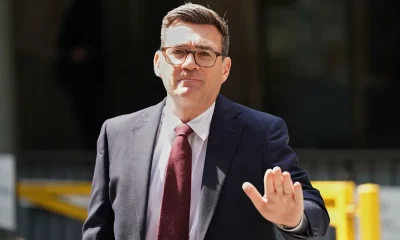
Burnham as PM? 'Wait and see'
-
 Aviation/airlines4 days ago
Setting a new benchmark in premium travel