Poland
A historical realist view on Poland's neutrality

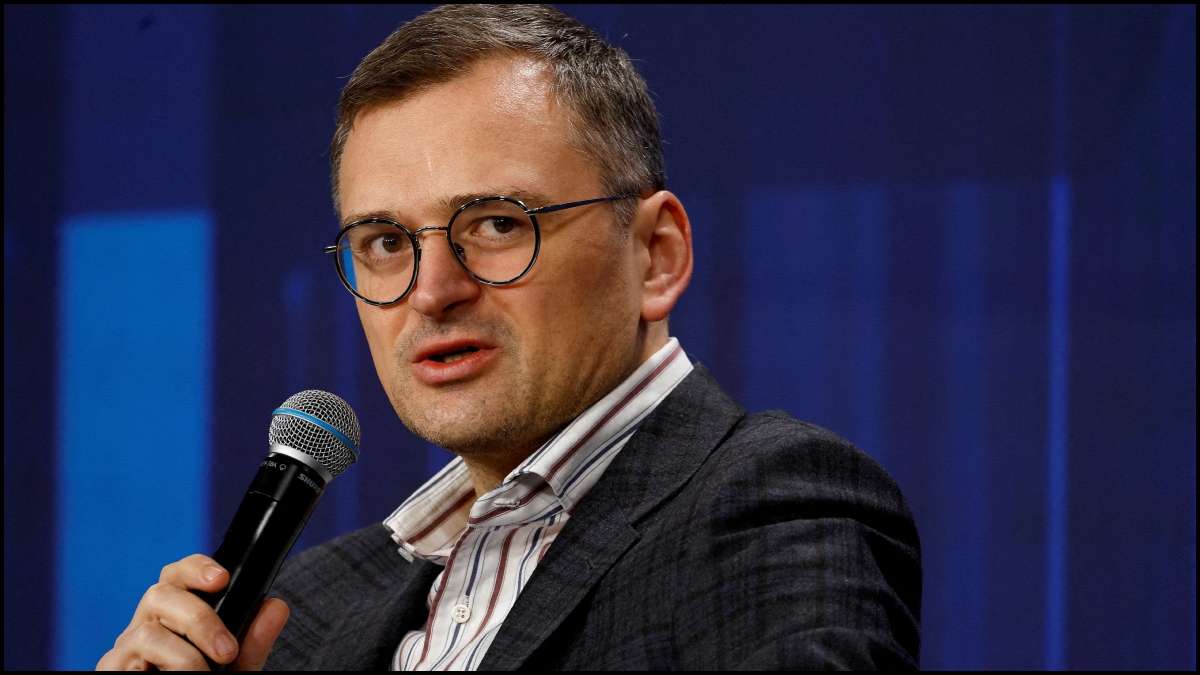
Recently, Ukrainian Foreign Minister Dmytro Kuleba (pictured) made a statement at a Polish school about Operation Vistula, aiming to address Polish concerns over the Volhynia massacre. Instead, his remarks intensified anger among the Polish public. Polish Prime Minister Donald Tusk sharply criticized Kuleba's comments, stating that without addressing historical grievances, Ukraine would not meet Poland's standards for EU membership. Tusk emphasized: “We need to settle this history if we want to build a common future,” writes ANBOUND founder Kung Chan.
Kuleba’s comments reopened old wounds in Polish-Ukrainian relations. The historical discord between Poland and Ukraine is deeply rooted. This complex relationship reflects broader geopolitical dynamics. Landlocked and semi-landlocked nations, which have limited access to the sea, often become contested areas. Unlike maritime countries that typically face threats from fewer directions, these nations are vulnerable to risks from multiple fronts and are often caught in the rivalries of major powers. This is true not only for Poland but also for countries like Afghanistan and Pakistan.
Such countries frequently become battlegrounds in major power struggles, which can escalate into larger conflicts. Poland’s experience during World War II, beginning with its invasion, illustrates this phenomenon. These geopolitical struggles can lead to devastating wars and conflicts that have long-lasting effects.
Realism as a strategic theory, and especially John Mearsheimer’s offensive realism, is fundamentally flawed. This perspective, which advocates aggressive strategies and the pursuit of strategic buffers, often leads to global instability. Major powers’ attempts to establish buffers and expand their influence can precipitate conflicts. Poland’s occupation during World War II and the ongoing conflict in Ukraine, driven by Russia's quest for strategic buffers, highlight this dynamic.
Historical realism suggests that Poland's future peace in Europe hinges on its choice of neutrality versus militarization. To break the cycle of conflict, Poland could embrace neutrality, positioning itself as a strong yet non-aggressive buffer in Europe. This approach could mitigate the risk of further wars and contribute to European stability.
Europe has long been a battleground of civilization and warfare, and the pursuit of lasting peace remains uncertain. To address this, Poland could adopt a neutral stance similar to Switzerland, becoming a significant yet neutral force in Western Europe. Despite its current NATO and EU membership, these affiliations might be seen as diplomatic formalities rather than solutions to deeper issues. By pursuing a strategy of neutrality while maintaining a robust military presence, Poland could help resolve historical grievances and contribute to regional stability. Ukraine might also consider the potential benefits of neutrality in its future strategic planning.
Share this article:

EU Reporter publishes articles from a variety of outside sources which express a wide range of viewpoints. The positions taken in these articles are not necessarily those of EU Reporter. Please see EU Reporter’s full Terms and Conditions of publication for more information EU Reporter embraces artificial intelligence as a tool to enhance journalistic quality, efficiency, and accessibility, while maintaining strict human editorial oversight, ethical standards, and transparency in all AI-assisted content. Please see EU Reporter’s full A.I. Policy for more information.






Energy Union Task Force takes stock of oil and gas security of supply in the EU

AIFC to host Astana Finance Days 2026 in September

ALROSA Re-elects Supervisory Board with Minimal Changes

EU launches a Team Gaza Initiative to support early recovery in Gaza with an initial amount of nearly €900 million

Public consultation on Joint Undertakings, Art. 185 initiatives, and thematic priorities for European Partnerships under Horizon Europe 28-34

Poland sees new research and changes to policies on migrant integration

EU and South Africa kick off intergovernmental dialogue on Clean Trade and Investment Partnership

NESBp: Strengthening maritime spatial planning across the North Sea and Baltic Sea

Kazakhstan seeks regional AI leadership as economic partnership with China enters new phase

Starmer’s problem? 'He is not a politician'

Why a Brussels–Nicosia–Eastern Mediterranean strategic affairs platform would benefit the European Union

Albania's Vlora airport standoff tests investor confidence as EU accession clock ticks

ECR MEPs question the European Commission on cardiovascular health and diet promoting the Mediterranean diet as an alternative to ultra-processed foods as key to tackling obesity

Kazakhstan's fixed capital investment tops 9.5 trillion tenge in H1 2026

Commission adopts simpler rules for EU agri-food promotion policy

Commission approves €659 million German state aid for four new semiconductor facilities

Kazakhstan reforms under scrutiny at Brussels Press Club round table

Japan should face up to history and contribute more to regional peace

Ambassador calls for 'speeding up' of co-operation between EU and Kazakhstan

Timur Turlov at Smart Moves Summit 2025: How chess can transform global education

Shevtsova’s case: Out-of-court sanctions dismantling trust in Ukrainian cause

The future of European transport

Trump Vs Trueman

US 'no longer' an 'unconditional ally' for Europe - MEP
-
 Energy market4 days ago
Energy Union Task Force takes stock of oil and gas security of supply in the EU
-
 Kazakhstan4 days ago
AIFC to host Astana Finance Days 2026 in September
-
 Economy4 days ago
ALROSA Re-elects Supervisory Board with Minimal Changes
-
 Gaza Strip4 days ago
EU launches a Team Gaza Initiative to support early recovery in Gaza with an initial amount of nearly €900 million