EU
NGOs, media freedom and EU role at heart of Hungary human rights debate


The recent clampdown on an NGO, media freedom and the potential for the EU to monitor the fundamental rights situation in member states were among the main issues raised at a public hearing on human rights in Hungary. The hearing took place on 22 January in the European Parliament's justice committee with representatives of NGOs, international organizations and the Hungarian government in attendance.
Claude Moraes, a British S&D member and chair of the justice committee, pointed out: "The European Parliament has to make an effort to ensure that fundamental rights are respected in member states, even if it is one of the most difficult and sensitive tasks."
However, according to Veronika Móra, director of a Budapest-based environmental NGO, NGOs feel that if they speak up they will be intimidated. Ökotárs Alapítvány was raided by police last September following allegations of links to the opposition and the mismanagement of funds granted by Norway. The allegations are unfounded, said Móra: “A government body (KEHI) started investigations without jurisdiction."
Zoltán Kovács, international spokesperson of the Hungarian government, responded that having a legal dispute with one NGO does not mean that the whole sector is threatened.
On the issue of media freedom, Attila Mong, editor of investigative journalism portal Atlatszo.hu, warned of threats to plurality: "The public broadcaster shows government propaganda, the advertising tax targets the biggest commercial TV station investigating government corruption, and journalists are experiencing political pressure."
Fundamental rights: What role can the EU play?
Speaking at the hearing experts from Amnesty International and the Council of Europe stressed that the EU should play an important role in ensuring that fundamental rights are respected in all member states. With regards media legislation or constitutional changes Kovács said that the Hungarian government has resolved controversial issues with the relevant EU institutions.
Click here to watch a recording of the hearing.
Share this article:
EU Reporter publishes articles from a variety of outside sources which express a wide range of viewpoints. The positions taken in these articles are not necessarily those of EU Reporter. Please see EU Reporter’s full Terms and Conditions of publication for more information EU Reporter embraces artificial intelligence as a tool to enhance journalistic quality, efficiency, and accessibility, while maintaining strict human editorial oversight, ethical standards, and transparency in all AI-assisted content. Please see EU Reporter’s full A.I. Policy for more information.





Kazakhstan cuts water use by 874 mln m³ through new technologies

Serbia’s business environment is driving its integration into the EU

Record breaking Belgian sailors making more waves

New EU rules on pay transparency explained

Western investors eye Russian assets again as sanctions discounts persist

Message to Kemi Badenoch: 'Make a splash by thinking out-of-the-box on UK-Europe relationship'

Give your career a real take off

Europe's peripheral and maritime regions 'combine many territorial assets', meeting told

The G7 has a critical minerals plan, but it is missing a development chapter

How European businesses are rethinking customer support in the AI era

Latest financial report by Corinthia Hotel owners, IHI, raises questions over financial stability

Paying ISIS to keep a cement plant running: How a major French company financed one of the world's most brutal terrorist groups

Bach in Brussels

President approves Digital Qazaqstan national strategy

Who will win the 2026 World Cup? Data points to Spain

Renew Europe adopts Cork Declaration: A road map for prosperity, security and reform

Kazakhstan reforms under scrutiny at Brussels Press Club round table

Japan should face up to history and contribute more to regional peace

Ambassador calls for 'speeding up' of co-operation between EU and Kazakhstan

Timur Turlov at Smart Moves Summit 2025: How chess can transform global education

Shevtsova’s case: Out-of-court sanctions dismantling trust in Ukrainian cause

The future of European transport

Trump Vs Trueman

US 'no longer' an 'unconditional ally' for Europe - MEP
-
 Kazakhstan5 days ago
Kazakhstan cuts water use by 874 mln m³ through new technologies
-
 General4 days ago
Serbia’s business environment is driving its integration into the EU
-
 Belgium5 days ago
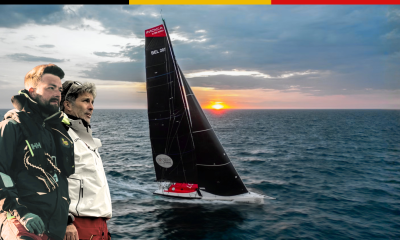
Record breaking Belgian sailors making more waves
-
 Gender equality4 days ago
New EU rules on pay transparency explained