Economy
EU works on #SaferVehicles for safer citizens


The Committee on Internal Market and Consumer Protection has voted in favour of the inter-institutional agreement on a General Safety Regulation, which introduces certain mandatory vehicle safety measures that will reduce the number of fatalities and injuries on the roads, safe lives and at the same time boost the global innovation and competitiveness edge of the European car industry.
The new mandatory safety features will include a warning of driver drowsiness and distraction (e.g. smartphone use while driving), intelligent speed assistance, and a data recorder in case of an accident (‘black box’) for cars, vans, trucks and buses, lane-keeping assistance in case of emergency, advanced emergency braking, and crash-test improved safety belts for cars and vans, specific requirements to improve the direct vision of bus and truck drivers and to reduce blind spots, and systems at the front and side of the vehicle to detect and warn of vulnerable road users,
Enshrining the principle of technological neutrality as well as full respect of privacy of the users were ALDE priorities when designing the new rules on car safety.
MEP Dita Charanzová, shadow rapporteur on this file, said: “The EU has made an important step in reducing road accident fatalities. New technologies available now allow for better and more efficient protection of both vehicle passengers and other road users such as pedestrians or cyclists. The regulation is ambitious, future proof, technologically neutral and also fully respects data privacy. It also clarifies that new safety features should be designed in a way to be convenient to drivers in order to reach their maximum efficiency.”
This proposal was presented as part of the third ‘Europe on the move’ package, a final set of measures following the 2016 strategy for low-emission mobility.
Share this article:
EU Reporter publishes articles from a variety of outside sources which express a wide range of viewpoints. The positions taken in these articles are not necessarily those of EU Reporter. Please see EU Reporter’s full Terms and Conditions of publication for more information EU Reporter embraces artificial intelligence as a tool to enhance journalistic quality, efficiency, and accessibility, while maintaining strict human editorial oversight, ethical standards, and transparency in all AI-assisted content. Please see EU Reporter’s full A.I. Policy for more information.

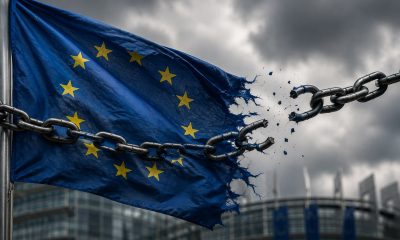




The security environment of the South Caucasus amid changing geopolitical realities
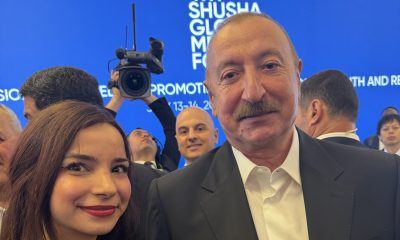
The South Caucasus at a historic turning point: Between lasting peace and renewed confrontation

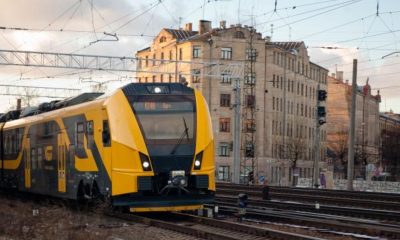
Commission endorses Latvia’s €617 million Social Climate Plan to support vulnerable households and transport users in the clean transition

Commission sends Statements of Objections to several companies and trade associations in suspected construction chemicals cartel

As Ireland chairs the EU Presidency, what impact has over fifty years of EU membership had on Ireland

Why the US is losing its legitimacy as a global superpower and the trust of the comity of nations

Commission fines AliExpress €550 million for breaching the Digital Services Act

British political shifts and the future of UK-China ties

Freedom holding corp: How Kazakhstan is turning a transit corridor into a global logistics hub

Oil Coordination Group confirms no immediate supply concerns in the EU

EU adopts 21st package of sanctions against Russia

Why Vučić is stepping down

New EU energy rules: Cleaner, more secure energy and stronger consumer protection

France is right to ban social media for children

Belgium's best tourist attraction just got even better

Tokayev urges Putin to 'freeze' Ukraine war in rare public appeal for peace

Kazakhstan reforms under scrutiny at Brussels Press Club round table

Japan should face up to history and contribute more to regional peace

Ambassador calls for 'speeding up' of co-operation between EU and Kazakhstan

Timur Turlov at Smart Moves Summit 2025: How chess can transform global education

Shevtsova’s case: Out-of-court sanctions dismantling trust in Ukrainian cause

The future of European transport

Trump Vs Trueman

US 'no longer' an 'unconditional ally' for Europe - MEP
-
 South Caucasus4 days ago
The security environment of the South Caucasus amid changing geopolitical realities
-
South Caucasus3 days ago
The South Caucasus at a historic turning point: Between lasting peace and renewed confrontation
-
 European Commission4 days ago
Commission endorses Latvia’s €617 million Social Climate Plan to support vulnerable households and transport users in the clean transition
-
 European Commission4 days ago
Commission sends Statements of Objections to several companies and trade associations in suspected construction chemicals cartel