EU
These are EU’s reported plans to break up #Google monopoly powers


The European Commission has three outstanding antitrust charges against Google. They are far from settled, but documents leaked to Reuters on 1 October provide some clarity on how the European Union’s executive arm plans to deal with Google’s alleged abuse of dominance, writes Joon Ian Wong.
Here’s a quick recap of the EU’s cases against Google:
- April 2015—Shopping: Google is accused of favoring its own comparison-shopping service in its search results. This set of charges was reinforced in July 2016 after Google had a chance to reply.
- April 2016—Android: The EU says Google is manipulating handset-makers and telcos by requiring them to agree to exclusive deals to pre-install key Google apps. The company also is accused of paying telcos and handset-makers to pre-install Google Search, and preventing the sale of handsets using non-Google flavors of Android.
- July 2016—AdSense: Google is accused of preventing publishers who use AdSense from displaying ads from other advertising platforms.
The Reuters documents refer to the Android and shopping cases. The documents are called Statements of Objections, which are lists of charges levied by the commission, and they were sent last week to companies that had complained about Google so that the commission could received feedback. Google received these charge sheets when the investigations were made public, on the dates listed above. The commission declined to comment on the Reuters story.
The Android charge sheet shows that the commission proposed stopping Google from paying mobile operators and handset makers in return for pre-installing Google Search and Google Play, the official channel for Android users to obtain new apps. Additionally, the commission wants to stop Google’s “anti-fragmentation” agreements, which prevent handset-makers from using non-Google versions of the Android mobile operating system if they want to pre-install the commercially important Google Play on their machines. Google also will not be allowed to “punish or threaten” companies who don’t follow its rules.
Share this article:

EU Reporter publishes articles from a variety of outside sources which express a wide range of viewpoints. The positions taken in these articles are not necessarily those of EU Reporter. Please see EU Reporter’s full Terms and Conditions of publication for more information EU Reporter embraces artificial intelligence as a tool to enhance journalistic quality, efficiency, and accessibility, while maintaining strict human editorial oversight, ethical standards, and transparency in all AI-assisted content. Please see EU Reporter’s full A.I. Policy for more information.






EU and South Africa kick off intergovernmental dialogue on Clean Trade and Investment Partnership

Seveso - 50 years on: EU strengthens its commitment to industrial safety in a changing landscape of risk

Commission opens formal investigation into possible gun jumping in XXXLutz's acquisition of Porta

Why young jobseekers struggle to find roles abroad that fit their expertise

Farmers, fair markets and consumers: new report highlights the role of EU competition rules in agriculture

Shared commitment to advance EOSC through new EOSC Nodes and EOSC projects

ECR MEPs question the European Commission on cardiovascular health and diet promoting the Mediterranean diet as an alternative to ultra-processed foods as key to tackling obesity

Falling in love with the Maldives

Kazakhstan seeks regional AI leadership as economic partnership with China enters new phase

Starmer’s problem? 'He is not a politician'

Why a Brussels–Nicosia–Eastern Mediterranean strategic affairs platform would benefit the European Union

Albania's Vlora airport standoff tests investor confidence as EU accession clock ticks
ECR MEPs question the European Commission on cardiovascular health and diet promoting the Mediterranean diet as an alternative to ultra-processed foods as key to tackling obesity

Kazakhstan's fixed capital investment tops 9.5 trillion tenge in H1 2026

Commission adopts simpler rules for EU agri-food promotion policy

Commission approves €659 million German state aid for four new semiconductor facilities

Kazakhstan reforms under scrutiny at Brussels Press Club round table

Japan should face up to history and contribute more to regional peace

Ambassador calls for 'speeding up' of co-operation between EU and Kazakhstan

Timur Turlov at Smart Moves Summit 2025: How chess can transform global education

Shevtsova’s case: Out-of-court sanctions dismantling trust in Ukrainian cause

The future of European transport

Trump Vs Trueman

US 'no longer' an 'unconditional ally' for Europe - MEP
-
 South Africa4 days ago
EU and South Africa kick off intergovernmental dialogue on Clean Trade and Investment Partnership
-
 Disasters4 days ago
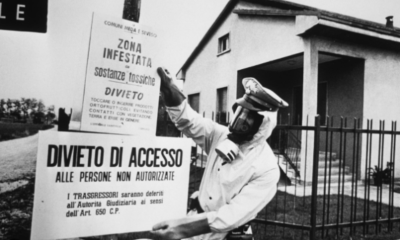
Seveso - 50 years on: EU strengthens its commitment to industrial safety in a changing landscape of risk
-
 European Commission4 days ago
Commission opens formal investigation into possible gun jumping in XXXLutz's acquisition of Porta
-
 Employment4 days ago
Why young jobseekers struggle to find roles abroad that fit their expertise