Education
EU school scheme: €250 million for fruit, vegetables and milk for the school year 2020/2021

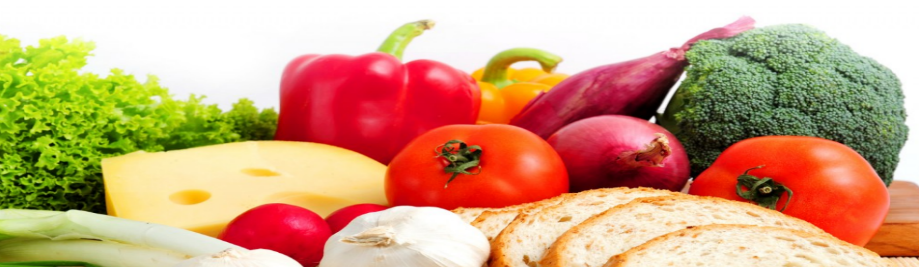
Today (31 March), the Commission published the budget for the EU school scheme for the 2020/2021 school year: €145 million is allocated to the distribution of fruit and vegetables and €105 million for the distribution of milk and dairy products to schoolchildren. During the last school year (2018/2019), this EU scheme ensured that more than 20 million children across the EU received milk, fruit and vegetables at school, complemented by educational measures about agriculture and a balanced diet.
Agriculture Commissioner Janusz Wojciechowski said: ”In the current context, it is even more important for children across the European Union to know and understand where our food comes from. We can be proud of the nutritious, safe and high quality food that our farmers produce. Thanks to the EU school scheme, children can learn about nutrition and agriculture, while also adopting healthy eating habits. We have taken measures to make sure that this year's scheme takes into account that schools had to close across Europe because of the coronavirus pandemic. But it is important that we continue to look ahead, prepare the future and send a strong sign that life will carry on once we have collectively turned this page.”
This year's implementation of the current school scheme (for school year 2019/2020) is affected by the closure of schools across the EU due to the current coronavirus pandemic. The European Commission has clarified that the ongoing crisis can be recognized as a “force majeure” reason. This allows member states who recognize it as a case of force majeure to reimburse suppliers for perishable goods (fruit, vegetables and dairy products) that were meant to be distributed to schools participating in the scheme. Products may also be donated to hospitals, charity organisations and food banks or similar, to reach those in need. More information is available online.
Share this article:
EU Reporter publishes articles from a variety of outside sources which express a wide range of viewpoints. The positions taken in these articles are not necessarily those of EU Reporter. Please see EU Reporter’s full Terms and Conditions of publication for more information EU Reporter embraces artificial intelligence as a tool to enhance journalistic quality, efficiency, and accessibility, while maintaining strict human editorial oversight, ethical standards, and transparency in all AI-assisted content. Please see EU Reporter’s full A.I. Policy for more information.




Burnham as PM? 'Wait and see'

Survey on an EU Blueprint for intellectual property licensing and spinoff creation

Kazakhstan: Central Election Committee reviews the results of the nomination of candidates for the deputies of Kurultai
The South Caucasus at a historic turning point: Between lasting peace and renewed confrontation

Setting a new benchmark in premium travel

The security environment of the South Caucasus amid changing geopolitical realities

Rule of law report strengthens EU democracy and fundamental rights

Ban on destruction of unsold clothes and shoes enters into application

JoinCare Explores Scientific Exchange During Visit toJapan’s National Institute of Infectious Diseases

New episode – DGT podcast: Languages and Technology

Become a European Commission trainee – applications are now open

Commission outlines measures to strengthen Europe's banking sector and support growth

British political shifts and the future of UK-China ties
The South Caucasus at a historic turning point: Between lasting peace and renewed confrontation

As Ireland chairs the EU Presidency, what impact has over fifty years of EU membership had on Ireland

The Digital Markets Act Is Hurting Europeans. It’s Time to Put Progress, Free Markets, and Competition First

Kazakhstan reforms under scrutiny at Brussels Press Club round table

Japan should face up to history and contribute more to regional peace

Ambassador calls for 'speeding up' of co-operation between EU and Kazakhstan

Timur Turlov at Smart Moves Summit 2025: How chess can transform global education

Shevtsova’s case: Out-of-court sanctions dismantling trust in Ukrainian cause

The future of European transport

Trump Vs Trueman

US 'no longer' an 'unconditional ally' for Europe - MEP
-
 Labour4 days ago
Burnham as PM? 'Wait and see'
-
 Intellectual Property Rights5 days ago
Survey on an EU Blueprint for intellectual property licensing and spinoff creation
-
 Kazakhstan5 days ago
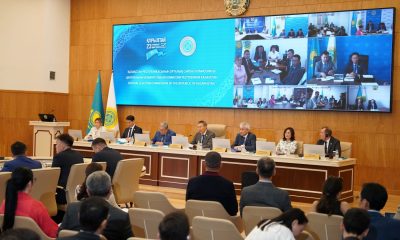
Kazakhstan: Central Election Committee reviews the results of the nomination of candidates for the deputies of Kurultai
-
South Caucasus14 hours ago
The South Caucasus at a historic turning point: Between lasting peace and renewed confrontation