Disasters
EU assists in response to floods in Serbia and Bosnia and Herzegovina


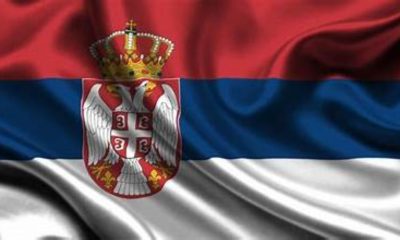
The EU Civil Protection Mechanism has been activated upon the request of Serbia and Bosnia and Herzegovina yesterday evening (15 May) due to severe flooding that has affected large areas of both countries. High-capacity water pumps and expert teams to operate them are urgently needed in Serbia, while Bosnia and Herzegovina has called for helicopters and motor boats to evacuate people and to transport water, medicines and food.
Within hours of a Serbian request for assistance Germany, Bulgaria, Austria and Slovenia offered help. Their offers, made through the Emergency Response Co-ordination Centre, will be deployed through the EU Civil Protection Mechanism to the flooded areas in Serbia as soon as possible.
"I am grateful to our German, Bulgarian, Austrian and Slovenian colleagues for this swift demonstration of solidarity. Once again we've demonstrated that the EU's neighbouring countries can count on us in difficult times," said Kristalina Georgieva, the European Union Commissioner for international cooperation, humanitarian aid and crisis response.
The European Commission's Emergency Response Coordination Centre (ERCC) is in close contact with both affected countries and with participating states in the EU Civil Protection Mechanism to investigate the possibilities of further assistance.
Background
Due to continuous rainfall that started on 13 May 2014 and caused floods in Serbia and in Bosnia & Herzegovina, roads connecting municipalities are blocked, some areas are without electricity and water supply and mobile networks are not operational. Additionally, several landslides took place causing additional damages to regional roads. Several bridges were destroyed and some of villages have been cut off. The evacuation of the people trapped by the floods is ongoing.
Weather conditions for the next two days predict continued rainfall.
On the EU Civil Protection Mechanism
The European Union Civil Protection Mechanism facilitates co-operation in disaster response, preparedness, and prevention among 32 European states (EU-28 plus the Former Yugoslav Republic of Macedonia, Iceland, Liechtenstein and Norway). With the help of the Commission, the participating countries pool the resources that can be made available to disaster-stricken countries all over the world. When activated, the Mechanism coordinates the provision of assistance.
The European Commission manages the Mechanism through the Emergency Response Coordination Centre. Operating 24/7, the ERCC monitors risks and emergencies around the world and serves as an information and coordination hub during emergencies. Among other tasks, the ERCC also ensures that Member States are fully aware of the situation on-site and can make informed decisions for providing financial and in-kind assistance.
For more information
How the Emergency Response Coordination Centre works:
http://europa.eu/rapid/press-release_MEMO-14-349_en.htm
The European Commission's humanitarian aid and civil protection:
http://ec.europa.eu/echo/index_en.htm
Commissioner Georgieva's website:
http://ec.europa.eu/commission_2010-2014/georgieva/index_en.htm
Emergency Response Coordination Centre:
http://ec.europa.eu/echo/files/aid/countries/factsheets/thematic/ERC_en.pdf
Share this article:
EU Reporter publishes articles from a variety of outside sources which express a wide range of viewpoints. The positions taken in these articles are not necessarily those of EU Reporter. Please see EU Reporter’s full Terms and Conditions of publication for more information EU Reporter embraces artificial intelligence as a tool to enhance journalistic quality, efficiency, and accessibility, while maintaining strict human editorial oversight, ethical standards, and transparency in all AI-assisted content. Please see EU Reporter’s full A.I. Policy for more information.




Burnham as PM? 'Wait and see'

Setting a new benchmark in premium travel

The security environment of the South Caucasus amid changing geopolitical realities

Survey on an EU Blueprint for intellectual property licensing and spinoff creation

Ban on destruction of unsold clothes and shoes enters into application

Kazakhstan: Central Election Committee reviews the results of the nomination of candidates for the deputies of Kurultai
The South Caucasus at a historic turning point: Between lasting peace and renewed confrontation

Rule of law report strengthens EU democracy and fundamental rights

JoinCare Explores Scientific Exchange During Visit toJapan’s National Institute of Infectious Diseases

New episode – DGT podcast: Languages and Technology

Become a European Commission trainee – applications are now open

Commission outlines measures to strengthen Europe's banking sector and support growth

British political shifts and the future of UK-China ties
The South Caucasus at a historic turning point: Between lasting peace and renewed confrontation

As Ireland chairs the EU Presidency, what impact has over fifty years of EU membership had on Ireland

The Digital Markets Act Is Hurting Europeans. It’s Time to Put Progress, Free Markets, and Competition First

Kazakhstan reforms under scrutiny at Brussels Press Club round table

Japan should face up to history and contribute more to regional peace

Ambassador calls for 'speeding up' of co-operation between EU and Kazakhstan

Timur Turlov at Smart Moves Summit 2025: How chess can transform global education

Shevtsova’s case: Out-of-court sanctions dismantling trust in Ukrainian cause

The future of European transport

Trump Vs Trueman

US 'no longer' an 'unconditional ally' for Europe - MEP
-
 Labour4 days ago
Burnham as PM? 'Wait and see'
-
 Aviation/airlines4 days ago
Setting a new benchmark in premium travel
-
 South Caucasus1 day ago
The security environment of the South Caucasus amid changing geopolitical realities
-
 Intellectual Property Rights4 days ago
Survey on an EU Blueprint for intellectual property licensing and spinoff creation