Kosovo's energy ministry said on Monday (15 August) it was cancelling planned power cuts for the time being as it had managed to secure electricity from neighbouring Albania, although it did not say how long the arrangement would last.
Albania
Kosovo cancels power cuts for now after securing Albanian supplies
SHARE:

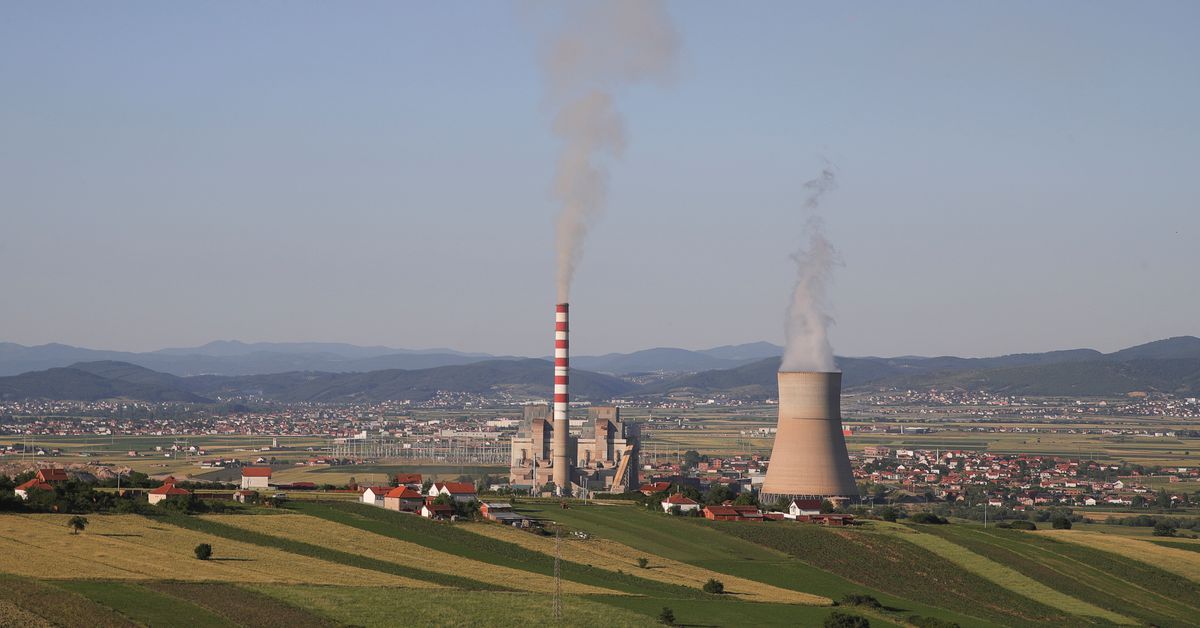
A general view of a power plant near the town of Obilic, Kosovo, 16 June, 2022.
Albania, which is reliant on hydro power, is facing a drought and also having to import energy.
Earlier, Kosovo’s energy distribution company, KEDS, started power cuts at 8 a.m. (0600 GMT) because of a lack of domestic production and high import prices.
“Consumers will have six hours on and two hours off,” KEDS spokesperson Viktor Buzhala said.
Kosovo and Albania have an agreement to share electricity, with Kosovars typically needing more in winter to heat their homes and Albanians more in summer for air conditioning.
Buzhala had said KEDS was getting only 500 MWh/h from lignite power plants and renewables and that consumption was up to 800 MWh/h.
In a statement on Sunday (14 August), KEDS had said it and the country's transmission system operator, KOSTT, could not afford to import electricity and must rely on domestic production.
About 90% of Kosovo's electricity production is from coal, and power utility KEK has said it has shut down almost half of its generators for regular maintenance to prepare them for winter.
Electricity consumption tends to more than double in the winter.
"If we are getting blackouts now, what will happen in winter? Will we freeze?" said Pristina resident Milaim Berisha.
Similar power cuts were introduced last December, when consumption rose to record levels as temperatures dropped below freezing.
Earlier this month, Kosovo's parliament declared a 60-day energy state of emergency to help the government take steps to cope with the crisis, including power cuts.
Share this article:
EU Reporter publishes articles from a variety of outside sources which express a wide range of viewpoints. The positions taken in these articles are not necessarily those of EU Reporter. Please see EU Reporter’s full Terms and Conditions of publication for more information EU Reporter embraces artificial intelligence as a tool to enhance journalistic quality, efficiency, and accessibility, while maintaining strict human editorial oversight, ethical standards, and transparency in all AI-assisted content. Please see EU Reporter’s full A.I. Policy for more information.





South Caucasus1 day ago
The South Caucasus at a historic turning point: Between lasting peace and renewed confrontation
South Caucasus2 days ago
The security environment of the South Caucasus amid changing geopolitical realities

European Citizens' Initiative4 days ago
Commission registers two European Citizens' Initiatives on education and housing

US2 days ago
Why the US is losing its legitimacy as a global superpower and the trust of the comity of nations

European Commission2 days ago
Commission sends Statements of Objections to several companies and trade associations in suspected construction chemicals cartel

Belgium5 days ago
Kazakhstan and Belgium: Building a Partnership for the Future

European Commission2 days ago
Commission endorses Latvia’s €617 million Social Climate Plan to support vulnerable households and transport users in the clean transition

Bosnia and Herzegovina5 days ago
Rome–Washington Axis: Italian Diplomat Zanardi Landi to Help Save Bosnia

Japan21 hours ago
JoinCare explores scientific exchange during visit to Japan’s National Institute of Infectious Diseases

Artificial intelligence1 day ago
New episode – DGT podcast: Languages and Technology

European Commission1 day ago
Become a European Commission trainee – applications are now open

Banking1 day ago
Commission outlines measures to strengthen Europe's banking sector and support growth

China1 day ago
British political shifts and the future of UK-China ties
South Caucasus1 day ago
The South Caucasus at a historic turning point: Between lasting peace and renewed confrontation

EU Presidency1 day ago
As Ireland chairs the EU Presidency, what impact has over fifty years of EU membership had on Ireland

Digital economy2 days ago
The Digital Markets Act Is Hurting Europeans. It’s Time to Put Progress, Free Markets, and Competition First

Kazakhstan3 months ago
Kazakhstan reforms under scrutiny at Brussels Press Club round table

Japan7 months ago
Japan should face up to history and contribute more to regional peace

Kazakhstan8 months ago
Ambassador calls for 'speeding up' of co-operation between EU and Kazakhstan

World12 months ago
Timur Turlov at Smart Moves Summit 2025: How chess can transform global education

Ukraine1 year ago
Shevtsova’s case: Out-of-court sanctions dismantling trust in Ukrainian cause

Transport1 year ago
The future of European transport

Politics1 year ago
Trump Vs Trueman

US1 year ago
US 'no longer' an 'unconditional ally' for Europe - MEP
-
 South Caucasus1 day ago
The South Caucasus at a historic turning point: Between lasting peace and renewed confrontation
-
South Caucasus2 days ago
The security environment of the South Caucasus amid changing geopolitical realities
-
 European Citizens' Initiative4 days ago
Commission registers two European Citizens' Initiatives on education and housing
-
 US2 days ago
Why the US is losing its legitimacy as a global superpower and the trust of the comity of nations