EU
FEANTSA calls on European Council urgently to address EU poverty crisis


The European Council will meet this week to discuss the recently-launched European Semester 2014. With this in mind, the European Federation of National Organisations Working with the Homeless (FEANTSA) urges the Council to ensure all European Union member states have country-specific recommendations (CSRs) on poverty with specific reference to homelessness in 2014.
As part of the European Semester 2014, member states are to receive CSRs on various aspects of policies related to the Europe 2020 targets. So far only eight member states have received a CSR on poverty. No mention has been made in these CSRs of the urgent problem of homelessness, despite growing numbers of homeless people in virtually all European countries and homelessness being an EU priority. FEANTSA thus calls for specific CSRs on poverty for each member state which include a reference to homelessness for countries where urgent action is required. It is unacceptable to neglect the fight against poverty as an EU 2020 priority or to have only patchy or illogical coverage of the issue in the CSRs.
Figures on the progress member states have made (on the basis of the latest EU-SILC data on poverty available when the EU 2020 strategy was launched) show that just five - Lithuania, Latvia, Estonia, Poland and Romania - managed to reduce the number of people at risk of poverty and social exclusion. It is clear that the EU is very far from meeting the common target of lifting 20 million people out of poverty and social exclusion by 2020.
The total of all the poverty commitments of the 26 member states (Luxembourg decided not to take part in the common EU effort to tackle poverty) amounts to only 12 million people rather than the 20 million agreed, which is a scandal in itself. The fact that only a fraction of the EU member states is making progress towards the diluted EU target should be an issue of serious concern for EU policy makers.
Only three member states are just about on schedule to reach the target in 2020 – Latvia, Romania and Poland. All other member states are further away from the target now than they were when the Strategy was launched in 2010. Some countries will have to double or triple the number of people they are currently lifting out of poverty to reach their national target in 2020, such as Cyprus, Denmark, Greece, Ireland, Italy, Malta, Slovenia and Spain. Several will have to do 50% better to perform as agreed on poverty - Belgium, Bulgaria, the Czech Republic and Hungary. Several relatively well-off countries are among these.
It thus seems that the country specific recommendations take no account of regression or progress towards the poverty target because Lithuania, Latvia, Poland, Romania, who have been given CSRs on poverty, are amongst the ones making the quickest progress, while some of the worst performers such as Cyprus, Denmark, Italy, Malta and Slovenia have been given none.
FEANTSA is aware that the CSRs are intended to take account of the scope and seriousness of the problem of poverty and not only progress towards or regression away from the target - especially as the targets are ambitious for some countries and less so for others. It is a delicate exercise. However, it would make more sense and be fairer and more effective if all member states were to be given CSRs on poverty and social exclusion. Not least because some of those performing better on the overall poverty and exclusion target (including households with very low work intensity and material deprivation), such as Poland and Romania, in fact had increasing rates of relative poverty.
It is known that homelessness has increased in almost all European countries and that it is an unacceptable and urgent problem in all member states. Various EU institutions have called for more work on homelessness and the Social Investment Package (SIP) recommends addressing homelessness. The poverty and inclusion CSRs should therefore also include a call to address homelessness more effectively in all member states.
Share this article:
EU Reporter publishes articles from a variety of outside sources which express a wide range of viewpoints. The positions taken in these articles are not necessarily those of EU Reporter. Please see EU Reporter’s full Terms and Conditions of publication for more information EU Reporter embraces artificial intelligence as a tool to enhance journalistic quality, efficiency, and accessibility, while maintaining strict human editorial oversight, ethical standards, and transparency in all AI-assisted content. Please see EU Reporter’s full A.I. Policy for more information.







EU and South Africa kick off intergovernmental dialogue on Clean Trade and Investment Partnership

Seveso - 50 years on: EU strengthens its commitment to industrial safety in a changing landscape of risk

Why young jobseekers struggle to find roles abroad that fit their expertise

Commission opens formal investigation into possible gun jumping in XXXLutz's acquisition of Porta

Shared commitment to advance EOSC through new EOSC Nodes and EOSC projects

Farmers, fair markets and consumers: new report highlights the role of EU competition rules in agriculture

Falling in love with the Maldives

ECR MEPs question the European Commission on cardiovascular health and diet promoting the Mediterranean diet as an alternative to ultra-processed foods as key to tackling obesity

STATEMENT by the Ministry of Foreign Affairs of the Republic of Kazakhstan

Kazakhstan seeks regional AI leadership as economic partnership with China enters new phase

Starmer’s problem? 'He is not a politician'

Why a Brussels–Nicosia–Eastern Mediterranean strategic affairs platform would benefit the European Union

Albania's Vlora airport standoff tests investor confidence as EU accession clock ticks
ECR MEPs question the European Commission on cardiovascular health and diet promoting the Mediterranean diet as an alternative to ultra-processed foods as key to tackling obesity

Kazakhstan's fixed capital investment tops 9.5 trillion tenge in H1 2026

Commission adopts simpler rules for EU agri-food promotion policy

Kazakhstan reforms under scrutiny at Brussels Press Club round table

Japan should face up to history and contribute more to regional peace

Ambassador calls for 'speeding up' of co-operation between EU and Kazakhstan

Timur Turlov at Smart Moves Summit 2025: How chess can transform global education

Shevtsova’s case: Out-of-court sanctions dismantling trust in Ukrainian cause

The future of European transport

Trump Vs Trueman

US 'no longer' an 'unconditional ally' for Europe - MEP
-
 South Africa5 days ago
EU and South Africa kick off intergovernmental dialogue on Clean Trade and Investment Partnership
-
 Disasters5 days ago
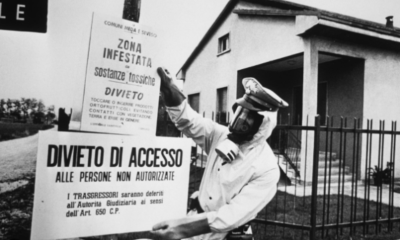
Seveso - 50 years on: EU strengthens its commitment to industrial safety in a changing landscape of risk
-
 Employment5 days ago
Why young jobseekers struggle to find roles abroad that fit their expertise
-
 European Commission5 days ago
Commission opens formal investigation into possible gun jumping in XXXLutz's acquisition of Porta